
Reviewed · AMSTERDAM WALKING TOURS
5 hrs Golden Age Amsterdam Private Walking Tour With Local Guide
This is interesting because Amsterdam’s Golden Age can feel like a maze, and a good local guide gives you a clean map of what matters. I like the small private group setup (max 4), and I like how the tour strings big stories together without turning it into a lecture. One possible drawback is that several landmark interiors are not included and you will likely pay extra for places like the Royal Palace and Anne Frank House.
I also like the range here. You go from grand stations and basilicas to quieter courtyards like the Begijnhof, with a structured, respectful stop in De Wallen. The guide I saw highlighted in the comments, Aleksandar (often called Aleks or Aca), is especially good at keeping families engaged and adjusting the pace when kids are along.
Quick picks: what makes this tour work
- Max 4 people means you can ask questions and actually hear the answers.
- Aleksandar’s style keeps the day moving, with stories that fit both adults and kids.
- Golden Age landmarks plus hidden corners like the Begijnhof give you variety in 5 hours.
- A guided De Wallen stop comes with context and practical “what to know” framing.
- A lot of stops are free to view, so the walk feels value-packed.
Why This 5-Hour Golden Age Walk Helps You Get Oriented Fast
If it is your first time in Amsterdam, you need two things quickly: a sense of direction and a sense of how the city became what you see today. This tour is built for that. In about 5 hours, you cover a broad loop that hits key neighborhoods, squares, religious sites, and canal-world details.
The private setup matters more than you might think. With a group limited to 4, the guide can slow down where you want it, answer what you ask, and keep the pace from getting chaotic. I also like the way this day blends big, obvious sights with smaller “wait, what is that?” moments.
More walking tours in Amsterdam:
- Anne Frank’s Story – Guided Walking Tour through Amsterdam
★ 5.0 · 11,619 reviews - Amsterdam: Life of Anne Frank and World War II Walking Tour
★ 4.8 · 10,467 reviews - Absolutely Amsterdam – the Essential Introductory Walking Tour
★ 5.0 · 3,629 reviews
Price and What You Actually Get for $540.69
The price is $540.69 per group for up to 4 people. In a full group, that is roughly $135 per person before any additional ticket costs. If you are traveling with just two people, the per-person cost jumps, so this works best when you can split with friends or family.
Here is the important part: the tour guide service is included, but many of the most famous interiors are not. You should budget separately for tickets listed as not included, including:
- Royal Palace Amsterdam (€10 per person)
- Westerkerk (€7 per person)
- Old Center (€13.50 per person)
- Anne Frank House (€16 per person)
- Nieuwe Kerk (€10 per person)
- Ons’ Lieve Heer op Solder museum (€16.50 per person)
At the same time, a lot of the sightseeing stops are free to enter, or you are mostly viewing from the outside. That mix is what keeps the day from feeling like constant ticket lines.
Meeting at Amsterdam Centraal, and How the Walk Is Likely to Feel
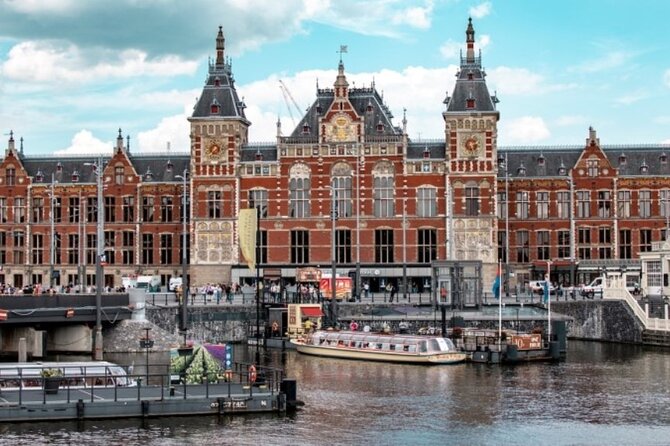
You meet at Amsterdam Centraal railway station, specifically at Stationsplein, 1012 AB Amsterdam. The tour ends back at the meeting point, so you are not left trying to figure out your route home while tired.
Pickup is offered, but you still start at Centraal. That is handy if you are not staying nearby. Since the tour is a walking experience and runs about 5 hours, wear comfortable shoes, and bring water, especially if you plan on doing photos at the canals and bridges.
Centraal Station to St. Nicholas Basilica: Start With the City’s Scale
Your first stop is Centraal Station. You are looking at the central train station building in a Dutch neoclassical style, and you get the practical engineering context too. The building sits on thousands of wooden poles, a reminder that Amsterdam is not just picturesque, it is constructed for a watery world.
From there you head to St. Nicholas Basilica, described as the biggest Catholic temple in the Netherlands dating from the second half of the 19th century. This is a good early anchor because it shows you how Amsterdam’s religious life continued to evolve even as the city modernized.
If you only skim Amsterdam on your own, you might notice buildings. With a guide, you start noticing why those buildings exist in the first place. That is the real value of starting with major landmarks.
A few more Amsterdam tours worth comparing
- Amsterdam: 75 Minute City Canal Cruise with Audio Guide
★ 4.4 · 17,501 reviews - Amsterdam: Johan Cruijff ArenA Tour with Optional Guide
★ 4.6 · 8,954 reviews - Amsterdam: Royal Palace Entry Ticket and Audio Guide
★ 4.6 · 6,475 reviews - Amsterdam: Guided Zaanse Schans, Windmills & Cheese Tour
★ 4.4 · 4,826 reviews
The Weeping Tower and Het Kleinste Huis: Walls, Water, and Canal Meaning
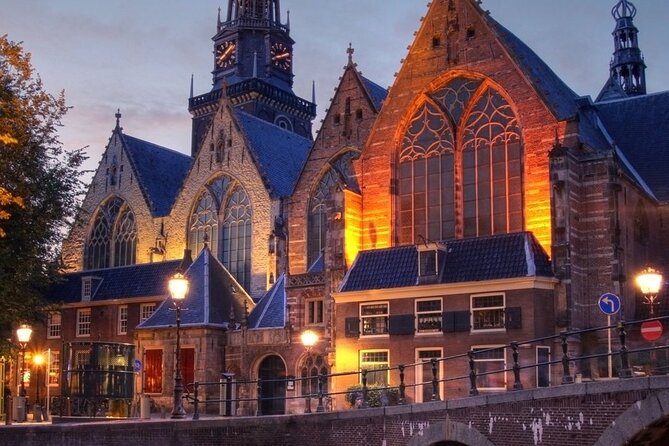
Next comes the Weeping Tower, once part of the medieval city wall. The location connects to a big global story too: it is linked to the voyage of Henry Hudson setting sail toward Northern America. Even as a quick stop, this is a reminder that Amsterdam’s maritime reach shaped the city’s identity.
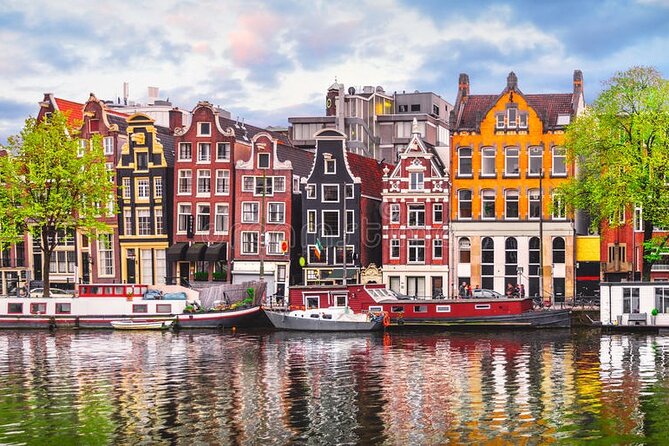
Then you visit Het Kleinste Huis van Amsterdam, the smallest house in Amsterdam on the canal Singel. This is not just a trivia photo stop. You learn what “grachten” means, how canals functioned historically, and the practical realities behind maintaining narrow, tall canal homes and bridges.
Small house, big takeaway: Amsterdam’s canal system is not decorative. It is part of how neighborhoods worked, how trade moved, and how people lived.
The Waag and the Canal-Gate Feeling of Old Amsterdam
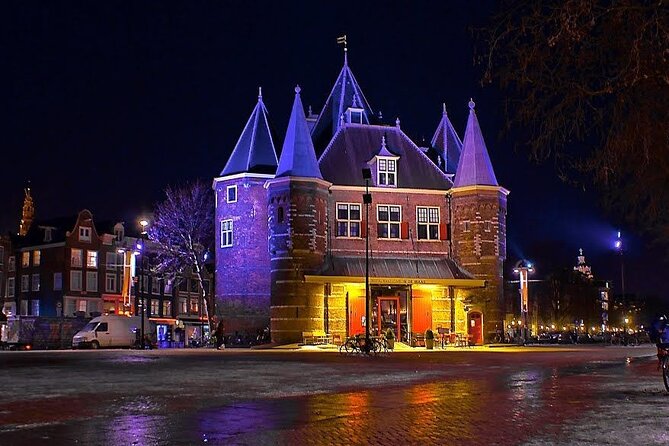
At De Waag, you get the sense of Amsterdam as a city of trade rules and civic control. The Waag is tied to being a weigh-building and customs house, dating to the beginning of the 15th century, and it also served as guild headquarters. It was once one of the city’s gates into the inner area of Amsterdam.
This stop is useful because it helps you read the city like a system. When you understand that gates and weighing buildings were part of commerce, the canals and street patterns start to make more sense.
Ons’ Lieve Heer op Solder and Fo Guang Shan: One City, Many Faith Stories
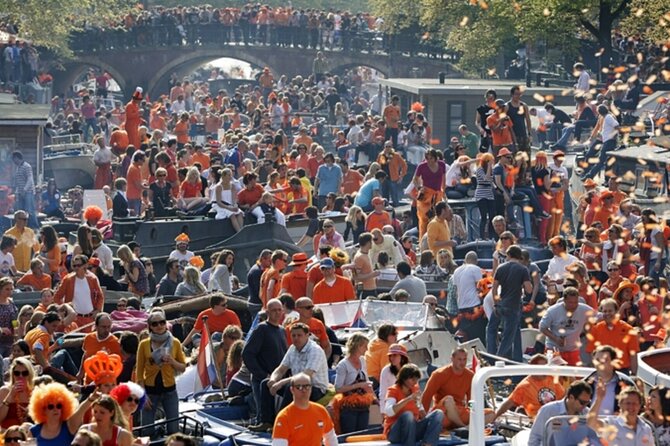
The tour then includes Our Lord in the Attic Museum, Ons’ Lieve Heer op Solder. This is the well-known secret church in Amsterdam, now restored and served as a museum. The key point for you is timing and budgeting: admission is not included, listed at €16.50 per person.
Right after that, you switch tone and direction with Fo Guang Shan, a Chinese Buddhist temple in the heart of Amsterdam’s Chinatown. This temple is described as the second biggest of its kind in Europe, and it gives you a modern contrast to the earlier church stops.
I like this pairing because it shows you Amsterdam’s layering. You see how religion, migration, and community space change over time, not just in a single chapter of history.
De Wallen With Context, Then Dam Square’s Big-Picture Center
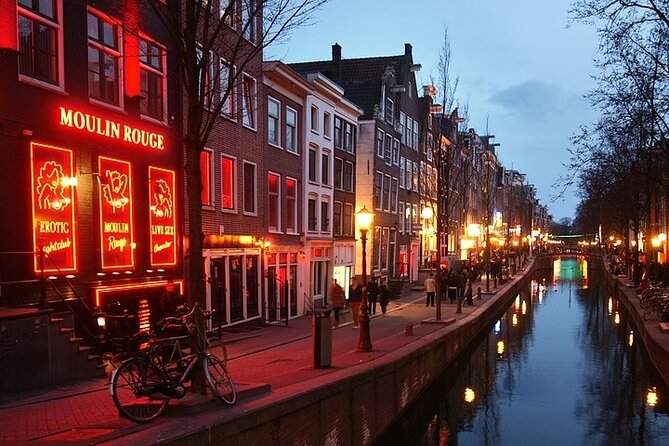
A standout part of the day is the guided stop in the Red Light District (De Wallen). The tour is described as a short break with a moderation about prostitution and drug policy in the Netherlands, including history, how things look today, and “yes and no” framing about light drugs. You also get friendly recommendations on how to enjoy the area while not breaking the law.
Plan for this to be a more opinionated, conversation-heavy segment than a pure sightseeing stop. It can also be emotionally awkward for some people. If you are easily uncomfortable with sensitive topics, you will want to think about how you want your trip to feel.
After that comes Dam Square, Amsterdam’s central and oldest square, described as the birthplace of the city. You get quick focus on surrounding icons like the Royal Palace, New Church, the National Monument, and other major landmarks nearby.
Royal Palace, Nieuwe Kerk, and the National Monument: Power and Memory in One Zone
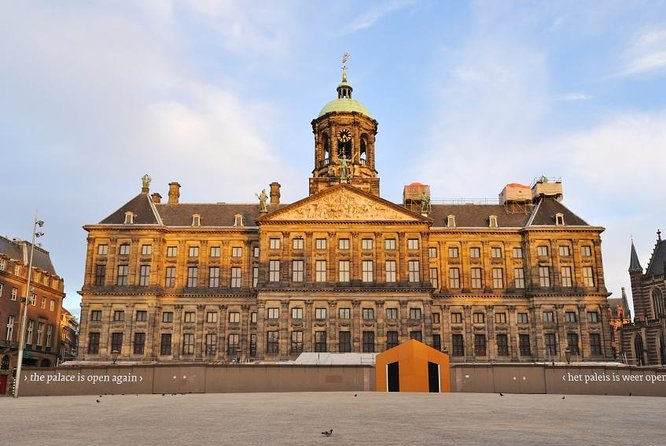
From Dam Square you move to the Royal Palace Amsterdam, described as the former city hall built in the middle of the 17th century on 13,659 wooden poles. This is a huge architectural flex, and admission is not included at €10 per person.
Next is National Monument, a remembrance stand 22 meters high from 1956, commemorating casualties of World War II and subsequent armed conflicts. It is a quiet stop where the city’s public memory becomes physical.
Then comes Nieuwe Kerk, originally erected in the 15th century as a worship church of the Dutch Reformed Church and still used for royal wedding and crowning ceremonies. Admission is listed as not included at €10 per person.
This triad works well if you like seeing how a city expresses itself through civic space. Amsterdam is famous for canals, but it is also good at telling you what it chooses to remember.
Begijnhof: The Courtyard Pause That Changes the Mood
The tour’s mood shift happens at Begijnhof. This is described as a hidden place and memorial area dedicated to the Beguines, a semi-closed sisters order similar to nuns, along with another secret Catholic church. You also hear about the oldest wooden house in Amsterdam, the English Church, and a legend connected to Cornelia Arens.
There is also a “miracle of Amsterdam” story tied to 1345, which helps explain why the Begijnhof feels like a time capsule even while it sits inside a modern city.
This stop is a great reset after busier streets. It is also a reminder to slow down, because the best parts of Amsterdam are often tucked behind plain doors.
Munt Tower and the Rembrandt Zone: Gates, Coins, and Night Watch Talk
Next you hit Munt Tower (Munttoren), originally erected at the meeting point of the Amstel and a key canal area, Singel. This tower served as one of the main gates to the medieval city and as a coin-minting location during the 17th century.
Then you move into Rembrandt territory with the Rembrandt Monument, honoring Rembrandt van Rijn and featuring a 3D exposure of his masterpiece The Night Watch. You get facts and trivia about the painting and Rembrandt’s private life, which is a fun way to connect art to real people.
Right around here there is also a stop for the biggest and most famous flower and garden accessories market in the city. If you like buying tulip bulbs or simply want the smell and color experience, this is the moment. Keep your wallet ready, but also keep your expectations realistic: you are walking, so big purchases might be a hassle to carry.
Sint Luciënsteeg and Anne Frank House: Street Detail to Human History
At Sint Luciënsteeg, you visit the Burgerweeshuis orphanage from 1580 and an area known for stone gables and stone tablets referencing house identities from medieval ages. This is the kind of stop that makes Amsterdam feel “readable,” because you learn that buildings carry messages.
Then the tour reaches Anne Frank House, one of the most emotionally important stops on this walk. The guidance here is clear: admission tickets can be booked only online and at least 6 weeks in advance. The museum ticket is listed as not included at €16 per person.
If you are going to Anne Frank House, arrive mentally ready. This stop is less about photos and more about attention.
Westerkerk, the Amstel, and Jodenbuurt: Protestant Space, Then Jewish Quarter Memory
After Anne Frank House, the tour goes to Westerkerk, described as the third oldest church after South and North, built in 1631 with a leaning tower. It was built for Protestant believers. The tour also notes weddings of former Dutch queen Beatrix, and mentions Rembrandt burial nearby is sometimes believed, though never precisely proven.
Admission is listed as not included at €7 per person.
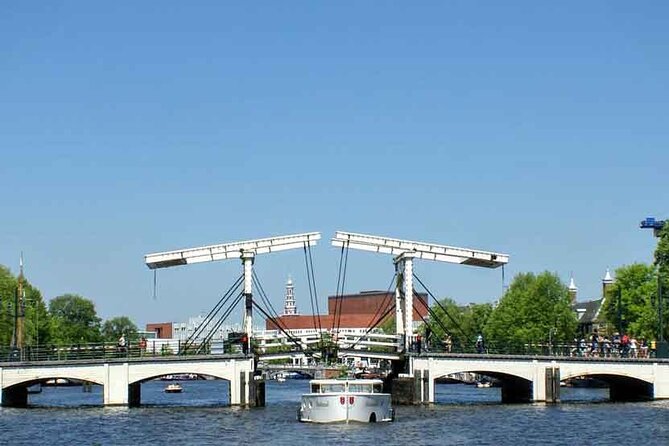
Next you get The Amstel viewpoint, with surrounding buildings and famous bridges such as the Blue Bridge and Skinny Bridge. This segment is a breather because it lets you see the waterline as the city intended, not just as a backdrop for busy streets.
Finally, you visit Jodenbuurt, also known as Plantage, the Jewish Quarter. You learn that from the end of the 16th century until World War II many Jews lived there, and you see important buildings and Holocaust monuments and memorials.
This ending is strong because it connects Amsterdam’s old neighborhoods to the heaviest parts of European history. It also gives you a clearer sense of how the city has remembered and grieved in public spaces.
The Guide Factor: Why Aleksandar’s Approach Gets Praise
A name that shows up again and again is Aleksandar, often called Aleks or Aca. The standout pattern in the comments is that he makes time feel short, even in a day packed with stops. He also speaks perfect English and Slovak, and he is described as able to work with families of mixed ages.
For families, that matters. One key detail included is that he adjusted how he talked about Amsterdam, art history, and city secrets to match each person’s level. When a guide does that, kids do not tune out, and adults do not feel talked down to.
If you are the type who loves asking questions, this kind of guide style is gold. The tour is designed with enough stops that you can keep curiosity alive instead of forcing it into a single crowded museum.
Who Should Book This Tour, and Who Might Skip It
This private walk is a smart pick if you:
- want a first-time orientation route across major Amsterdam highlights
- like your history explained as you walk, not after you get back to your hotel
- travel with kids or mixed ages and want the day to stay engaging
- want a guide who can handle sensitive areas with context and common-sense framing
You might skip it if:
- you already have your Amsterdam route planned in detail and you want deep time inside only a few specific museums
- you dislike walking for 5 hours and would rather do fewer stops with more rest
- you do not want extra budgeting for ticketed interiors like the Royal Palace, Nieuwe Kerk, Ons’ Lieve Heer op Solder museum, Westerkerk, and Anne Frank House
Should You Book This Golden Age Amsterdam Private Walking Tour?
I think you should book it if you want a guide-led path through both the famous and the quietly meaningful parts of Amsterdam. The small group size, the mix of canals, civic landmarks, religious sites, and historical neighborhoods, and the presence of a guide like Aleksandar who can keep everyone engaged are the biggest reasons.
Just be honest with yourself about costs and timing. Several of the most important stops need separate tickets, and Anne Frank House is ticketed and requires online booking far in advance. If you plan for that, this tour does a strong job of helping you understand Amsterdam, not just see it.
FAQ
How long is the Golden Age Amsterdam Private Walking Tour?
It runs for about 5 hours.
What is the group size for this private tour?
The group has a maximum of 4 travelers.
Where do we meet, and does the tour end there too?
You meet at Amsterdam Centraal railway station, Stationsplein, 1012 AB Amsterdam, and the tour ends back at the meeting point.
Is pickup offered?
Yes, pickup is offered.
What is included, and what entrance fees are not included?
The tour includes tour guide services. Entrance fees are not included for places listed as separate tickets, including Royal Palace Amsterdam (€10 per person), Westerkerk (€7 per person), Old Center (€13.50 per person), Anne Frank House (€16 per person), Nieuwe Kerk (€10 per person), and Ons’ Lieve Heer op Solder (€16.50 per person).
How far in advance do Anne Frank House tickets need to be booked?
Anne Frank House tickets can be booked only online and at least 6 weeks in advance.
When does the tour operate?
The opening hours provided list Monday: 11:00 AM to 5:00 PM.
Recently reviewed around Amsterdam
- Amsterdam Highlights Canal Cruise with a Drink★ 5.0 · 66 reviews
- Private walking tour Amsterdam. English or Spanish.★ 5.0 · 21 reviews
- Guided Private Bar Tour in Amsterdam City Center★ 5.0 · 4 reviews
- Amsterdam Private Boat Trip With Skipper, Burger and Beers★ 5.0 · 5 reviews
- Arrival Private Transfer Amsterdam Airport to Amsterdam City Center by Minibus★ 4.5 · 7 reviews
- Private Arrival Transfer: Schiphol Airport Amsterdam★ 3.5 · 30 reviews
- 2-Hour Private Anne Frank Walking Tour with Drink★ 5.0 · 3 reviews
- Private Amsterdam WW2 walking tour★ 4.5 · 15 reviews
Amsterdam Walking Tours, compared.
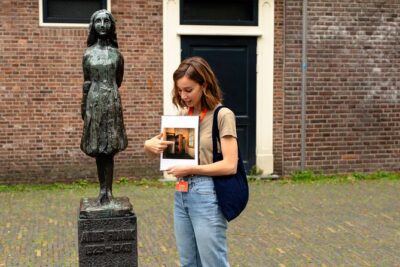
Anne Frank’s Story – Guided Walking Tour through Amsterdam
Read our review →
Life of Anne Frank and World War II Walking Tour
Read our review →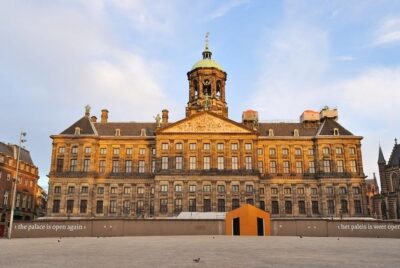
Absolutely Amsterdam – the Essential Introductory Walking Tour
Read our review →

Anne Frank Walking Tour – Guided in EN/DE/IT/ES
Read our review →
Anne Frank Walking Tour Amsterdam Including Jewish Cultural Quarter
Read our review →Browse the lists this tour appears in