
Reviewed · AMSTERDAM WALKING TOURS
Amsterdam: Coffee Shops Walking Tour
Amsterdam has a talent for contradictions, and that is exactly why this Amsterdam coffee shops walking tour feels different from the usual canal cruise or museum sprint. You get a guided walk that connects the city’s street-level reality to its famously liberal policies, with stops tied to the Red Light District and Amsterdam’s cannabis culture.
I especially like two parts. First, you see real places tied to the story, including the world-famous coffee-shop spots like Prix d’Ami. Second, you get local-style explanations that help the city make sense fast, including how legalization for sex work and the approach to soft drugs became part of Dutch politics. The one consideration: this is not a gentle stroll. The route includes narrow lanes and busy areas, and it is not suitable for people with mobility impairments.
Key highlights at a glance
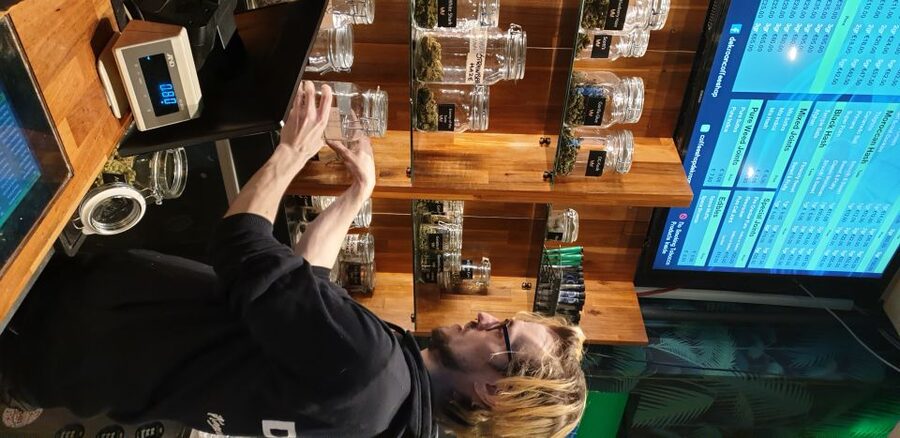
- Prix d’Ami, the world’s biggest coffee shop, as a literal stop on the walk
- Amsterdam’s smallest alleyway, where you get a sense of the city’s tight street plan
- Coffee-shop beginnings and Amsterdam cannabis culture, explained in plain language
- Red Light District context, including the history of legalization of prostitution
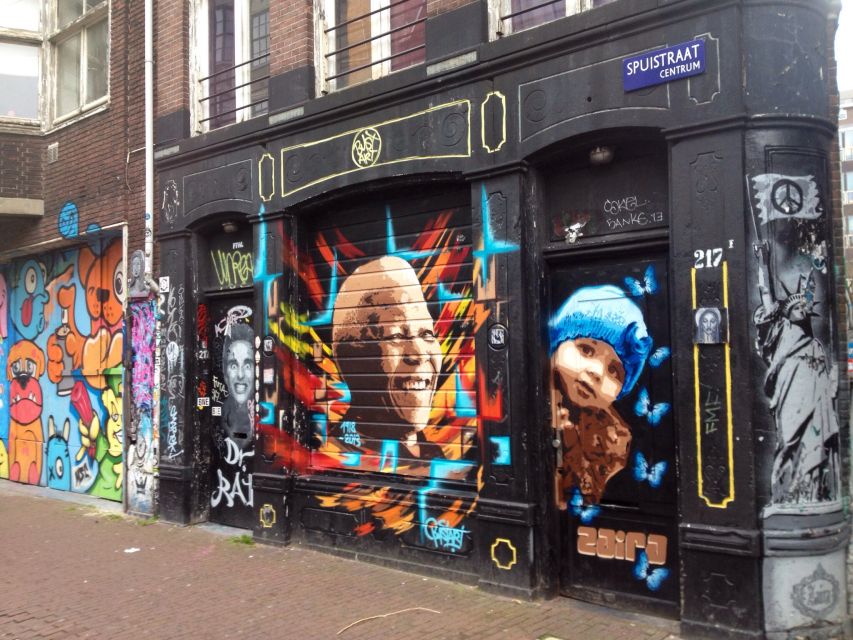
- A guided look beyond the main streets, with street art, canals, and markets along the way
- Local pace and Q and A, with guides such as Maurice and Gav mentioned for answering questions well
Where the story starts, in the heart of the Red Light District
This tour begins in central Amsterdam, right in the area most visitors associate with the city’s nightlife and big moral debates. The guide starts you at the Barbizon Palace Hotel NH collection and then leads you into the streets, alleys, and canal corridors that frame the iconic red-lit windows.
I like the way the walk treats the neighborhood as more than a set of photos. You hear context about how legalization of prostitution shaped the area, and what sex workers face today. Even if you are not interested in that topic personally, the explanation helps you understand why Amsterdam does what it does, and why the city talks about policy so openly.
One practical note: you will be surrounded by a mix of locals, tourists, and nightlife energy. Go in mentally prepared for a lively setting, not a hushed tour bus view.
More walking tours in Amsterdam:
- Anne Frank’s Story – Guided Walking Tour through Amsterdam
★ 5.0 · 11,619 reviews - Amsterdam: Life of Anne Frank and World War II Walking Tour
★ 4.8 · 10,467 reviews - Absolutely Amsterdam – the Essential Introductory Walking Tour
★ 5.0 · 3,629 reviews
Meeting at Barbizon Palace, then walking with a local lens
Getting started matters in Amsterdam. The meeting point is easy to find: stand in front of the Barbizon Palace Hotel NH collection entrance and your guide will pick you up from there.
From the first minutes, you are walking through the kind of older street layout that makes the city feel compact but surprising. The guide uses that geography as part of the lesson. Instead of telling you facts from a worksheet, you connect the facts to what is around you, from canals to street corners.
This is also why I think the local perspective is such a big part of the value. You are not just checking off named locations. You are learning how a local reads the city, what they notice, and how they explain the tensions that tourists often miss.
Coffee-shop landmarks, from the world’s first to Prix d’Ami
The tour’s coffee-shop stops are the reason it earns its name. You will visit one of Amsterdam’s legendary coffee shops as part of the route, and you will also learn about the role coffee shops played in the history of soft-drug policy.
Two highlights deserve their own spotlight.
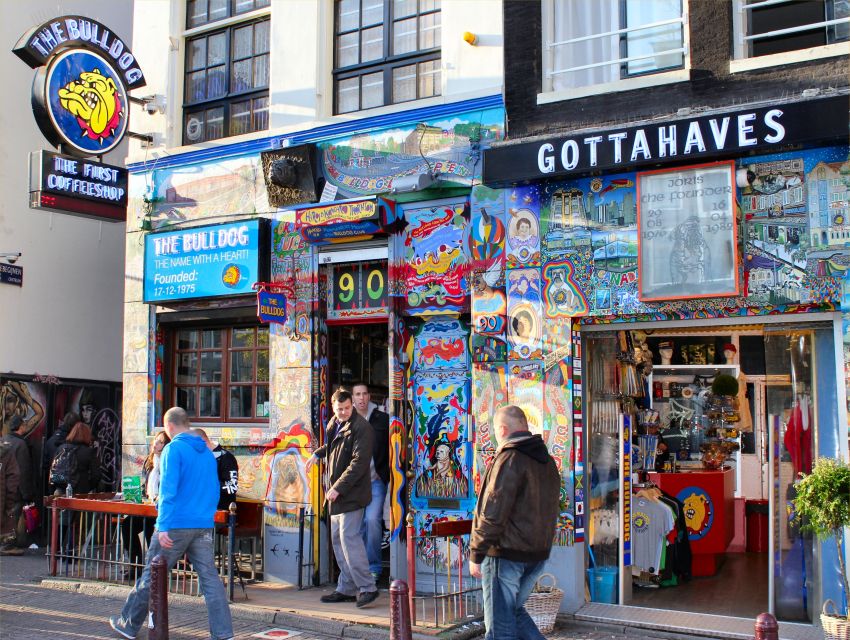
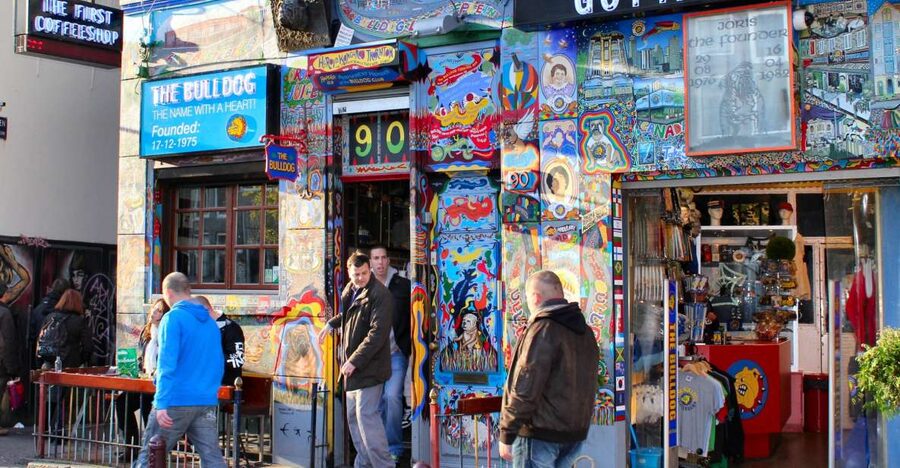
First, you will see the world’s first coffee shop. The guide frames it as a turning point, not a trivia fact. It helps to understand that Amsterdam’s coffee-shop culture did not appear out of thin air, it was part of a broader shift in how the Netherlands approached certain substances and public health.
Second, you will visit the world’s biggest coffee shop at Prix d’Ami. This stop is great because it is visual. Even if you already know the basics, seeing how big and well-known it is makes the topic feel real, not abstract.
One drawback to keep in mind: the experience is about culture and history. Food and drinks are not included, so do not plan on this tour replacing a meal or turning into a long sit-down break.
The smallest alleyway, and why it matters for reading Amsterdam
Amsterdam is famous for canals, but the city’s personality shows up in the tight spaces. One of the tour’s specific highlights is walking down the smallest alleyway in Amsterdam.
That might sound like a quirky photo stop, but it is actually useful. Narrow alleys are where you understand how the city developed, how people moved around before modern road systems, and why some places feel hidden even when they are in plain sight. When your guide points out the alley and explains the broader context, it makes the city feel more navigable.
This is also where you get a reminder that Amsterdam street life is dense. The tour covers enough ground that you should wear comfortable shoes and expect occasional crowding.
A few more Amsterdam tours worth comparing
- Amsterdam: Guided Ganja Walking Tour of Coffee Shops
★ 4.2 · 2,092 reviews - Amsterdam’s Market Street Food Tour with Streat Bites
★ 5.0 · 398 reviews - New Optimist: Atelier Visit & Shopping tour
★ 5.0 · 4 reviews - From Amsterdam; Alkmaar Cheese market & Zaanse Schans
★ 4.8 · 4 reviews
Red Light District history explained, without turning it into spectacle
A big part of the walk is built around context, especially where sex work intersects with Amsterdam’s legalization story. Your guide talks through the neighborhood’s history, including the legalization of prostitution and the ongoing challenges sex workers face.
I like that the tour does not just mention the topic and move on. It ties it to Amsterdam’s politics and culture, so you are not left with a list of facts that feel disconnected from reality.
Still, be honest with yourself about comfort levels. This is a tour that explicitly addresses sex and drug culture. If those subjects make you tense, the tour might feel like more intensity than you want on vacation.
Street art, landmarks, canals, and markets along the way
You do not get stuck in a single “theme zone.” Along the route, you stop at historic landmarks, street art, and local markets. This is where the walk becomes more than a lecture, because it turns the neighborhood into a living textbook.
Canals and old street lines help you understand why Amsterdam feels both orderly and chaotic at once. You are moving through an area that tourists often treat as one-note, but the guide’s commentary helps you see it as a mix of architecture, everyday commerce, and policy debates.
If you love seeing how a city actually functions, this part is a win. If you only want headsets-and-highlights style sightseeing, you may find yourself wishing for more time in the coffee-shop stops and less time on commentary.
Dutch cannabis laws, soft drugs, and the “strange” parts you will hear
The tour’s cannabis content is not presented as a party pitch. It is framed as policy and culture, with commentary on the history of legalization of soft drugs in the Netherlands and the current drug laws.
This is where the walking format helps. You are not reading about legal frameworks while sitting somewhere neutral. You are seeing the city where the policies are lived out, in storefronts, streets, and public attitudes.
I find it helpful because the guide connects the dots between the headlines and the lived reality. You leave with more understanding of why Amsterdam tolerates certain things publicly, and why the city remains cautious and controversial at the same time.
What makes the guide matter, Maurice and Gav as examples
A walking tour lives or dies by the guide. The experiences tied to this tour put extra weight on that human factor.
Guides such as Maurice are mentioned as excellent, with a special focus on making sure questions do not stay unanswered. Another guide mentioned, Gav, is praised for keeping two hours of information going without losing energy, mixing history with the night-life context and what makes Amsterdam popular with tourists.
Even if you do not get those exact guides, the pattern is clear. You should expect a guide who talks in a way that keeps the pace up and invites questions, especially during topic-heavy stretches like coffee-shop history and Red Light District context.
How long is it, and what pace feels right for you
The tour runs for 2 hours, which is a smart length for this kind of topic. You can cover multiple themes without losing the thread, and you still have time afterward to eat, browse, or take a canal walk on your own.
But the pace is also why this tour is not listed as suitable for mobility impairments. Tight streets, frequent turns, and the realities of crowded neighborhoods are part of how the story is told.
If you are someone who loves walking, this will feel comfortable. If you get tired quickly or prefer long stops over constant movement, you might find it a bit fast.
Price and value: is $106 for 2 hours worth it
At $106 per person for 2 hours, you are paying for a local guide, plus the structure of seeing multiple specific stops in a short time window. You are not paying for a museum ticket or a long transport itinerary.
So the value question is simple: do you want context and interpretation, or do you want to wander on your own? If you like guided storytelling, a two-hour walk that ties Red Light District history to cannabis culture and takes you past named landmarks like Prix d’Ami can feel like efficient use of time.
On the other hand, because food and drinks are not included, you will still need to plan your own meal or snacks. If you are expecting a free tasting or a full experience with refreshments, you will need to adjust.
The best way to think about the price: you are buying clarity. Not everyone can walk through Amsterdam’s most debated neighborhoods and come away understanding why it all works the way it does. This tour aims to get you there quickly.
Language options, and a small schedule catch
The tour guide can operate in Dutch, English, or German. That matters because the commentary is a big part of the value, not just the route.
One specific scheduling consideration: on Mondays and Tuesdays, tours in German are not available. If German is your preferred language, plan your days accordingly.
The guide meets at the Barbizon Palace Hotel NH collection entrance, then takes you from there into the walk.
Who should book this coffee shops walking tour
I think this tour is a great fit if you want:
- A guided walk through central Amsterdam that connects policy and culture
- Specific coffee-shop landmarks, including Prix d’Ami
- An explanation of Amsterdam’s approach to soft drugs and the broader legalization story around the Red Light District
- A local narrative that helps you understand what you see without needing to research everything afterward
It may be a poor fit if you:
- Need accessibility support, since it is not suitable for mobility impairments
- Want a food-focused tour (food and drinks are not included)
- Are uncomfortable with a tour that explicitly covers sex and drug culture
Final call: should you book it
Yes, you should consider booking this tour if you want an efficient, guided way to understand Amsterdam’s most talked-about topics. The biggest wins are the specific coffee-shop landmarks, especially Prix d’Ami, and the guide’s framing of history and laws so the city stops feeling like a collection of stereotypes.
If you are hoping for a low-energy, beginner-friendly stroll with minimal edge, pick something else. This one is more about learning how Amsterdam thinks, and what its liberal policies look like on the street.
FAQ
Where does the tour start?
Meet the guide in front of the Barbizion Palace Hotel NH collection entrance.
How long is the Amsterdam coffee shops walking tour?
It lasts 2 hours.
How much does it cost?
The price is listed as $106 per person.
What languages are available?
The tour is available in Dutch, English, and German.
Are German-language tours always available?
No. On Mondays and Tuesdays, tours in German are not available.
Is food or drinks included?
No. Food and drinks are not included.
Is it a private group tour?
Yes, it is described as a private group, with a local guide.
Is the tour suitable for people with mobility impairments?
No. It is not suitable for people with mobility impairments.
What is the cancellation policy?
Free cancellation is available up to 24 hours in advance for a full refund.
Recently reviewed around Amsterdam
- Rotterdam Center: Cocktail Bar Walking Tour – Self Guided★ 2.9 · 9 reviews
- Rent a bike in Amsterdam | 1, 2, 3+ hours★ 4.5 · 68 reviews
- Amsterdam: Rijksmuseum Masterpieces Guided Small Group Tour★ 4.9 · 31 reviews
- Romantic Photoshoot Experience for Couples in Amsterdam★ 4.7 · 25 reviews
- Amsterdam: Self-guided Red Light District Pub Crawl Mystery★ 3.7 · 6 reviews
- Amsterdam: Red-Light District Pub Crawl and Booze Boat Tour★ 4.1 · 120 reviews
- Amsterdam: Queer Nightlife Tour★ 4.8 · 7 reviews
- Amsterdam: Private Red Light District and Food Tour★ 4.8 · 62 reviews
Amsterdam Walking Tours, compared.
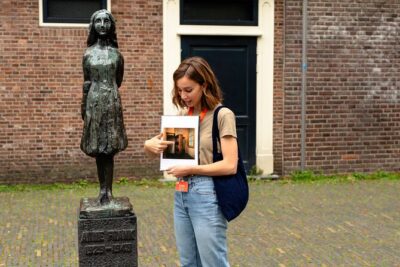
Anne Frank’s Story – Guided Walking Tour through Amsterdam
Read our review →
Life of Anne Frank and World War II Walking Tour
Read our review →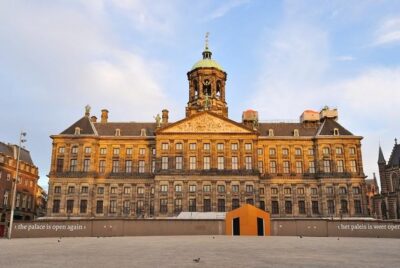
Absolutely Amsterdam – the Essential Introductory Walking Tour
Read our review →

Anne Frank Walking Tour – Guided in EN/DE/IT/ES
Read our review →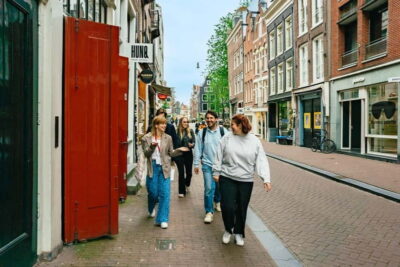
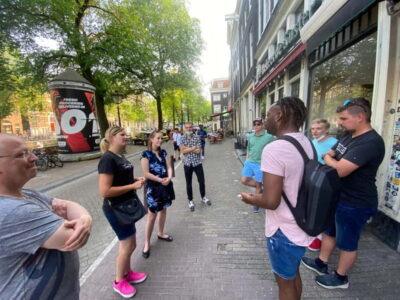
Anne Frank Walking Tour Amsterdam Including Jewish Cultural Quarter
Read our review →Browse the lists this tour appears in