
Reviewed · ROTTERDAM TOURS
Rotterdam Architecture: Centre and South Bank with watertaxi
Rotterdam Architecture: Centre and South Bank with watertaxi is interesting because you get to read the city like a design story. You start with an architect guide on foot, then you switch to a speedboat watertaxi ride for the kind of river views you cannot fake from the street.
I like how the route strings together big-name buildings and public spaces in a way that makes the city’s choices feel logical, from the post-war modernist shopping area to the Markthal’s indoor-market atmosphere. I also like that the tour is only 3 hours, but still includes the core Rotterdam icons, like the Cube Houses, plus the Erasmus Bridge crossing.
One possible drawback to plan for: it is a 4-kilometer walk, and luggage or large bags are not allowed. If you are traveling with extra stuff, you will want to travel light and wear comfortable shoes.
Key highlights you’ll actually feel during the tour
- Architect-led explanations that connect what you see to culture and traditions, plus future plans
- Central Station start makes the first minutes easy, with a clear meeting spot outside under the clock
- Lijnbaan, Timmerhuis, St. Laurens, Markthal, and Cube Houses in one tight loop of Rotterdam icons
- Watertaxi speedboat ride across the river for a fast, fun change of pace
- Erasmus Bridge views from the water, with the harbor-to-city feel you miss from land
- South Bank semi-island stops like Hotel New York and the Fenix buildings, paired with great café and restaurant energy
Why Rotterdam’s Architecture Tour Works So Well
Rotterdam is one of those cities where architecture is not background noise. It is the main character. This tour makes that clear fast, because you walk a curated line through key districts, then you cut to the river for the view that explains why these buildings were built the way they were.
The biggest win is the architect guide approach. You are not just hearing names and dates. You are getting an architect’s way of looking: how shapes, materials, and uses fit the city and how plans keep evolving. That matters in Rotterdam, because so much of what you see reflects rebuilding, modernization, and a strong belief that design can steer the future.
You also get the thrill factor without wasting time. The speedboat portion is short, but it changes your perspective immediately. You see how the city stacks up along the river, and then the South Bank stops make more sense because you understand the geography, not just the facades.
More Rotterdam tours and day trips:
- Rotterdam: Harbor Sightseeing Cruise
★ 4.3 · 7,599 reviews - Rotterdam: 1-Hour Sightseeing Splash Tour
★ 4.5 · 3,299 reviews - Rotterdam: Rotterdam Zoo Blijdorp Entry Ticket
★ 4.6 · 2,754 reviews
Meeting at Central Station, Then Getting Oriented in Minutes
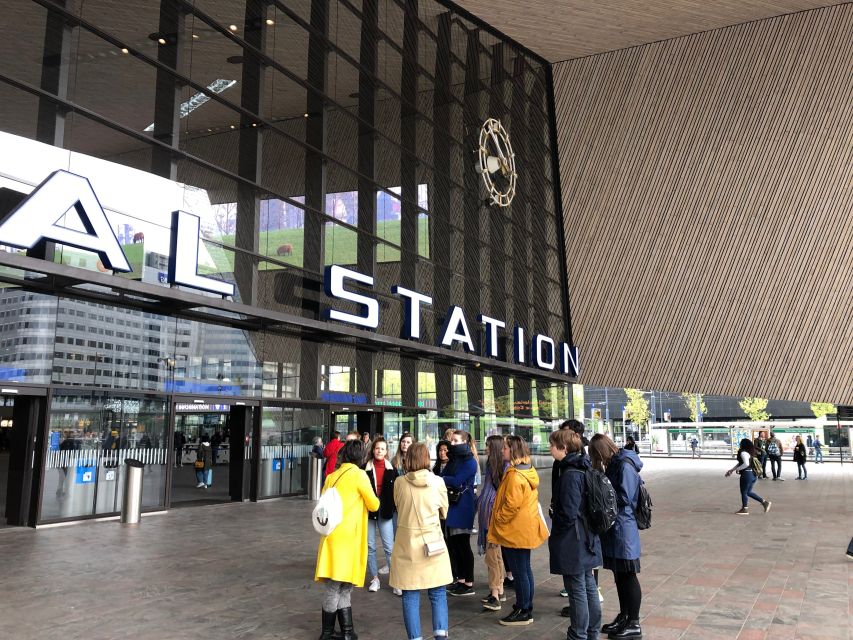
Your tour starts at Central Station in Rotterdam. You meet your guide under the station clock, outside next to the main entrance. That kind of meet-up matters more than most people think, especially in a large station. You do not waste energy hunting.
From there, the group heads out on an architecturally iconic route through the city center. Even if you arrive in Rotterdam with a half-formed list of what you want to see, this start helps you get your bearings quickly and sets the rhythm for the rest of the walk.
A key practical detail: the tour is a 4-kilometer walk in total. That is not an all-day grind, but it is enough walking that you should treat it like a real outing, not a casual stroll. Comfortable shoes are a must.
Also, plan your carry-ons. Luggage or large bags are not allowed, so bring only what you can handle on your own. If you packed heavy, that is the one part of the experience that can feel like a constraint rather than a benefit.
The Walk Through Rotterdam’s Best Known Modern and Traditional Icons
This is not a random grab bag. The route moves through places that represent different sides of Rotterdam, including post-war modern shopping, major architectural landmarks by famous firms, churches, and market culture.
Lijnbaan: Post-war modernism you can feel under your feet
The tour passes the Lijnbaan, described as a post-war modernist shopping area. For me, this is one of the best “warm-up” stops because it sets a tone. You start seeing how Rotterdam’s center shaped itself around movement, shopping life, and a modern streetscape mindset.
When your guide explains it, you will likely look at more than storefronts. You start noticing urban design choices: how wide the public space feels, how the street functions as a corridor, and how a shopping street became a statement about the city’s identity after major disruptions.
Same city, a different kind of day out:
- Rotterdam: Euromast Lookout Tower Ticket
★ 4.4 · 2,549 reviews - Rotterdam: Pancake Cruise
★ 4.4 · 1,986 reviews - From Amsterdam: Rotterdam, Delft & The Hague Guided Day Tour
★ 4.2 · 1,765 reviews - Rotterdam: Kinderdijk UNESCO World Heritage Entry Ticket
★ 4.6 · 1,477 reviews
Timmerhuis (OMA): Big architecture, clear real-world impact
Next up is Timmerhuis, designed by the world-famous architects at OMA. This is where the tour becomes more than sightseeing. Timmerhuis is a “read it like architecture” stop, because your guide can point out design intent and how a major office building influences the area around it.
This part is valuable even if office architecture is not your thing. It helps you understand how Rotterdam uses signature projects to anchor districts. You will likely leave thinking about the city as an ongoing design conversation, not a set of fixed monuments.
St. Laurens Church: a different rhythm among the modern icons
Then you come to St. Laurens Church. Even with a mostly modern architecture route, the inclusion of a church adds texture. It gives you a different scale and a different kind of historic anchor, so the modern stops do not feel like they float in space.
For an architect-led tour, this church stop matters because it shows how older structures and newer design agendas coexist. You start noticing contrasts in form and in how people orient themselves around spiritual and civic landmarks.
Markthal: Rotterdam’s indoor market energy
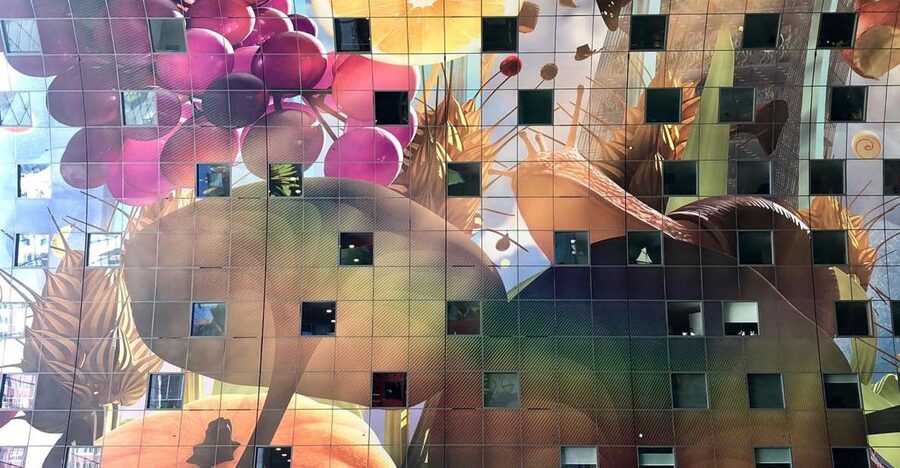
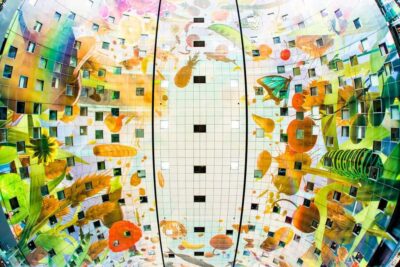
One of the most memorable stops is the Markthal, described as the most unique indoor market in Europe. Even without getting lost in superlatives, the concept here is easy to understand: you are shifting from open streets to a covered market environment where food culture and architecture meet.
This is the kind of place where a guided explanation helps you look around. You get a sense of how markets function as social spaces, not just places to buy things. If you enjoy architecture that supports daily life, you will appreciate how the Markthal is part of the city’s routines.
Cube Houses: a design idea that turns into a destination
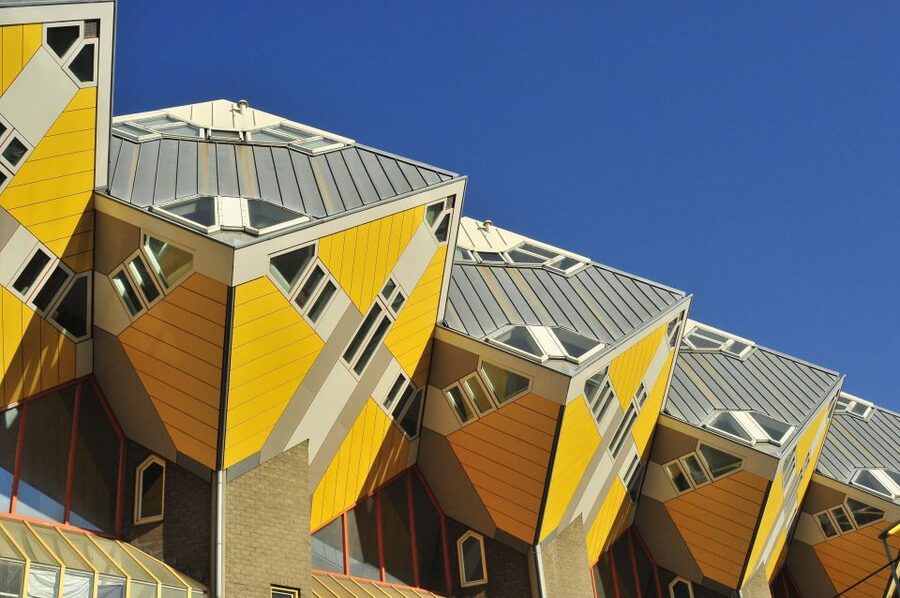
Finally, the walking part brings you to the Cube Houses. These homes are famous for a reason, but the value of the tour is that you do not just stare at them as a novelty. Your architect guide helps you connect the quirky geometry to the larger idea of Rotterdam’s design identity.
I love this stop because it changes the way you think about form. It is playful, but it also demonstrates a design logic. You start seeing how Rotterdam uses bold shapes to communicate ideas and create places people want to visit, photograph, and talk about.
From Street-Level Views to the River: Watertaxi Speedboat Time
The tour transitions to the waterfront, and that shift is the secret sauce. On land, you are reading buildings. On the water, you read spacing, alignment, and the city’s relationship to its harbor.
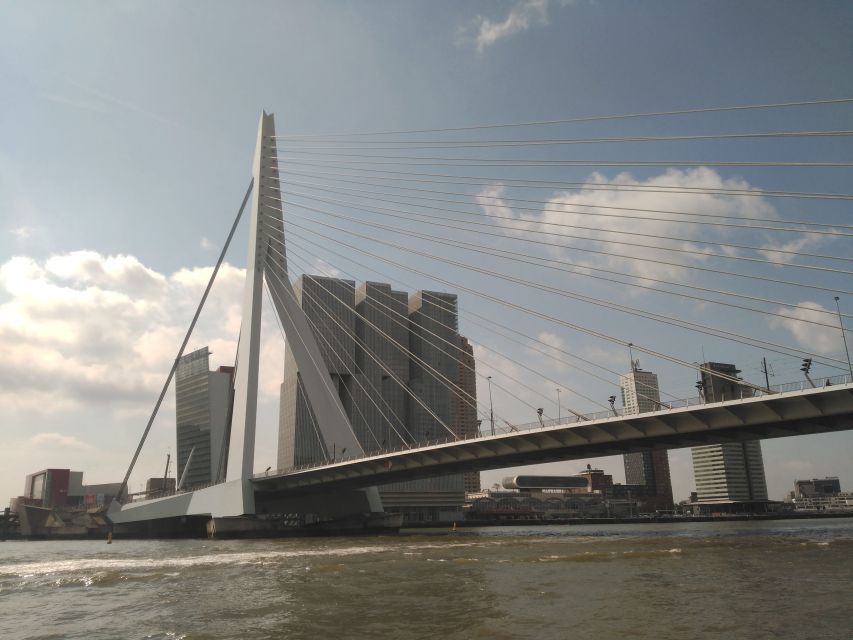
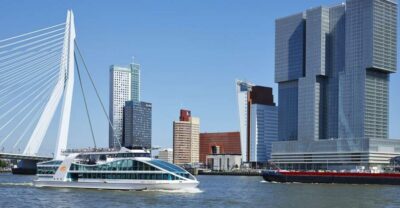
You board a watertaxi speedboat and head to the South Bank. One big visual highlight is passing under the Erasmus Bridge, which is the kind of landmark that looks good from anywhere, but hits differently when you see it as part of a living route along the water.
This part is also thrilling in a practical way. It is not long, but it breaks the walking rhythm, and it gives you a moving perspective. Even if you think you already know what the Erasmus Bridge is, the angle from the river can surprise you.
For most people, this is when the architecture tour stops feeling like a lecture and starts feeling like a real experience. You can look back at what you walked through and understand the city’s layout as a whole.
South Bank Highlights: Modern Moves on a Former Harbor Area
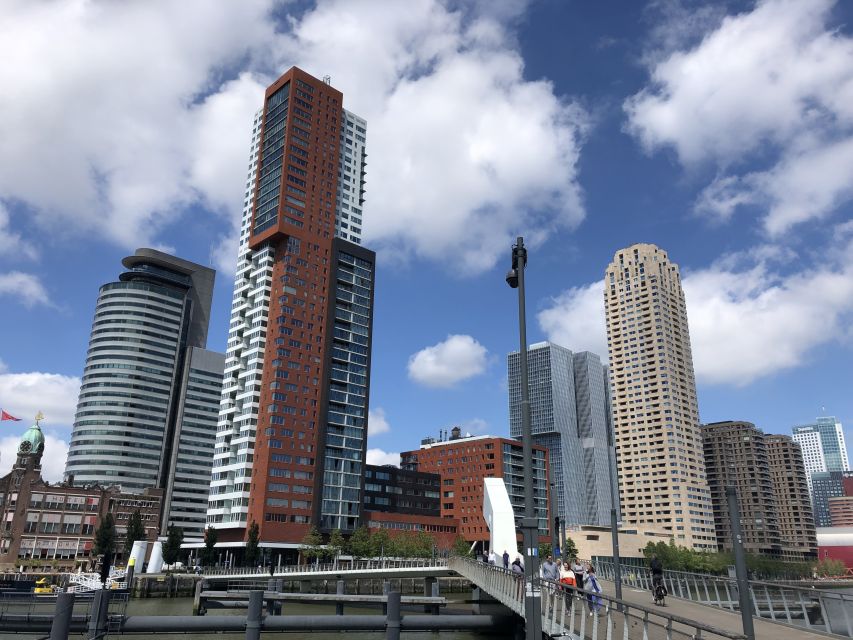
When you arrive at the South Bank, the tone shifts again. The tour describes the area as a former harbor area that is now a must-see semi-island with high-end architecture plus some of the best cafés and restaurants in Rotterdam.
That matters because it explains what you are looking at. This is not just a photo stop. It is an area where architecture supports leisure, dining, and an active public realm. Even if you do not plan to eat during the tour, you can feel that lifestyle vibe as you move between highlights.
Here are the stops you can expect on the South Bank side:
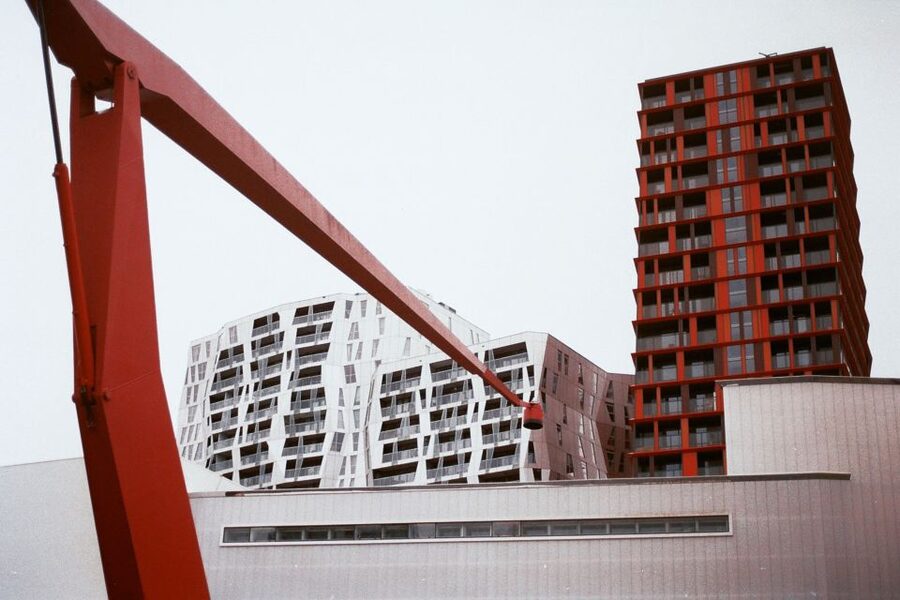
Rotterdam OMA building: the design thread continues
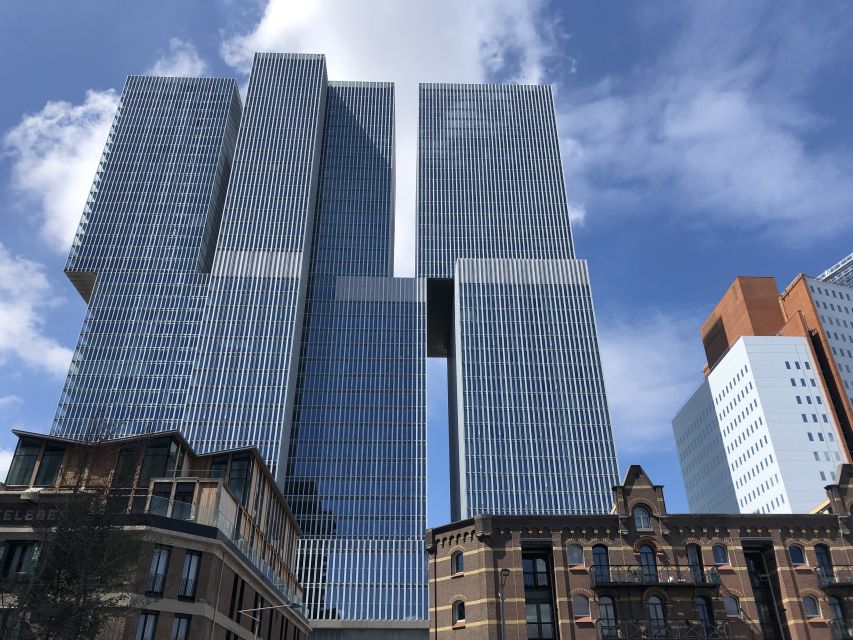
The tour includes another OMA building on the South Bank. Seeing OMA twice is useful because it helps you compare how the firm’s style reads in different contexts. It also reinforces the idea that Rotterdam’s architectural identity is not one-off. Big design names show up in multiple parts of the city.
Hotel New York: historic atmosphere next to modern momentum
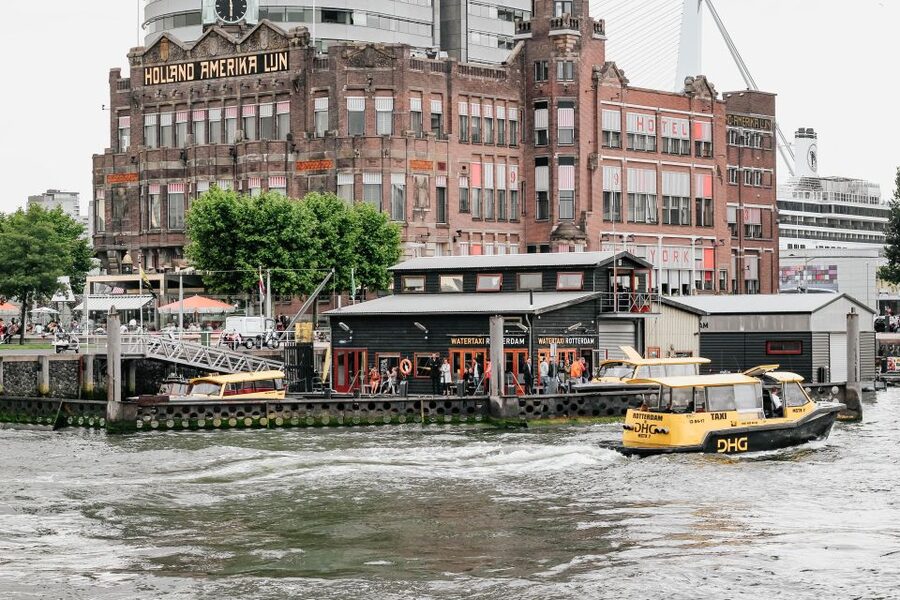
You will also see the historic Hotel New York. Including a historic hotel in an otherwise modern route gives you emotional balance. It reminds you that even as Rotterdam pushes forward, it keeps touchpoints that help the city feel rooted.
A guided explanation helps you notice how historic landmarks function as anchors. They give people a sense of continuity, even while the surrounding architecture evolves.
Fenixloods and Fenix Food Factory: where industrial meets present-day
Finally, you visit the Fenixloods and Fenix Food Factory. These are listed as specific highlights, which suggests they are meaningful stops beyond just a pretty facade.
What you should take from these places is how Rotterdam repurposes structures and uses them for modern public life. Markets, dining, and design-oriented spaces are a theme here, and the Fenix area fits that idea well.
And because the tour includes time on the water earlier, the South Bank stops feel more connected. You understand why these buildings sit where they do, and how the river side becomes part of the city’s daily attraction.
Tania’s guiding style, and why a real architect guide matters
A review specifically calls out a guide named Tania, and what stands out is the way the explanation goes beyond surface facts. She explains the architectural highlights well, and she also shares interesting outlooks on future developments. She even gives recommendations and sightseeing tips for the rest of your visit.
That type of guidance is hard to replicate with a generic audio guide. An architect guide can point out what you should be noticing at each stop, then connect it to what Rotterdam might do next. And the personal recommendations at the end are practical. They save you the work of trying to figure out where to go once the tour is over.
If you like design, cities that plan for the future, and guides who can explain how buildings function in real life, this tour hits your interests directly.
Price and value: what $82 buys you in real terms
The tour is listed at $82 per person for a 3-hour experience. The price includes the water taxi fee and the tour guide.
That inclusion is where the value comes in. Many architecture tours are “walk only,” then you pay extra for separate transport or views. Here, the river crossing is part of the package, so you get the Erasmus Bridge perspective without turning it into a separate plan you might postpone or skip.
Drinks are not included, so if you want a café stop afterward, plan to pay for that on your own. Also, the tour lasts long enough that you should think of it as a structured outing. If you prefer very flexible schedules, you might find the fixed timing less forgiving than self-guided sightseeing.
Still, for architecture lovers who want both street and river views in one go, $82 looks like a fair exchange for guided interpretation plus the watertaxi component.
Who this tour is for, and who should reconsider
This experience fits best if you:
- Like architecture explanations from an architect guide, not just quick photo stops
- Want a compact highlight route that includes major icons like Cube Houses and the Markthal
- Enjoy river views and want the Erasmus Bridge from the water, not just from a viewpoint on land
Consider skipping it if you:
- Need a low-walking plan. It includes a 4-kilometer walk
- Are traveling with large bags, since luggage or large bags are not allowed
- Have visual accessibility needs, because it is listed as not suitable for visually impaired people
On wheelchair use, the info is split: it is listed as wheelchair accessible, but it is also listed as not suitable for people with mobility impairments. Since the tour still includes a 4-kilometer walk, you should think carefully about whether you can manage that movement comfortably.
Should you book Rotterdam Architecture: Centre and South Bank with watertaxi?
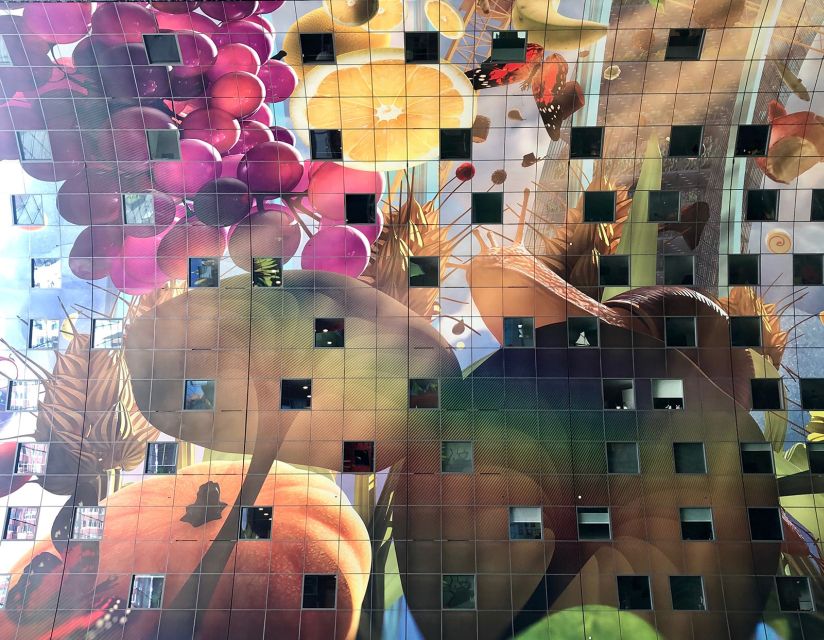
Book it if you want the fastest way to understand Rotterdam’s design language in one afternoon. The pairing of a walking route through major architecture stops with a watertaxi ride under the Erasmus Bridge is a strong combo. It keeps your eyes busy and your brain engaged, because each segment builds on the last.
Skip it if you dislike set routes, do not want to walk 4 kilometers, or you need a tour format that suits mobility and visual accessibility needs beyond what this one specifies.
If your travel style is “see the highlights, but make them make sense,” this tour is a smart use of time in Rotterdam.
FAQ
How long is the Rotterdam architecture tour?
The tour duration is 3 hours.
Where do I meet the guide?
Meet your guide under the station clock, located next to the main entrance, on the outside.
What is included in the price?
The price includes the tour guide and the watertaxi (water taxi) fee.
Is the tour guide available in English?
Yes, the live tour guide speaks English.
Is there walking involved?
Yes. The tour includes a 4-kilometer walk.
Can children participate, and what do they pay?
Children under age 12 can participate for free. The listed price covers only the speedboat (water taxi) fee.
Can I cancel and how does pay later work?
You can cancel up to 24 hours in advance for a full refund. You can reserve now and pay later, keeping your travel plans flexible.
Recently reviewed around Rotterdam
- Rotterdam: City Highlights Guided Bike Tour★ 4.8 · 112 reviews
- Rotterdam: Markthal Tour, Meet & Taste, and Het Witte Huis★ 4.3 · 36 reviews
- Rotterdam Private 2-Hour Food Tour with Tastings★ 4.3 · 12 reviews
- Rotterdam: De Rotterdam, Cube Houses, Watertaxi and Markthal★ 4.7 · 112 reviews
- Rotterdam: Food Tour by Bike★ 4.8 · 31 reviews
- Rotterdam Center: Cocktail Bar Walking Tour – Self Guided★ 2.9 · 9 reviews
- Discover Rotterdam: Classic Highlights Bike Tour by a Local★ 5.0 · 3 reviews
- Rotterdam: National Museum of Photography Entrance Ticket★ 3.8 · 24 reviews
Rotterdam Tours, compared.

Kinderdijk UNESCO World Heritage Entry Ticket
Read our review →
Browse the lists this tour appears in