
Reviewed · CYCLING TOURS
Amsterdam in World War Two Cycle Tour
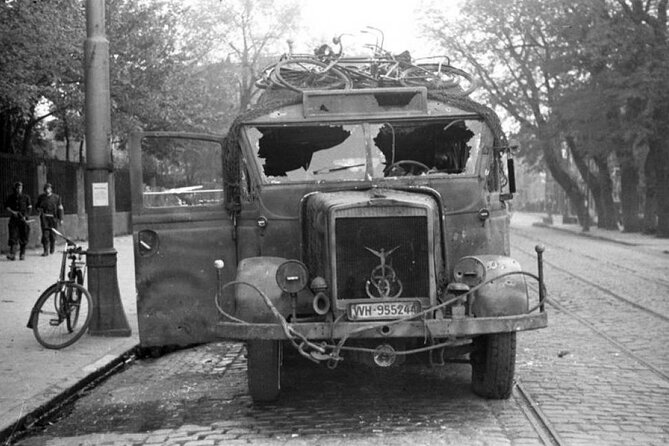
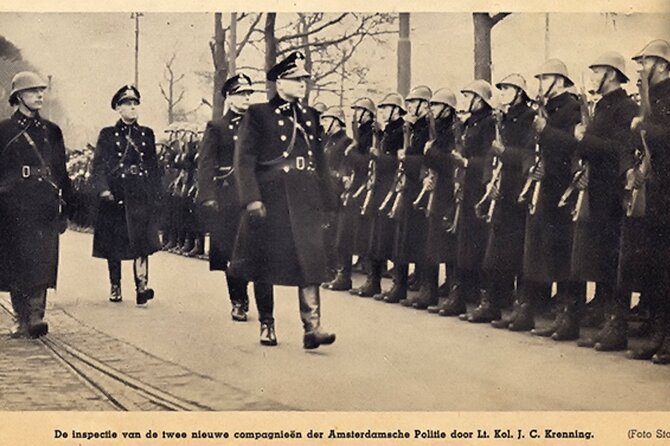
This is interesting because you do WWII history in a way Amsterdam was built for: by bike, moving street to street at human speed. The guide uses then and now photos so you stand on real corners and see what used to happen right there, not just read about it.
Two things I really liked: the tour keeps the group to six people max, so you can ask questions without yelling, and it gives you access to parts of Amsterdam South that cars do not easily reach. One thing to consider is that the topic is heavy, so if you want a light day out, this may feel intense.
Key highlights worth your attention
- Six riders max for a calmer, more personal pace and more time at each stop
- WWII photo matching that shows today’s street against its wartime look
- Bike access to neighborhoods outside the typical center crush
- Named sites tied to real people, from the Frank family to Dutch resistance networks
- Safe, structured ride with a planned route and stops so you do not feel rushed
- A short coffee and restroom break at Roelof Hartplein
Rolling Out From Tesselschadestraat: How the Bike Tour Feels in Real Life
I like this format because it beats the usual museum pattern of standing still and listening. On this tour, you ride between places that were connected in wartime, then you pause long enough to understand why they mattered. It is still a guided experience, just one that uses Amsterdam’s bike-friendly streets instead of buses.
You meet at Tesselschadestraat 1, 1054 ET Amsterdam, and the ride runs about 2 hours 30 minutes to 3 hours 10 minutes. Start time is 11:00 am, and it is offered in English with a mobile ticket. Average bookings show it tends to be reserved in advance, so if you want a specific day, book early.
A practical note that matters: because it is a bike tour, you should come ready to ride for the full loop. If you are used to long walking days but not biking, plan to take it easy with your cadence and ask the guide to slow down when needed. The route is designed for cycling, and that is part of why you can reach quieter corners that most people miss.
More bike and e-bike tours in Amsterdam:
- Amsterdam: Guided Bike Tour City Centre in EN/DE/FR/ES
★ 4.7 · 4,187 reviews - Countryside Bike Tour from Amsterdam: Cheese, Clogs & a Windmill
★ 5.0 · 1,485 reviews - Amsterdam: Hidden Gems & Highlights Guided Bike Tour
★ 4.8 · 1,404 reviews
Price, Time, and Why This Costs About What It Should
At $66.09 per person, you are paying for a guided small-group experience that covers a lot of ground in a short window. The value here is not just the bike ride. You get a tight route with multiple WWII locations and historical context delivered on-site, plus the then and now photo work that turns street names into actual scenes.
Is it more expensive than a self-guided walk? Yes, but it saves you the hard part: figuring out what each building used to be, why that corner matters, and how events connected across neighborhoods. A museum can be broad. This tour is focused, and that focus is part of the price justification.
You also avoid the “everyone stops in the same photo spot” rhythm. With a group size capped at six, the tour feels more like a conversation while you move, not a lecture line.
Victorieplein to the 1943 Raid: Understanding the “Judenaktion” Where It Happened
The tour’s story kicks off near Victorieplein, the Victory Square that was then called Daniël Willinkplein. On June 20, 1943, Amsterdam saw a major raid tied to what the Nazis called Judenaktion. Standing near the foot of the old skyscraper area, the guide explains how Jewish residents were arrested in large groups and transported onward.
What I think you will appreciate most here is the clarity of the sequence. You hear how arrests happened with help from Dutch police units, and how the process moved people through places like Olympiaplein for registration before they went east to Westerbork. The bike format helps because you can link the geography quickly, instead of treating each site as a separate fact.
You are not just looking at the modern streets. You are learning the “system” behind the cruelty, which makes later stops feel less random.
Merwedeplein and Anne Frank’s Corner: From the Secret Annex to a Real Bookshop
Next comes Merwedeplein 37-II on the third floor by American counting, presented as the Frank family home. The guide connects this address to the summer of 1942, when Otto Frank took his family and acquaintances to Het Achterhuis, the Secret Annex on the Prinsengracht, where Otto Frank’s company was located.
This stop is powerful for a simple reason: you can see how close famous history sits to normal street life. There is a statue commemorating Anne Frank on Merwedeplein, and the surrounding area is recognizably everyday. That contrast is not gentle, but it is honest.
Around the corner on Waalstraat, you also visit the area linked to the publication of Anne Frank’s diary. The Jimmink bookstore is described as having sold the first edition of Het Achterhuis, and the tour notes that Otto Frank bought the diary for his daughter there. You are literally walking past the kinds of places people remember from daily life, only now they carry an added layer of meaning.
Drawback to keep in mind: if you have seen a lot of Anne Frank related content already, you may know the broad story. Still, the address-level detail and the street-level context are what make this stop feel more grounded than a standard overview.
Same city, a different kind of day out:
- Amsterdam Classic Saloon Boat Cruise with Drinks and Cheese
★ 5.0 · 31,825 reviews - Amsterdam Luxury Canal Cruise + Unlimited Drinks & Bites option
★ 5.0 · 30,518 reviews - Amsterdam: Heineken Experience Ticket
★ 4.6 · 30,055 reviews - Amsterdam: Rijksmuseum Entry Ticket
★ 4.7 · 25,535 reviews
Tilex Bar on Waalstraat 48 and the Small Details That Hurt
At Waalstraat 48, opposite Merwedeplein, the tour points out what is now Café Blek. During the war it was Tilex Bar, tied to the story of Tilly and Lex van Weren, or “Lex van Weren” in the tour’s framing.
This is one of those stops where the tour’s approach matters. The guide shares a specific human detail: Lex van Weren survived Auschwitz because he had to play his trumpet at executions. It is a brutal fact, and it lands differently when you hear it standing across from a café where people now eat and drink without thinking about 1940s terror.
If you are sensitive to graphic or emotionally heavy facts, pace yourself here. Ask the guide to explain slowly, and take a moment before you move on.
Cornelis Troostplein 23 and the PBA Barracks: Occupation Infrastructure, Not Just Occupation
The ride then moves to Cornelis Troostplein 23. The tour explains that this place once held the PBA-baracks. Before the war it had been called a peace parish, and the Catholic complex included convents and a school.
In spring 1942, the guide describes how the chief of the Sicherheitsdienst (SD) or Gestapo, Rauter, inspected the PBA and met Reichsführer-SS Heinrich Himmler at Museumplein. That pairing of names and places helps you understand that occupation did not float in the clouds. It was built into local sites, offices, and military structures.
A small but important takeaway: this tour treats buildings as actors. A square, a barracks, and an office are not neutral. They become parts of the machine.
Museumplein’s Stronghold, Jewish Emigration Offices, and the Flak Bunkers
Now you shift to Museumplein, where the Germans transformed the area into a stronghold. From the concert hall facing position, the guide walks you through how different buildings were used.
The tour points out that houses on your left were occupied by German offices. The guide gives examples, including that the former United States consulate building housed the Zentralstelle für Jüdische Auswanderung, described as a central Jewish emigration office. You also hear about the Ortskommandantur and the Feldgendarmerie buildings next door. The broader message is that the occupation bureaucracy covered both “paper” work and enforcement.
Then comes the wartime geography lesson that is hard to grasp on foot. In the square in front of these buildings was the IJsclubterrein, the Amsterdam skating club area. The Germans built bunkers and anti-aircraft (Flak) batteries there. After WWII, the bunkers were blown up, but you are still standing on the edge of what those structures once protected.
You also learn where the NSB HQ Amsterdam sat next to the concert hall. Whether you come in knowing Dutch collaboration history or not, the stop helps connect occupation to local institutions, not only German personnel.
Roelof Hartplein Coffee Stop and the Resistance Photo Shop
At Roelof Hartplein, the tour includes a short break at Café Wildschut for coffee and restroom use. It is a small pause, but it matters because it lets you reset before the next stretch of resistance and retaliation stories.
After the break, you stop near the Roelof Hartstraat area, described as having a photo shop by the library building. During the war, the Dutch resistance used this store to develop photos, including unique images of the first roundups of Jews in Amsterdam by the SD/Gestapo and German police.
That detail is a reminder that resistance was not only explosions and gunfire. It was also documentation, and sometimes simply preserving the truth.
The tour also notes a small monument remembering Jews taken from this neighborhood. It is not a big memorial, and that is part of why it feels real. Not every remembrance is huge. Some are small and close to home.
Beethovenstraat and Apollolaan: Executions, Retaliation, and Street Names That Changed
Next, the route comes to the corner of Beethovenstraat and Apollolaan. At the end of October 1944, the tour says that Herbert Oelschlägel, an SS officer and Sicherheitsdienst or Gestapo agent, was executed by a Dutch resistance member near number 6. (The guide emphasizes that many house numbers are still the same as during WWII.)
In retaliation, the SD or Gestapo burned down two houses and executed 29 resistance fighters. That kind of cause and effect is why the tour keeps its stops close together. It helps you see how quickly the occupation responded, and how high the price was.
The tour also notes that this street was called Euterpestraat at the time. That fact can be easy to ignore, but it matters. When streets keep their location while changing their names, memory gets harder. The guide pulls it back into focus.
You also hear about Gerrit van der Veen, described as the leader of an important Dutch resistance group.
SD Headquarters, Hausraterfassungsstelle, and the RAF Typhoon Strike
The route then heads to the corner of Memlingstraat and Rubensstraat, where the tour identifies two major Nazi oppression organizations.
One was the SD-HQ Amsterdam, described as an SD Aussenstelle under Willy Lages. The other was the Hausraterfassungsstelle, associated with stealing the possessions of deported Jews, described as part of the Zentralstelle für Jüdische Auswanderung. The leader of the Hausraterfassungsstelle is named as a Dutch collaborator, Henneicke.
This is the stop where you learn how “economic loot” can be framed as administrative process. It was not only about removing people. It was about stripping what they carried, then converting it into Nazi profit and control.
The story continues into November 1944, when the resistance requested that the Royal Air Force attack these headquarters via a secret radio message. The tour highlights that the main aim was to destroy SD/Gestapo files. That job is credited to Group Captain Denys Gillam DSO, DFC, AFC, leader of 149 (Typhoon) wing.
On the map in your head, it helps to know that the resistance wanted information erased. Air raids were not just military strikes. They were also attempts to remove evidence and break the administrative chain.
The tour then points you to a safehouse on the corner of Rubensstraat and Gerrit van der Veenstraat, and it specifically mentions Stolperstein as a clue system for the address. There is also a clear betrayal detail: in June 1944, the address was betrayed to the SD/Gestapo by a female informant, called V-Frau.
Olympiaplein Registration, the Sports Complex, and the Westerbork Connection
Now you ride toward Olympiaplein and Parnassusweg. This square is tied to how people were processed after the June 1943 raid. The tour explains that Jews arrested during the raid at the sports complex were registered by the SD/Gestapo with help from Jewish camp police sent from Westerbork.
That detail can be uncomfortable, and the guide does not pretend it is easy. But it gives you a fuller picture of how the Nazis used coercion and local forced structures at multiple levels.
If you are trying to understand the war beyond “good guys versus bad guys,” this stop is a turning point. It shows how victims were pulled into systems even when they had no control over what was happening to them.
Valeriusplein and the Amsterdam Lyceum: Luftwaffe Headquarters in a School Building
Next is Valeriusplein and the Amsterdam Lyceum. The tour states that this school building was used as the headquarters of the Luftwaffe at the end of the occupation.
Again, it is not abstract. It is the same building type that would have been part of everyday life in normal times. That is one reason this tour hits harder than reading wartime summaries.
When a school becomes an HQ, you feel the occupation’s reach into education and daily routines.
Queen Emma at Emmalaan: Small Acts of Defiance You Can Actually See
The next stop is the Statue of Queen Emma on Emmalaan / Prins Hendriklaan. The tour points out that in the summer of 1940, people placed flowers at the statue as a form of defiance against the German occupiers.
That is one of my favorite kinds of history moments because it is simple. It reminds you that resistance also looked like public gestures, not only hidden meetings. You can almost imagine how risky it must have felt, because the act itself was visible.
The tour adds another name here too, connecting back to resistance photography. Charles Breijer is mentioned as a resistance photographer, and the guide shares that Breijer took a photo in 1944 of a guard at the headquarters of the Kriegsmarine.
Ending With the Last Day of the War: May 7, 1945 and the Return Through Vondelpark
At the end, the tour covers dangerous situations that arose on May 7, 1945, right around the surrender of German forces, when frustrations spilled into violence with resistance fighters. The guide directs you to a monument remembering victims of a shooting from that last day.
After that, the tour ends back where it started the walking portion, guiding you through Vondelpark to Leidseplein.
This finish matters because it prevents a neat “war ends, story ends” feeling. The end of the occupation was not clean or calm. You see how quickly violence can follow shifts in power.
What Makes This Tour Special for Your Amsterdam Plan
If your Amsterdam plan includes Anne Frank sites and WWII museums, this bike tour is a strong complement because it focuses on the neighborhoods behind the fame. It also gives you a different kind of memory tool: the city itself, seen through then and now photos.
You will also appreciate the guide style. The reviews you can rely on here are consistent on one point: Rudy is praised for being friendly, very well prepared with archives and vintage photos, and for linking stories to the exact street you are on. In one instance, the experience was delivered by Rudy and Peter, and that dual-guide format likely suits group questions even better.
Also, the pace is structured. There is that planned coffee and restroom stop at Roelof Hartplein, and the route is designed so you are not scrambling for directions while trying to learn.
Who Should Book This, and Who Might Want to Skip It
This is a great fit if you:
- Want WWII history in the real streets, not only in museum rooms
- Enjoy bikes and prefer active touring over buses and long walks
- Like small groups and direct Q and A with a local guide
- Care about resistance stories, occupation bureaucracy, and how events connect across places
You might want to skip it if you:
- Do not want a heavy emotional theme in your day
- Prefer a purely general sightseeing ride with lighter facts
- Are not comfortable biking for about 2 hours 30 minutes to 3 hours 10 minutes
Should You Book the Amsterdam WWII Bike Tour?
I think you should book it if you want a focused WWII story that feels anchored in place. The then and now photo matching is the magic trick here. It turns Amsterdam streets into a living timeline. The small group size also keeps the tour human, with time to absorb details rather than race past them.
If you do book it, come with two mindsets. First, expect emotion, not just information. Second, bring your curiosity for street level history, because the tour only works when you let the city do the storytelling.
FAQ
How long is the Amsterdam in World War Two Cycle Tour?
The tour runs about 2 hours 30 minutes to 3 hours 10 minutes.
Where do I meet, and when does it start?
You meet at Tesselschadestraat 1, 1054 ET Amsterdam, and the start time is 11:00 am. The tour ends back at the meeting point.
Is the tour in English?
Yes, it is offered in English.
How big is the group?
The maximum group size is six travelers.
Do I need a ticket on my phone?
You get a mobile ticket.
What will I see during the ride?
You will cycle past multiple WWII-related locations in Amsterdam South, with stops that include places connected to the June 1943 raid, the Frank family area, resistance activities, and sites tied to Nazi offices and military use.
Is there free cancellation?
Yes. You can cancel up to 24 hours in advance for a full refund.
Recently reviewed around Amsterdam
- Amsterdam Highlights Canal Cruise with a Drink★ 5.0 · 66 reviews
- Private walking tour Amsterdam. English or Spanish.★ 5.0 · 21 reviews
- Guided Private Bar Tour in Amsterdam City Center★ 5.0 · 4 reviews
- Amsterdam Private Boat Trip With Skipper, Burger and Beers★ 5.0 · 5 reviews
- Arrival Private Transfer Amsterdam Airport to Amsterdam City Center by Minibus★ 4.5 · 7 reviews
- Private Arrival Transfer: Schiphol Airport Amsterdam★ 3.5 · 30 reviews
- The Ultimate Zaanse-Schans Private Day Trip★ 5.0 · 44 reviews
- 2-Hour Private Anne Frank Walking Tour with Drink★ 5.0 · 3 reviews
Cycling Tours, compared.
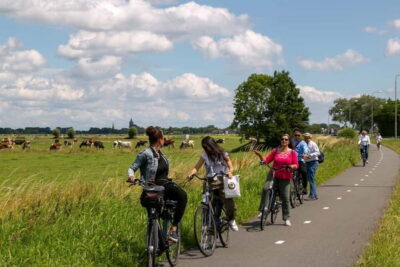
Countryside Bike Tour from Amsterdam: Cheese, Clogs & a Windmill
Read our review →
Windmill, Cheese, and Countryside E-Bike Tour
Read our review →
Browse the lists this tour appears in