
Reviewed · WORKSHOPS
Kintsugi Workshop “The art of Imperfection”
Kintsugi is interesting because it flips the usual idea of damage on its head. Instead of hiding cracks, this Japanese craft treats them like part of the story, using glue and golden leaf to turn break lines into design. In Amsterdam, you do the work yourself, in a calm room, near the city center.
I really like two things about this experience. First, you get a clear, hands-on ritual, including the symbolic plate break that signals a fresh start. Second, I love that the process is slow and careful, so your hands learn focus as you reassemble the pieces into something cohesive and beautiful, guided by Annelies, who is warm and welcoming.
One thing to think about before you book: this is a precise, hands-on activity, and the organizers ask for moderate physical fitness level. If you have strong hand or mobility limitations, it is worth considering whether you can comfortably work at the table for about two hours.
Kintsugi in Amsterdam: turning cracks into gold lines
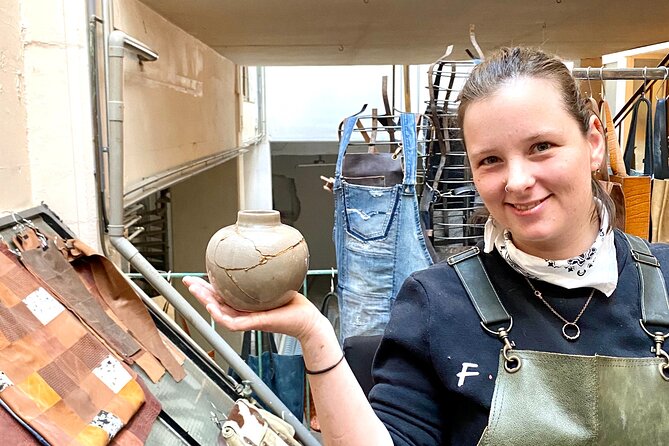
Kintsugi began in Japan centuries ago, with a practical goal: restore cracked ceramics. Over time, it became an art form that celebrates the fracture instead of erasing it, aligned with the idea of wabi-sabi, where natural materials and imperfection are part of the beauty.
What I find appealing is that this workshop does not feel like a lecture. You are not just watching someone else create. You take part in the steps, from the symbolic break through the careful fitting and finishing, so the meaning lands in your body, not only in your head.
This is also a solid pick for design-minded people. Golden seams look striking in modern interiors, but they still feel rooted in craft. That mix of traditional technique and contemporary appeal is a big part of why kintsugi has spread well beyond Japan.
What happens during the 2-hour session at Paleisstraat
The workshop runs about two hours, and it ends back where it starts. You meet at Paleisstraat 107, 1012 ZL Amsterdam, and you are back there at the end, so you can build it into a simple day plan.
Timing matters here because you want your brain fresh, not rushed. The session is scheduled on Wednesdays from 2:00 PM to 4:00 PM during the listed periods. Since you start mid-afternoon, it can pair nicely with a morning museum, a long lunch, or a relaxed stroll through the canal area before you head to the workshop.
Once you arrive, you should expect a serene introduction to set the tone. This is not just setup. The way the session starts matters because it primes you to work patiently, using attention instead of speed.
Then the practical steps take over:
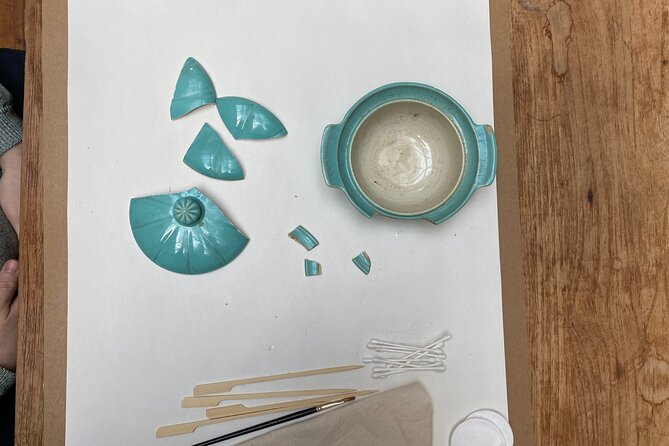
- You symbolize the start by breaking a plate.
- You reassemble the shards slowly and carefully.
- You witness the transformation as the repair takes on its final look.
By the time you finish, you are leaving with more than a souvenir. You have practiced a way of working that carries over to everyday life, like slowing down, accepting small flaws, and rebuilding what you thought was finished.
More hands-on workshops in Amsterdam:
- Amsterdam: Traditional Dutch Syrup Waffle Making Workshop
★ 4.8 · 4,093 reviews - Amsterdam Traditional Dutch Syrup Waffle Making Workshop
★ 5.0 · 960 reviews - Amsterdam: Bols Cocktail Experience and Cocktail Workshop
★ 4.8 · 666 reviews
The symbolic break: why you intentionally crack the plate
One of the most memorable parts is the symbolic break. You break a plate on purpose as part of the session, which sounds dramatic until you realize the point. It is about letting go of the old version of the object, and giving your attention to what comes next.
I like this approach because it turns a usually frustrating moment, the moment of breakage, into a creative decision. You are not just dealing with mistakes. You are using them as the start of design.
You may also notice a small practical detail: the workshop provides the items you break for the activity. That makes the experience lower stress, because you are not arriving with something fragile in your bag and hoping it survives Amsterdam cobblestones.
If you have a special ceramic at home you are attached to, you might still ask the instructor ahead of time whether you can bring a piece to repair. Based on the tone of the experience, it is the kind of question that could work, but you should confirm it directly rather than assuming.
Reassembling shards with patience, not pressure
After the break, you move into the part that feels most like craftwork and less like performance. You are guided to fit the pieces back together and reassemble the shards, step by step.
This is where the workshop becomes quietly powerful. Kintsugi demands alignment, clean edges, and steady hands. You get a chance to slow down and use fine motor skills in a very satisfying way. Even if you are not an artsy person, the method gives you structure, so you are not stuck wondering what to do next.
This stage is also where the symbolism becomes practical. You learn that a crack is not only a defect. It is a boundary, a map of what happened, and a line you can treat with respect.
And honestly, small group size helps. With a maximum of 6 travelers, you get enough attention to feel guided, but it still stays relaxed. You are working at your own pace without the pressure of a crowded class.
Golden leaf glue: where the craft becomes art
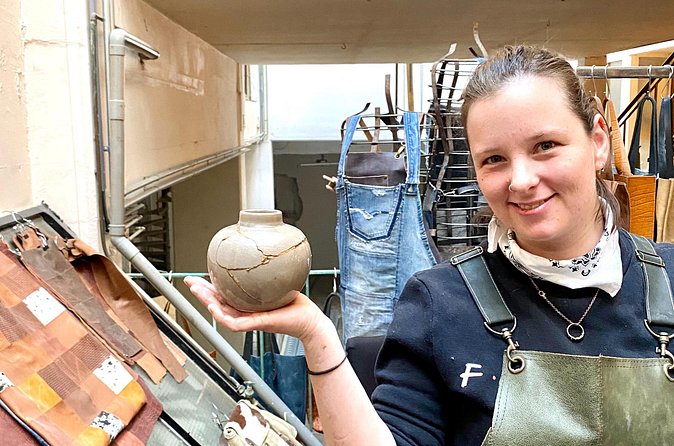
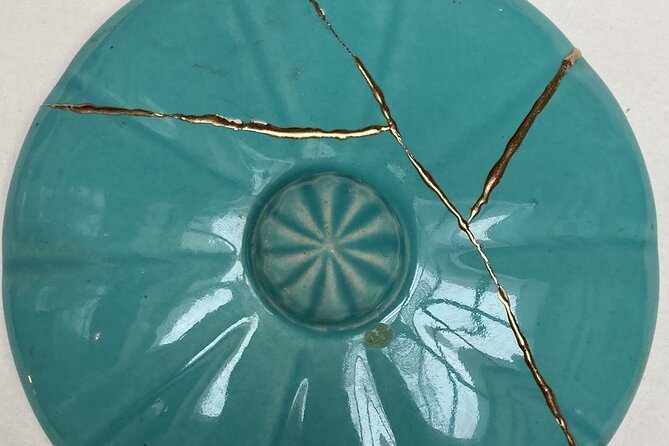
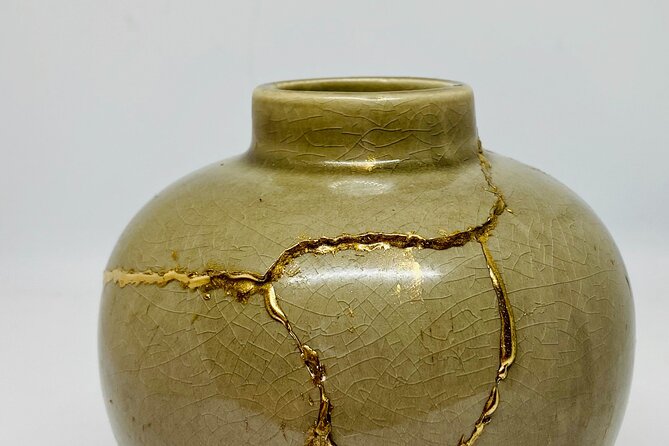
The distinctive look of kintsugi comes from the gold line. The restoration uses golden leaf glue, turning fracture lines into something that reads like intentional detail.
If you have seen kintsugi photos online, you already know it looks beautiful. What I like about doing it yourself is that the gold does not feel like magic. You see how the seams become the focal point, and how careful placement changes the final effect.
The workshop provides all materials, so you are not hunting for supplies or worrying about ratios. You show up with yourself, your hands, and your willingness to be patient for two hours.
One more practical note: coffee or tea is not included. If you are the type who needs a warm drink to settle in, you may want to grab something nearby before class. That way you can focus fully once you start working.
Same city, a different kind of day out:
- Amsterdam Classic Saloon Boat Cruise with Drinks and Cheese
★ 5.0 · 31,825 reviews - Amsterdam Luxury Canal Cruise + Unlimited Drinks & Bites option
★ 5.0 · 30,518 reviews - Amsterdam: Heineken Experience Ticket
★ 4.6 · 30,055 reviews - Amsterdam: Rijksmuseum Entry Ticket
★ 4.7 · 25,535 reviews
Why this workshop feels meaningful in daily life
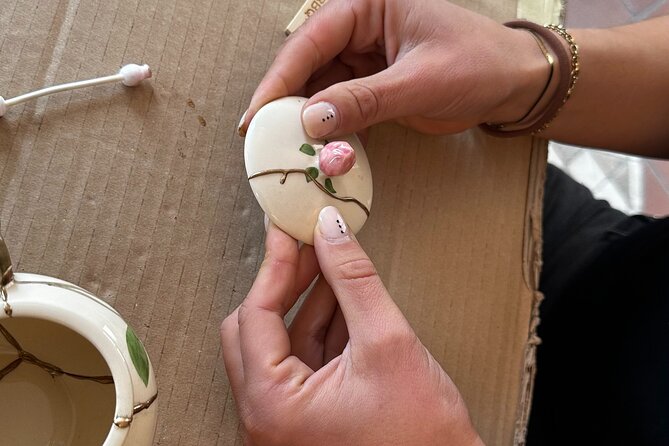
Kintsugi is not marketed as a therapy session, but it is a powerful metaphor that lands fast when you do the steps. The meaning you take away centers on resilience, letting go, and embracing new beginnings through what is left behind.
Here is what I think is most transferable:
- You learn to accept that damage is part of life, not the end of life.
- You practice attention and calm decision-making instead of rushing.
- You see how repair can create a new aesthetic, not a forced return to the past.
The workshop also frames the work as more than repair. It is about healing wounds in a symbolic way, using scars as evidence of experience rather than something to hide.
You can keep that mindset simple. For example, when something breaks at home or a plan changes, you can treat it like a chance to rebuild differently, not just a reason to be disappointed.
Getting there, group size, and the little things that matter
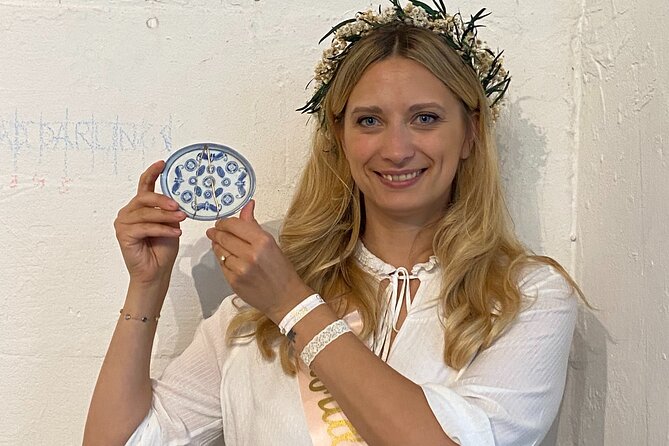
This workshop meets at Paleisstraat 107 in central Amsterdam. The location is convenient because it is near public transportation, which matters in Amsterdam where walking time can vary with crowds and weather.
You’ll use a mobile ticket, and you should plan for confirmation after booking. The session is in English, so you can focus on the technique and not on translating instructions.
Service animals are allowed, which is a considerate detail for people who need that support.
As for physical comfort, the workshop asks for moderate physical fitness. That usually means being able to sit and work for about two hours, handle small tools and pieces carefully, and maintain concentration. If that is a stretch for you, it does not mean you cannot participate, but it is a good moment to be realistic about how your body handles detailed tasks.
Price and value: is 90.11 worth it?
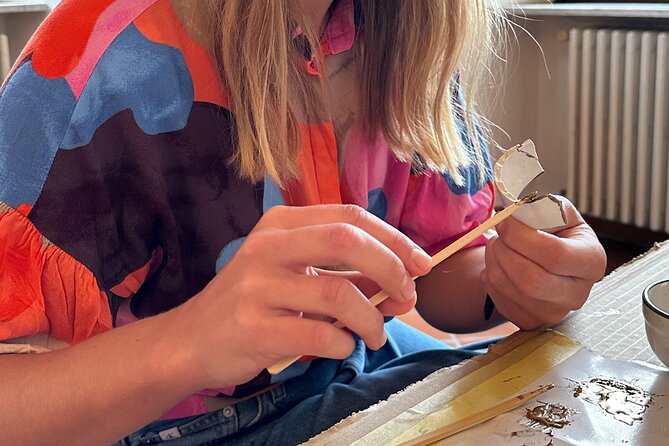
At $90.11 per person for roughly two hours, this workshop sits in the middle of what people typically pay for hands-on art in Amsterdam. The key value is that your materials are included, and you are not paying extra to access the core tools and supplies.
You also pay for instructor guidance. When the session is small, with a maximum group size of 6, you are more likely to get clear feedback and help if you get stuck. For a craft that depends on careful placement, that kind of support is not a luxury. It makes the difference between a repair that looks good and one that looks intentional.
There is also value in the outcome. Even if you do not consider yourself an artist, you will produce a finished piece through a process that is both methodical and symbolic. That is a better memory than watching a demo, and it gives you a real object you can keep.
If you are the type who loves creative activities, especially ones with a calm, mindful pace, you will likely feel the price is fair.
Who should book this Kintsugi workshop, and who might not
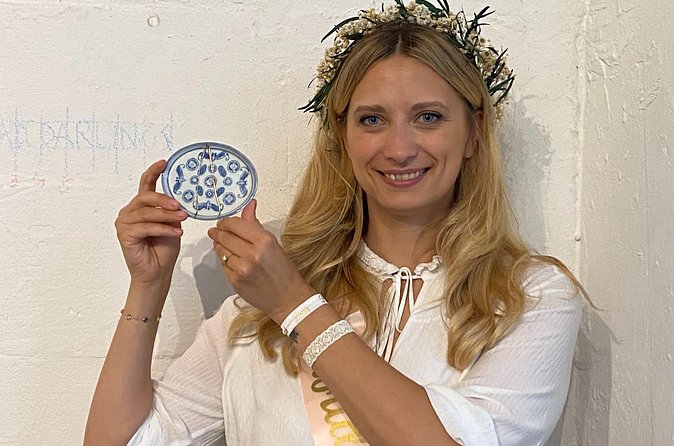
This workshop is a great match if you want:
- A hands-on craft session with a meaningful theme
- A small group experience with guidance
- A calm activity that is more about attention than performance
- A souvenir that feels personal because you made it
It is not suitable for children under 10, which makes sense because the steps are careful and hands-on.
If you dislike detailed manual tasks, or if the idea of working slowly with small parts sounds exhausting, you might find the experience less satisfying. And if you have mobility or hand limitations that make fine motor work hard, consider whether the moderate physical fitness requirement fits you.
Should you book it?
I would book this workshop if you want something different from the usual Amsterdam checklist. It is creative, quiet, and genuinely hands-on, with a guide named Annelies who sets the tone and helps you work with focus. The symbolic plate break plus the careful reassembly is exactly the kind of structure that makes kintsugi feel approachable, even if you have never tried it before.
If you are traveling with a tight schedule, the two-hour slot is manageable, and meeting at Paleisstraat 107 is easy to plan around. If you can handle precise, seated work for a couple of hours, you will likely leave with a finished piece and a mindset shift you can actually use later.
FAQ
How long is the Kintsugi workshop in Amsterdam?
The workshop lasts about 2 hours.
What language is the workshop offered in?
The workshop is offered in English.
What is included in the price?
All materials needed for the workshop are provided.
Is coffee or tea included?
No, coffee and tea are not included.
Is the workshop suitable for children?
No, the workshop is not suitable for children under age 10.
What is the cancellation policy?
You can cancel for a full refund up to 24 hours before the experience starts. If you cancel less than 24 hours before the start time, the amount paid is not refunded.
Recently reviewed around Amsterdam
- Amsterdam Highlights Canal Cruise with a Drink★ 5.0 · 66 reviews
- Private walking tour Amsterdam. English or Spanish.★ 5.0 · 21 reviews
- Guided Private Bar Tour in Amsterdam City Center★ 5.0 · 4 reviews
- Amsterdam Private Boat Trip With Skipper, Burger and Beers★ 5.0 · 5 reviews
- Arrival Private Transfer Amsterdam Airport to Amsterdam City Center by Minibus★ 4.5 · 7 reviews
- Private Arrival Transfer: Schiphol Airport Amsterdam★ 3.5 · 30 reviews
- The Ultimate Zaanse-Schans Private Day Trip★ 5.0 · 44 reviews
- 2-Hour Private Anne Frank Walking Tour with Drink★ 5.0 · 3 reviews
Workshops, compared.
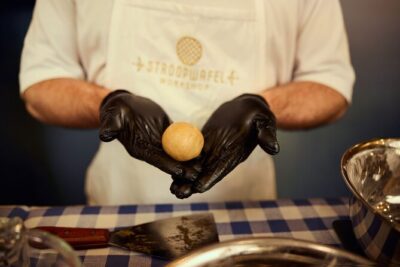
Traditional Dutch Syrup Waffle Making Workshop
Read our review →Amsterdam Traditional Dutch Syrup Waffle Making Workshop
Read our review →

3-Course Meal in Historic 1st Class Waiting Rooms
Read our review →

Amsterdam Light Festival Winter Walk with Stroopwafel Workshop
Read our review →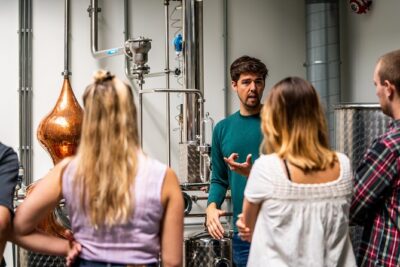
Distilling Class @ Spirited Union Rum Co. (Amsterdam)
Read our review →
Cocktail workshop @ Spirited Union Rum Co. (Amsterdam)
Read our review →Browse the lists this tour appears in