
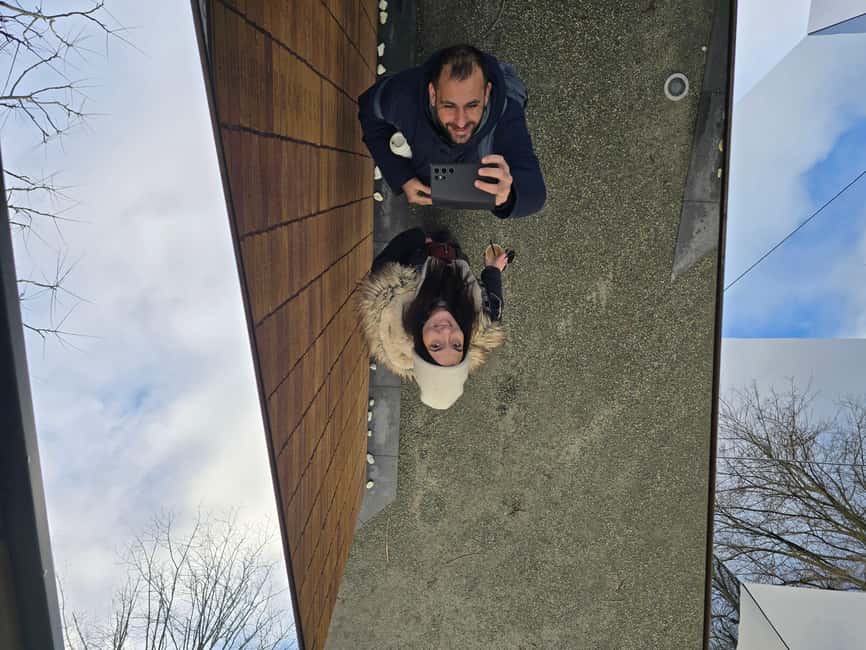
Reviewed · AMSTERDAM
Amsterdam’s Hidden Facts: 750 Years of Secrets ⭐
Amsterdam’s Hidden Facts is a fun way to experience the city without drowning in museum fatigue. This 2-hour walking tour turns 750 years of Amsterdam into a fast, human story, with the kind of odd details that make you look at buildings differently. I love the way Antonis mixes serious local know-how with warmth, humor, and just enough obsession to keep you alert and laughing.
I also love the small-group feel, max 12 people, because it means you can ask questions instead of getting swept along. The tour ends with a handwritten postcard and Dutch stamp from historic A’dam, which is a nice souvenir you can actually use. One consideration: it is a true walking tour, so bring comfortable shoes, and note that video recording is not allowed.
Key things I’d circle before you go
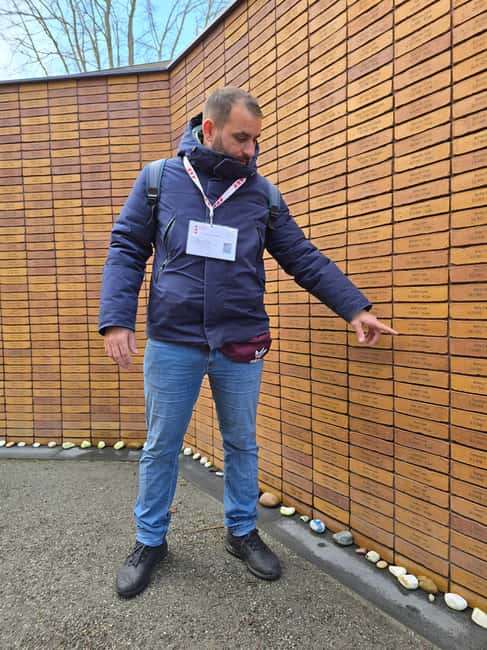
- 750 years told in real time: dams, trade, floods, freedom, and WWII, all in one compact walk
- The facts you can’t stop repeating: why houses lean, why Amsterdam is built on mud, and the meaning behind the XXX you’ll hear about
- Antonis is the engine of the tour: warm, funny, and clearly invested in helping you connect to the city
- Small group, low stress: up to 12 people, no crowded chaos to fight through
- A’dam postcard payoff: handwritten note plus a Dutch stamp you can send or keep
- A walking story, not a lecture: you’ll leave with a head full of strange-but-true bits
Starting near the Bull, and why this format works
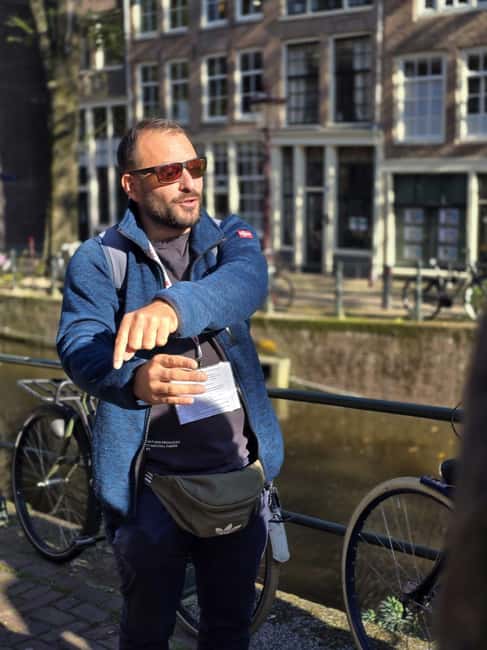
The tour meets in front of the Bull and ends right back at the same spot. That matters more than it sounds. In a city like Amsterdam, it is easy to spend your day chasing logistics, but here you get a clean start and finish, and you can plan the rest of your itinerary without stress.
The format is built for attention. It is not a bus tour and not a stop-and-stare museum day. You are walking while the story unfolds, so the information sticks better. You’ll also get the small-group advantage, max 12 guests, which usually means the guide can pace the group and handle questions without the tour turning into a one-way lecture.
English is the main language, with Greek also offered. If you are traveling solo, I like that the tour style is personal rather than scripted. One of the best signals of a good guide is how they handle individual questions without making anyone feel left out, and Antonis comes across that way.
Other things people book in Amsterdam:
- Amsterdam Classic Saloon Boat Cruise with Drinks and Cheese
★ 5.0 · 31,825 reviews - Amsterdam Luxury Canal Cruise + Unlimited Drinks & Bites option
★ 5.0 · 30,518 reviews - Amsterdam: Heineken Experience Ticket
★ 4.6 · 30,055 reviews
750 years of Amsterdam in 2 hours, paced like a story
If you only have a short window in Amsterdam, you need a guide who can compress a lot without turning it into chaos. That is what makes this walk interesting. The “750 years” promise is not just a title. You move through big eras like early settlement and water control, the Golden Age, and the shock and aftermath of World War II, but the guide ties them together so you understand the cause-and-effect.
The tour is clearly designed to avoid info dumping. You get “facts you won’t forget” kind of moments, the questions you didn’t know to ask, and the little surprises that make you notice Amsterdam’s details in a new way. It is also why you will hear themes like trust, resilience, and radical ideas. Amsterdam wasn’t only built on bricks. It was built on systems, agreements, and a stubborn belief that people can manage difficult conditions together.
By the end, you should feel like you’ve learned how Amsterdam thinks. Not just what happened, but why it mattered to the people living there at the time. That is the real value of a storytelling walk.
Water control, early settlers, and the first dam and dikes
Amsterdam’s story starts with water, even before you reach the famous sights people post online. In this tour, that early focus is a big deal, because the city’s shape and behavior make sense once you understand the water problem.
You’ll learn about the first dam and dikes, and how these were not minor engineering choices. They were survival choices. Amsterdam was built where water is stubborn, and the city had to figure out how to hold back floods while still allowing trade and daily life to function. Once you grasp that, you stop viewing the canals as scenery and start seeing them as infrastructure that grew out of constant problem solving.
You will also hear why Amsterdam is built on mud. That sounds like a quirky fact until you realize it explains so much: the need for special foundations, the way the land behaves, and even why certain building features look the way they do. It’s the kind of detail that makes you read the city like a living map.
Practical tip for this section: take a second to look at how buildings and street lines relate to the surrounding water system. Even if you cannot pinpoint the exact geography, the guide’s explanation will give you a framework for what you’re seeing.
The Golden Age clues: trade, leaning houses, and those XXX details
The Golden Age is usually described in broad strokes, ships, wealth, art, power. Here, you get a more grounded approach. The walk builds toward that era by showing how earlier systems made growth possible, and then you zoom in on the city’s clues.
This is where you’ll hear the “facts you won’t forget” topics that make the tour feel different. Why do houses lean? The answer is tied to Amsterdam’s building reality, not just a quirky architectural oddity. If you walk away understanding why the ground and foundations matter, you’ll start spotting similar patterns around town.
And then there’s the XXX detail. The guide includes a question that keeps people paying attention, what is with all the XXX. You’re not just hearing a random trivia line. You’re learning how Amsterdam marked things, signaled information, or used symbols in ways that connected people to the rules and norms of the time.
You will also get a sense of how trade and prosperity changed everyday life, not only the big-picture politics. This makes the Golden Age feel closer to real people and their choices, rather than a textbook chapter.
Same city, a different kind of day out:
- Amsterdam: Rijksmuseum Entry Ticket
★ 4.7 · 25,535 reviews - Amsterdam: Classic Boat Cruise with Optional Cheese & Wine
★ 4.6 · 22,925 reviews - Amsterdam: Evening Cruise with Optional Wine and Snacks
★ 4.4 · 19,696 reviews - Amsterdam: 75 Minute City Canal Cruise with Audio Guide
★ 4.4 · 17,501 reviews
Religions, liberal revolutions, and learning to live with differences
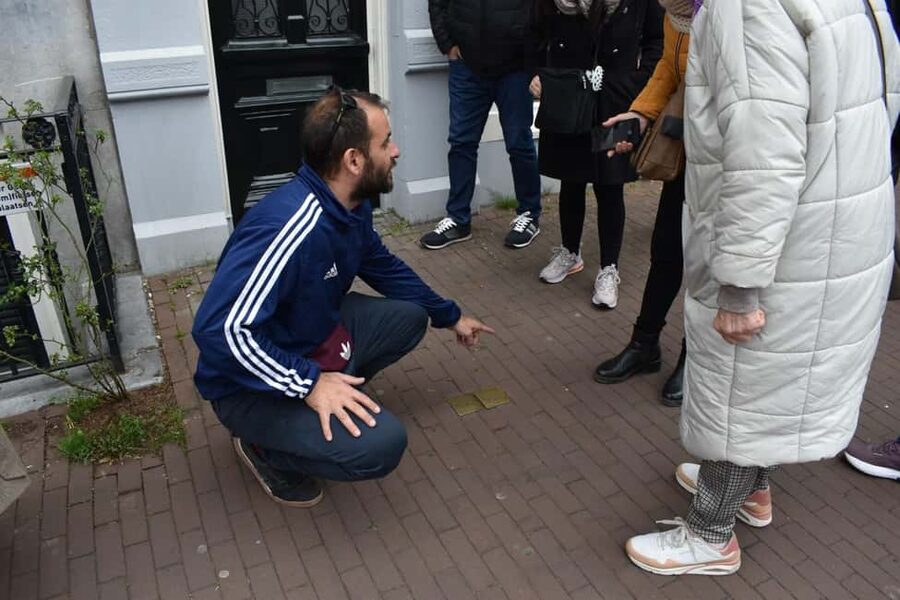
Amsterdam did not become famous only for wealth. It became known for how it handled competing ideas. This tour moves from older religions to liberal revolutions, with a focus on how people built systems that allowed disagreement without total collapse.
That section is valuable because it explains the city’s reputation for tolerance in a way that makes sense historically. You are not asked to accept a slogan. You’re asked to connect social change to practical decisions, how communities organized, and why trust became a necessary tool for survival and growth.
The guide frames it around people shaping a place built on trust and resilience, and that theme connects back to earlier water management. When you realize both water control and social order require collective action, Amsterdam’s character stops feeling like marketing.
If you like cities that have big arguments and big consequences, this part hits the sweet spot. It’s also one of the sections most likely to make you look at Amsterdam’s public spaces differently afterwards. You start asking, what system is this place built to support?
World War II: remembering the hard moments without getting lost
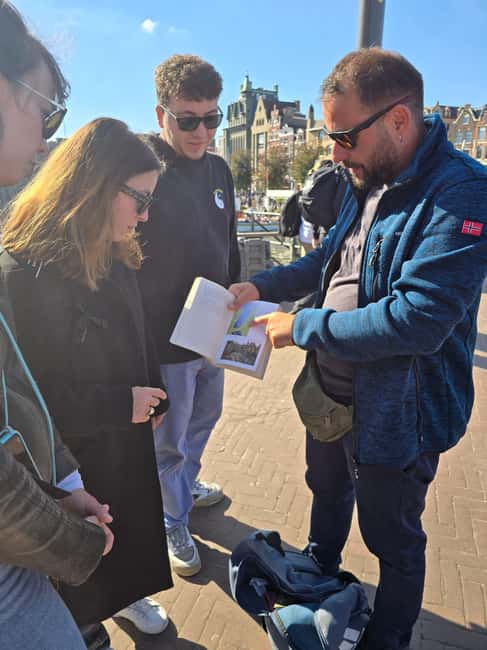
World War II shows up in the tour as one of the defining moments. You’ll hear stories tied to how Amsterdam was impacted, and what the city’s people faced. The goal is not shock value. It’s understanding how a city’s systems and communities behave under extreme pressure.
This kind of context is important because Amsterdam’s modern look can feel cheerful if you only scan for pretty facades. But the city’s story is layered, and WWII is part of that layering. Learning it on foot helps you connect the past to the spaces where you are standing now.
You’ll also hear how the city’s survival isn’t just about dramatic events. It is also about the systems that saved it, and that theme returns here. You leave with a clearer sense of why resilience became more than a virtue word. It became a practical survival skill.
A good guide keeps this section respectful and understandable. Antonis brings warmth and humor to the tour overall, but the WWII portion is the reminder that history is not only trivia. It has weight.
Your handwritten postcard from historic A’dam, and why it’s more than a souvenir
The tour includes a handwritten postcard with a Dutch stamp. It comes from historic A’dam, which ties the walk to a specific place and gives you a tangible memory.
I like this inclusion for two reasons. First, it is personal. A printed postcard is fine, but a handwritten note from the experience makes it feel like you brought home a piece of the day. Second, it is useful. The Dutch stamp means you can mail it if you want, or you can keep it as proof that you actually did the tour, not just read about it.
It’s also a neat final beat. After two hours of facts, you get one calm moment to pause, look at the postcard, and let the information land. If you are the type who likes to write a quick note to yourself or a friend right after an experience, this is a built-in moment to do that.
Bring a pen if you plan to write on the postcard right away, though you can always write later at your accommodation.
Price and value: is $28 worth 2 hours in Amsterdam?
At $28 per person for a 2-hour walking tour, you are paying for three things: a local guide, a story-driven route, and a small-group experience. The guide time is the biggest cost, and here you also get real value in the format.
If you have ever done a cheap walking tour that feels like a list, you know why price matters less than approach. This one is designed to answer real curiosity: why houses lean, why Amsterdam is built on mud, what the XXX detail means, and how dams, trade, revolutions, and WWII connect.
The group size also justifies the cost. Max 12 guests is the difference between hearing the guide and straining to catch words. It is also why you can ask questions and get responses that fit your interests.
Finally, the postcard with a Dutch stamp is a small but real perk. It turns the tour into something you can keep, and it gives you an easy way to share the day after you return home.
What to bring, and what to expect during the walk
This is a practical walking tour, so pack like you want to actually walk comfortably.
Bring:
- Comfortable shoes
- Camera
- Water
- Weather-appropriate clothing
If the forecast looks rainy, dress for it. You are outside for the full experience, and you will want shoes that handle wet pavement without slipping. You also cannot count on your phone camera to solve everything since video recording is not allowed. Photos should work, and a camera is explicitly suggested.
Keep your expectations aligned with the tour style. This is story time on foot. You’ll leave with facts that feel weird in the best way, plus a clearer mental model of why Amsterdam became Amsterdam.
If you get motion sickness easily, take breaks when the guide stops and bring some water. Otherwise, it’s a straightforward 2-hour outing for most people who can comfortably walk city streets.
Who should book this Amsterdam walking tour, and who might skip it
I’d put this tour near the top of your list if you like:
- History that reads like a story
- City details that you can see in real time
- Small groups and interaction with a guide
- Learning the why behind the look of Amsterdam
It also makes sense for solo travelers. The tour is built for individual curiosity, and Antonis is described as attentive, even when someone books alone.
If you prefer quiet museum rooms, or you want a strict itinerary of named landmarks every few minutes, this might feel less structured. The tour is about themes across 750 years, and you’ll move continuously while the guide weaves the timeline together.
Should you book Amsterdam’s Hidden Facts: 750 Years of Secrets?
Yes, if you want a smart, human Amsterdam introduction that goes past surface sightseeing. The combination of Antonis, the small-group size (max 12), and the “facts you won’t forget” approach is exactly what makes this feel like a real experience, not a generic overview.
Book it especially if you have limited time and you want your day to end with a postcard from historic A’dam, not just blurry photos. The $28 price is reasonable for the guide-led storytelling and the added souvenir.
I’d only hesitate if you dislike walking, need video recording, or you already know Amsterdam’s history so well that you are hunting for ultra-specific sites and dates. For most first-timers and curious returnees, it’s a strong value.
FAQ
How long is Amsterdam’s Hidden Facts: 750 Years of Secrets?
The tour lasts 2 hours.
Where does the tour start and end?
It starts in front of the Bull and ends back at the meeting point.
How much does it cost?
The price is $28 per person.
What group size should I expect?
It’s a small-group tour with a maximum of 12 guests.
What languages is the tour offered in?
The tour is available in English and Greek.
What’s included in the tour price?
You get a professional guide and a handwritten postcard with a Dutch stamp.
What should I bring?
Wear comfortable shoes, bring a camera, bring water, and dress appropriately for the weather.
Is video recording allowed?
No, video recording is not allowed.
What are my options if I need to cancel or pay later?
You can cancel up to 24 hours in advance for a full refund, and you can reserve now and pay later.
If you want, tell me your travel dates and what else you’re doing that day, and I’ll suggest a good before-and-after plan around this 2-hour walk.
Recently reviewed around Amsterdam
- Rotterdam Center: Cocktail Bar Walking Tour – Self Guided★ 2.9 · 9 reviews
- Rent a bike in Amsterdam | 1, 2, 3+ hours★ 4.5 · 68 reviews
- Amsterdam: Rijksmuseum Masterpieces Guided Small Group Tour★ 4.9 · 31 reviews
- Romantic Photoshoot Experience for Couples in Amsterdam★ 4.7 · 25 reviews
- Amsterdam: Queer Nightlife Tour★ 4.8 · 7 reviews
- Amsterdam: Self-guided Red Light District Pub Crawl Mystery★ 3.7 · 6 reviews
- Amsterdam: Red-Light District Pub Crawl and Booze Boat Tour★ 4.1 · 120 reviews
- Amsterdam: Private Red Light District and Food Tour★ 4.8 · 62 reviews