
Reviewed · DELFT TOURS
Delft: Canal House Museum ‘Paul Tetar van Elven’ Ticket
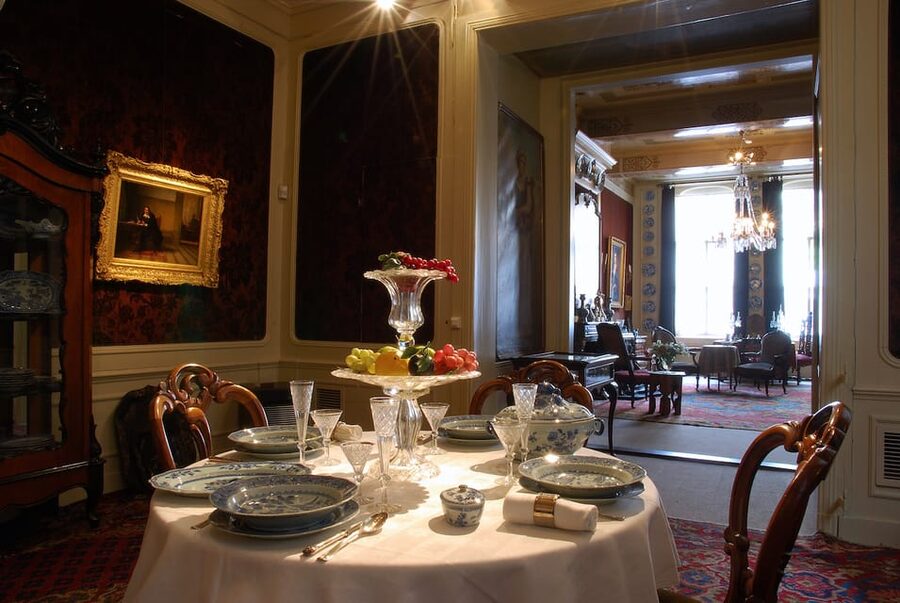
Paul Tetar van Elven Canal House Museum is interesting because you are not looking at a set of objects in a modern gallery. You are walking through a real 19th-century artist home, where the style, the collecting, and the daily routine all feel close together. I love the authentic canal house interiors and the way the museum clearly shows Tetar van Elven as both an artist and a collector. The main drawback to consider is simple: this is a house museum, so it will feel best if you enjoy rooms, decoration, and objects more than big art masterpieces on a wall.
Two details really pull me in. First, the lavish rooms feel personal, not staged. Second, the museum covers both the artistic side and the collecting side, from the studio and portraits to Delft blue and porcelain cabinets. If your ideal museum is fast, hands-off, and purely about famous artworks, you might want to pair this stop with something more action-based in Delft.
Here is the context that makes it click. The house sits in the center of Delft on the Koornmarkt, and its story stretches back to the 16th century after the Great Fire of Delft in 1536. Tetar van Elven bought it in 1864, adapted the interiors to the fashion of his time, and in his will left his home and possessions to become a museum. That is why this place feels like a preserved snapshot of how a 19th-century artist lived, taught, and collected.
Key Highlights You Should Not Miss in Delft
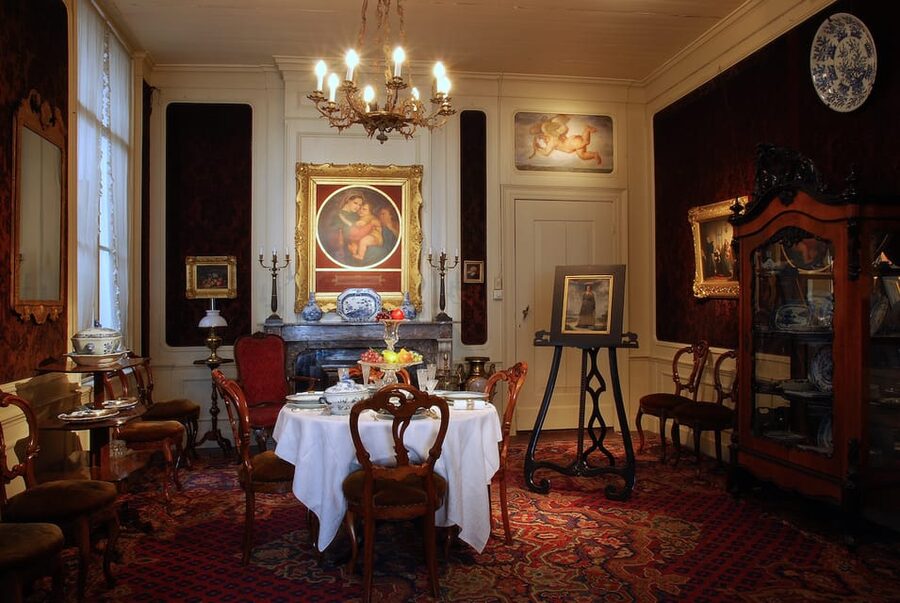
- Only well-preserved, authentic 19th-century artist’s house in The Netherlands, with the feel of someone still living there
- Koornmarkt canal house setting in central Delft, built from earlier centuries and renovated over time
- Painted Salon ceiling commissioned from Abraham Gips, naming old masters Tetar admired
- Original rooms and personal possessions, including Tetar’s studio setup
- Porcelain and pottery cabinets, featuring Delft blue plus porcelain from the Far East
- Library of antique books that supports the whole collector mindset
Paul Tetar van Elven Canal House, Why This Feels So Particular
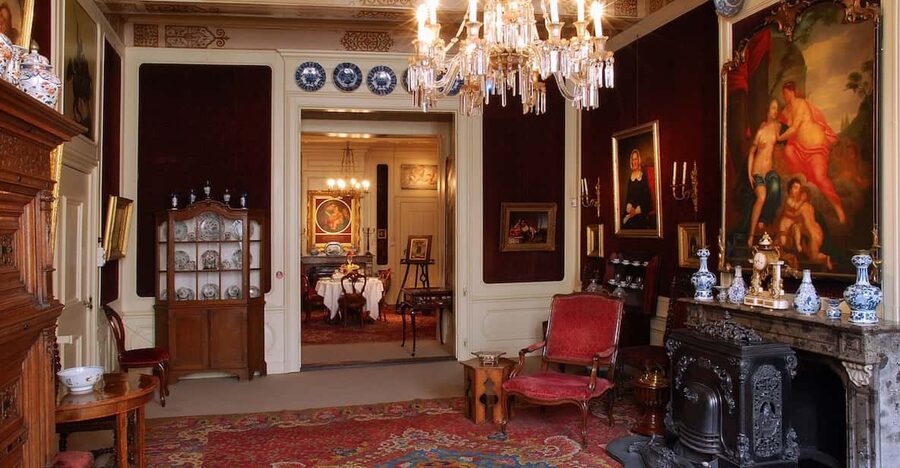
This museum works because it is not trying to impress you with scale. It impresses you with coherence. A single person shaped the house and the collection, and the museum keeps that logic intact. You move from room to room and the story does not reset itself like it can in larger institutions.
The big win is the feeling of the era. The house includes layers from different periods, with early structure dating back to shortly after 1536. Tetar van Elven then adapted the interiors to the fashion of the 1800s. When you see the contrast between the older building bones and the later decorative choices, you understand why the museum feels time-anchored instead of theme-parked.
You also get a more human view of what an artist’s life could look like in Delft. Tetar was not only creating drawings. He was a drawing-master at the Polytechnic School, which is now part of the Technical University of Delft, and he was a serious collector. That mix of teaching, making, and collecting is exactly what you sense as you walk through the rooms.
More Delft tours and day trips:
- From Amsterdam: Rotterdam, Delft & The Hague Guided Day Tour
★ 4.2 · 1,765 reviews - Delft: Canal Cruise with Guided Commentary
★ 4.4 · 990 reviews - Rotterdam, Delft, the Hague, Madurodam from Amsterdam
★ 4.0 · 793 reviews
The Koornmarkt Setting and the House Timeline You’ll Notice on Arrival
The museum is in the center of Delft on the Koornmarkt. That matters because you can combine it with the rest of your Delft walk without needing special logistics. You are already in a canal-city atmosphere, so the house blends naturally into the streetscape.
The house itself has a long backstory you can spot once you know where to look. The original building dates to the 16th century, from shortly after the Great Fire of Delft in 1536. That timing helped the Koornmarkt become one of the wealthier areas of the city. So even before Tetar’s time, the neighborhood carried money and taste.
Later, the house was renovated and modernized in stages. There was a new front façade and extensive modernization around the year 1800. Tetar van Elven bought the house in 1864. He did not do major renovations from scratch, but he adapted the interiors to match what people wanted in his day. When you enter, treat it like a timeline in wood, plaster, and decoration.
Ticket Value: What $14 Gets You in a One-Day Stop
The ticket is about $14 per person, and for me the value comes from the breadth inside a single address. You are not paying just for one room or one collection. You are paying for a preserved 19th-century artist home, including the drawing-related parts of life plus the collecting cabinets with Delft blue and Far East porcelain.
This can be a great deal if you like Delft’s signature ceramics. Many visitors come to Delft for Delft blue, and this museum connects that interest to the personal taste of a real resident. If you are also into antiques and domestic interiors, the library of antique books and the studio area add depth.
If you want a quick “tick-box” museum, this may feel like too much atmosphere for too little payoff. But if you like to slow down and pay attention to rooms, objects, and how the owner arranged his world, it is very cost-effective for what you get.
Inside the House: Rooms That Feel Like a Welcome, Not a Display
The best way to describe this place is “lived-in.” Even though the museum is not pretending to be private anymore, the layout and the furnishings carry that sense of personal presence. The museum is set up so you feel like the artist and his wife are welcoming you into their drawing rooms.
You can expect a sequence of lavish living spaces with the kind of furnishings you would associate with a wealthier canal-house life. Tetar van Elven’s choices show up in the way the rooms feel cohesive. It is not just expensive objects sitting together. It is a decorative logic that matches a collector’s eye and an artist’s discipline.
A practical note for your visit: pace yourself room by room. The museum is small enough that you can skip areas, but it is much more rewarding when you treat each room like a chapter. If you rush, you miss the links between the art side and the collecting side, which is where the museum becomes more than a pretty house.
More museums and galleries in Delft:
- Royal Delft: Delftblue Factory and Museum
★ 4.6 · 588 reviews - Delft: Vermeer Centrum Delft Museum Entry Ticket
★ 4.6 · 189 reviews - Private Tour of Delft + Visit to Royal Delft Museum
★ 5.0 · 4 reviews - Amsterdam: Van Gogh Museum Ticket
★ 4.7 · 52,054 reviews
The Salon Ceiling and the Old Masters Names by Abraham Gips
One feature is so distinctive that it can anchor your whole visit. In the Salon, the ceiling was decorated by Abraham Gips, a Dutch painter who lived from 1861 to 1943. The ceiling carries the names of the old masters that Tetar van Elven admired and copied.
The names you should look for include Raphaël, Rubens, Rembrandt, and others. Seeing these references in a private home is a different experience than seeing them in a textbook or a museum label. It shows how Tetar turned admiration into daily visual experience. This is art history translated into domestic design.
When you spot the ceiling, spend extra time with it. Do not just scan for names. Think about what it means to live under a curriculum of artists you studied. Tetar was a drawing-master, so the ceiling reads like part inspiration board, part declaration of taste, and part teaching energy.
Portraits, Paintings, and the Artist-Tetar Side of the Collection
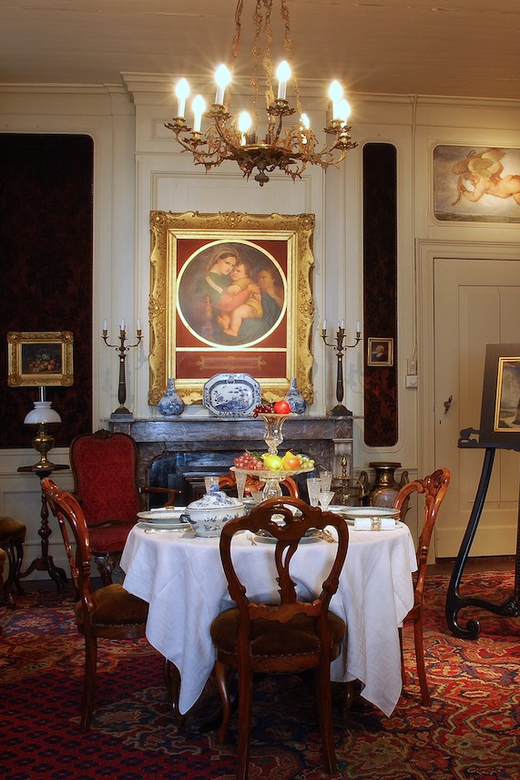
This museum does not force you to choose between “house” and “art.” Tetar van Elven appears in the artistic parts of the interior, including portraits and other paintings by himself and his contemporaries. That matters because it keeps the story from becoming only decorative.
You can also connect the dots between his roles. He was an artist and a teacher, and his collecting instincts likely shaped what he learned and how he studied. Even when you are not looking at drawings directly, the rooms and artworks keep pointing back to the same mind at work: careful, selective, and proud of craft.
If you like seeing how artists operated beyond the moment of making art, this section lands well. You get a feeling for artistic networks in Tetar’s circle through the presence of contemporaries’ paintings.
Studio and Library: Where the Drawer Lived and Worked
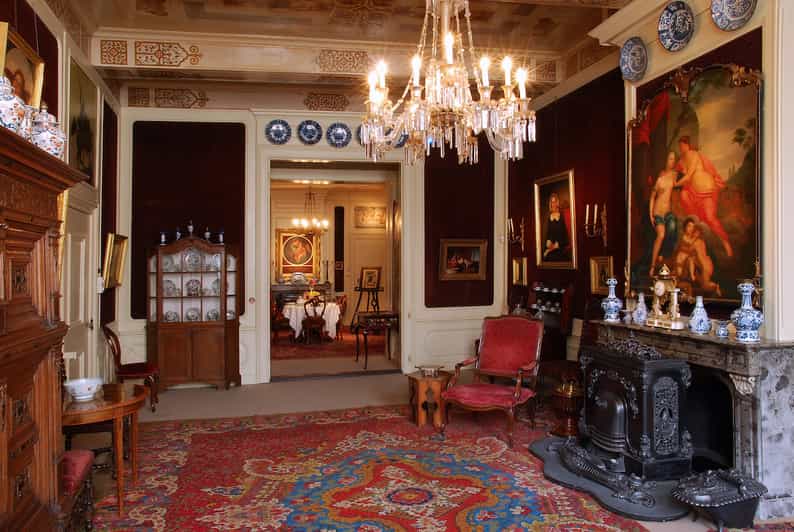
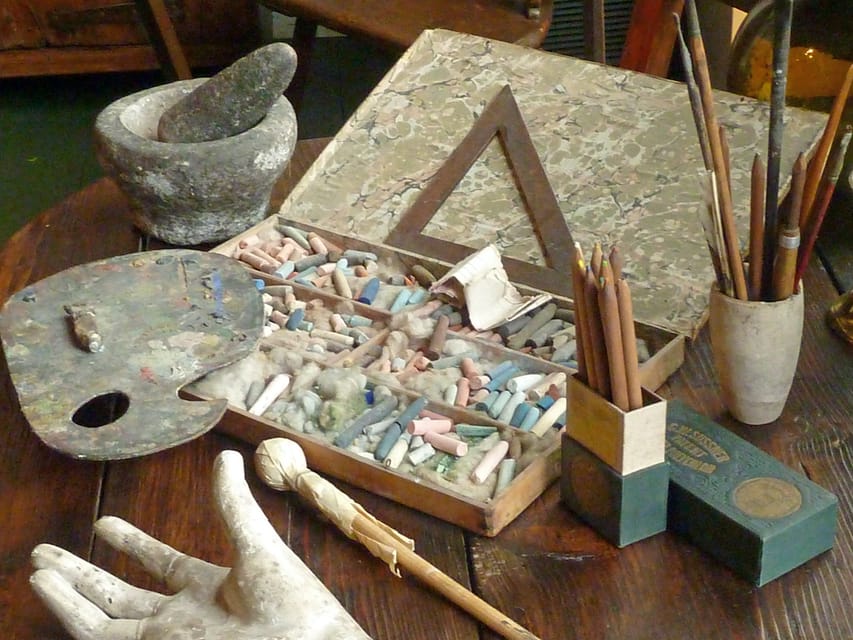
The studio area is where you can shift from “decorative eye” to “maker eye.” You can see Tetar’s studio with his personal possessions. That is the part that feels most direct and most specific, because it connects the house to daily habits rather than one-time moments.
Then there is the library, filled with antique books. A library can seem like an extra, but here it supports the broader story. A collector who invests in porcelain and Delft blue is usually also someone who values references, origin stories, and material culture. The antique books hint at the intellectual habits behind the acquisitions.
If you like details, this is where you should slow down the most. Studio spaces and libraries reward careful looking. You might not be able to read everything closely, but the overall organization and the sense of ownership come through.
Delft Blue and Far East Porcelain Cabinets, Plus What They Say About Taste
The cabinets with pottery and porcelain are one of the defining attractions. Tetar collected Delft blue pottery and porcelain, plus porcelain from the Far East. Seeing these together in the same house helps you understand Delft collecting culture as something personal, global, and curated.
For many visitors, Delft blue is the reason they came. Here, you get more context than “this is Delft blue.” You see how a collector built a set of objects that communicated style and curiosity. The presence of Far East porcelain also adds a layer that can be easy to miss when you only think about local production.
This is also where the museum becomes very practical for your memories. It is easy to remember a single cabinet of ceramics later, even after you leave Delft. If you want souvenirs that feel less like trinkets and more like a story, paying attention to what you see here helps you choose well later.
How Long to Spend and the Order That Makes Sense
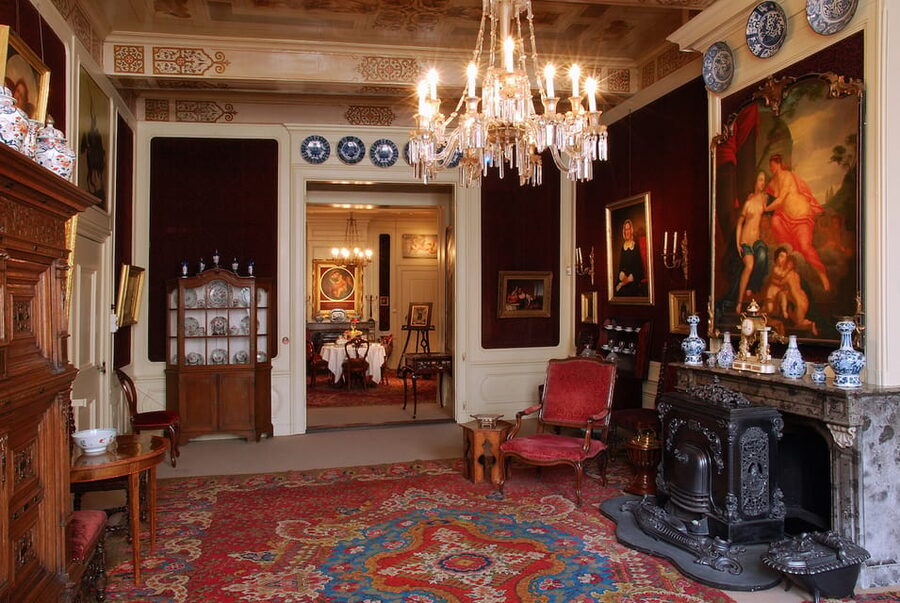
The experience is listed as valid for 1 day, so you can fit it into your Delft schedule. Since this is a house museum, the best approach is to create a simple order you will actually follow.
Start with the main rooms and drawing spaces, then go to the areas that explain the owner directly. After that, shift to the studio and library, and finish with the cabinets of pottery and porcelain. That flow matters because it moves you from atmosphere to intent. You understand the house first, then you understand the collector and the maker.
You do not need to rush to “finish.” Your goal is to connect the parts: the lavish rooms, the painted ceiling with old masters, the paintings linked to Tetar and his contemporaries, then the ceramics cabinets. When you make those links, the visit feels satisfying even if you are not obsessed with every object.
Who This Museum House Is Best For
This museum is a smart match if you like any of the following:
- You enjoy interiors and decorative detail more than huge ticket-size exhibitions.
- You want Delft’s ceramics in context, not just as shopping inspiration.
- You are curious about an artist who also taught at the Polytechnic School, which is now part of the Technical University of Delft.
- You like the idea of collecting as a lifestyle, with porcelain and books living in the same world as art.
It is less ideal if you want a loud, high-energy museum day. This place is about careful attention. If you thrive on fast movement and big, blockbuster highlights, you may find it calmer than you expected.
What the Host and the Experience Add During Your Visit
The museum uses English and Dutch for the host or greeter. That matters because it helps you stay oriented while you take in the rooms. The best visits are the ones where you do not just look, you also understand what you are looking at.
From the emphasis people place on the guided feel of the experience, the explanations are clearly part of the value. The guide approach tends to make the house feel less like a static interior and more like a narrative with reasons behind the choices. You will get more out of your time if you treat questions and listening as part of the sightseeing, not as an extra.
Final Call: Should You Book the Paul Tetar van Elven Ticket?
If your Delft plan includes canal streets and you are curious about how 19th-century artists lived, I think this is a strong booking. The main reason is simple: you are paying for a rare kind of museum, a preserved artist’s home with original-feeling rooms, plus the personal links Tetar left behind through his studio, portraits, library, and porcelain cabinets.
Skip it only if you want a fast, modern museum experience with minimal reading and minimal attention to interiors. Otherwise, for a one-day stop priced around $14, it is a tidy way to see Delft through one person’s eyes, from old masters named on a ceiling to Delft blue and Far East porcelain collected under the same roof.
FAQ
Where is the Museum Paul Tetar van Elven located?
The museum is in the center of Delft on the Koornmarkt, in South Holland, Netherlands.
How long is the experience?
The ticket is valid for 1 day.
How much is the ticket?
The price is listed as about $14 per person.
What is included with the ticket?
Your ticket includes entry to the Museum Paul Tetar van Elven.
Is food or drinks included?
No. Food and drinks are not included.
What languages are available for the host or greeter?
The host or greeter offers English and Dutch.
Recently reviewed around Delft
- Private Tour of Delft + Visit to Royal Delft Museum★ 5.0 · 4 reviews
- From Amsterdam: Rotterdam to The Hague and Delft★ 4.6 · 15 reviews
- From Amsterdam: Rotterdam, The Hague & Delft Private Tour★ 4.6 · 7 reviews
- From Amsterdam: Tulip Tour Keukenhof & City Tour Delft★ 4.2 · 20 reviews
- From Amsterdam: Day Tour to Rotterdam, Delft and The Hague★ 4.8 · 98 reviews
- Delft: Dive into the Golden Age on a Private Walking Tour★ 4.6 · 16 reviews
- Private half-day Delft and The Hague tour★ 5.0 · 3 reviews
- Delft: Private Historical and Cultural Guided Walking Tour★ 5.0 · 8 reviews
Delft Tours, compared.



Rotterdam, Delft, the Hague, Madurodam from Amsterdam
Read our review →
Rotterdam, Delft and The Hague Small Group Tour from Amsterdam
Read our review →



Browse the lists this tour appears in