

Reviewed · ANNE FRANK & JEWISH HISTORY TOURS
Amsterdam: Anne Frank Walking Tour – Guided in EN/DE/IT/ES
This experience is interesting because it ties Amsterdam’s streets to one of WWII’s most personal stories, using Anne Frank diary excerpts alongside the local history of the Jewish Quarter. I like the way the tour connects daily life, persecution, and resistance in one route, and I also like the focus on specific places you can stand in front of, not vague explanations. One drawback to consider: it is emotionally heavy, and the tour is still a brisk walking circuit, so you’ll want comfortable shoes and a little patience.
A practical heads-up, too: this walk does not visit or stop at the Anne Frank House, even though the diary is part of the storytelling. Also, the language depends on your booking choice, so pick EN, DE, IT, or ES correctly since it is not bilingual.
Key things to know before you go
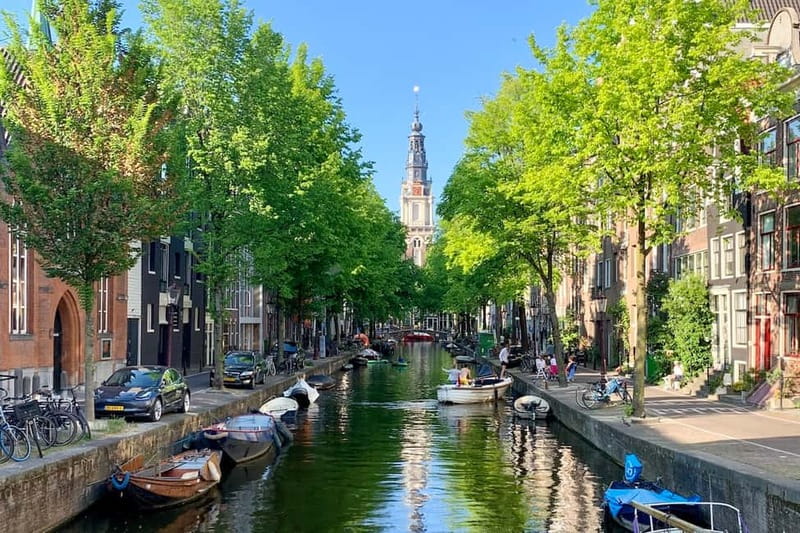
- Diary excerpts on the street: you’ll hear readings that frame what happened during the Nazi occupation and the Holocaust.
- Jewish Quarter in context: the tour covers how the area formed, including the role of Sephardic Jews in Amsterdam’s commercial life.
- Remembering in public spaces: you’ll see memorials tied to deportation, resistance, and loss, including name-based commemoration.
- More than one community story: Rembrandt lived in the broader Jewish quarter area, and non-Jewish resistance gets its own attention.
- A clear, doable distance: about 2 to 3 kilometers at an easy walking pace for most people.
- Guides bring it to life: guides like Emilia, Valentina, Lili, Bianca, Josh, Deborah, and David are praised for pacing, clarity, and respectful tone.
Why the Jewish Quarter and Anne Frank diary excerpts hit hard
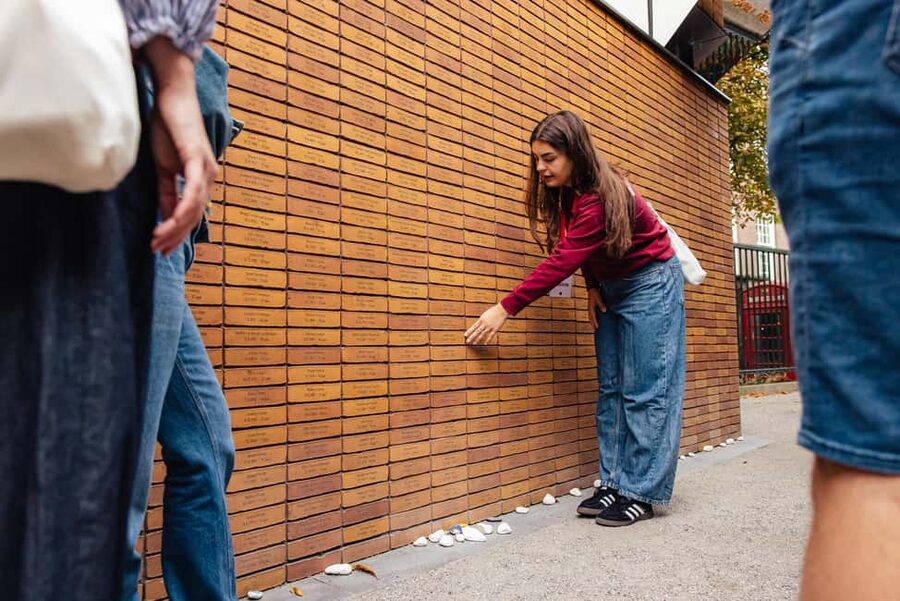
Amsterdam’s Jewish Quarter, the Jodenbuurt, is not just a historic label. It is a real neighborhood with real streets, buildings, and landmarks that people lived beside. That matters, because this tour uses those physical anchors to explain how a community could be woven into city life, then brutally torn apart.
What I like about the approach is that it does not treat Anne Frank like a museum artifact. You get the timeline through her words, then you also get the surrounding context: expulsions and settlement patterns that shaped the area, discrimination under Nazi occupation, and what deportation meant for families who had nowhere safe to go.
And yes, the Holocaust parts are heavy. This is the kind of walk where it helps if you expect somber moments and allow quiet time for your own thoughts. If you prefer lighter sightseeing, you might want to pair this with a different kind of tour later in your trip.
More Anne Frank and Jewish history tours:
- Anne Frank’s Story – Guided Walking Tour through Amsterdam
★ 5.0 · 11,619 reviews - Amsterdam: Life of Anne Frank and World War II Walking Tour
★ 4.8 · 10,467 reviews - Amsterdam: Anne Frank Guided Small Group Walking Tour
★ 4.8 · 2,722 reviews
Meeting at De Waag, then getting your bearings fast
You start at Waag, at the entrance to the historic restaurant De Waag in the middle of Nieuwmarkt. Your guide wears a red name tag, so you can spot them quickly.
One small thing that saves time, especially if you are relying on your phone map: sometimes Google Maps points you to the wrong side of De Waag. If you see the coffeeshop Jolly Joker, you’re on the wrong side. Walk around the building, then head to the entrance where your guide is waiting. It sounds fussy, but it prevents that annoying moment where you’re late and wandering around a landmark you already passed.
The route at a glance: from Waag to the National Holocaust Names Monument

This is a 2-hour walking tour covering roughly 2 to 3 kilometers. It is designed for a steady flow through the Jewish Quarter and central memorial points, with short guided stops and some photo moments.
The big idea: you’ll move from the neighborhood’s life and architecture into the occupation and deportation story, and then end at commemoration that brings the focus back to human names and loss.
The itinerary is built around a sequence of places where the guide can connect themes:
- community and geography
- synagogues and Jewish landmarks
- World War II persecution
- resistance by Jews and non-Jews
- memorials that mark deportation and survival, and remember who was taken
Nieuwmarkt Square and Zuiderkerk, the setting for community life
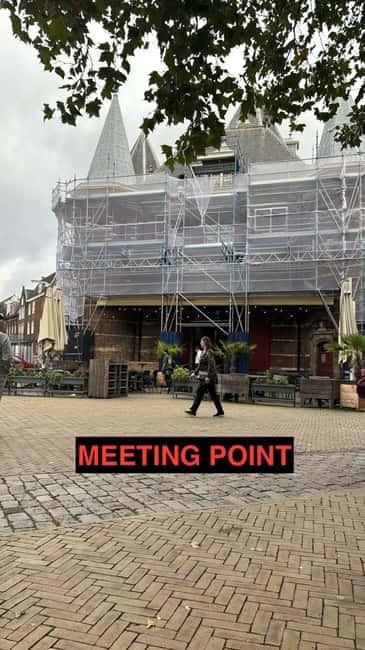
At Nieuwmarkt Square, the tour starts gently, with the kind of orientation that helps you understand why this area mattered before WWII. It’s a good spot for the first background layer because it’s open, easy to gather, and it helps you mentally shift from modern Amsterdam into historical Amsterdam.
Next up is Zuiderkerk. Expect your guide to connect the broader neighborhood story to the Jewish Quarter’s development and the city’s changing dynamics. This is where the tour starts to show you that Amsterdam’s Jewish history is not only about suffering. It also includes how Jews and other groups shaped the built environment and economic life.
A small caution: if you are visiting in poor weather, this is where you will feel the wind. Bring a hood or umbrella and don’t count on indoor shelter.
More walking tours in Amsterdam:
- Absolutely Amsterdam – the Essential Introductory Walking Tour
★ 5.0 · 3,629 reviews - Amsterdam: Guided Cultural Walking Tour
★ 4.9 · 2,384 reviews - Amsterdam: Guided Ganja Walking Tour of Coffee Shops
★ 4.2 · 2,092 reviews - Anne Frank Walking Tour Amsterdam Including Jewish Cultural Quarter
★ 5.0 · 1,879 reviews
Huis de Pinto and Rembrandt House, the surprise of everyday coexistence
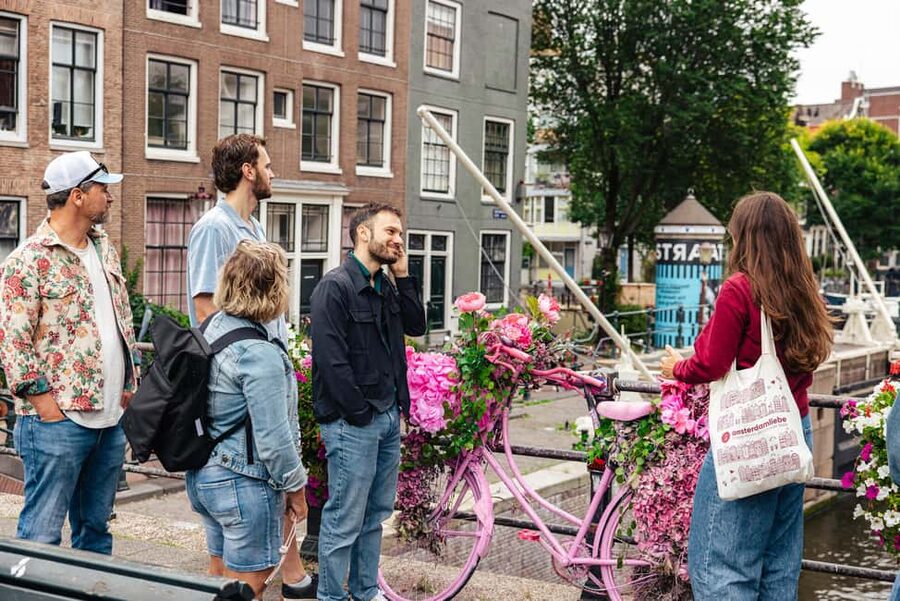
Then you get two stops that help you see the bigger picture: Huis de Pinto and the Rembrandt House.
Huis de Pinto helps ground the story in the architecture and status of Jewish residents, including the influence that Jewish communities had on Amsterdam’s commercial power. This part also connects to the idea that the Jodenbuurt formed with a clear geographic pull, not by accident.
Rembrandt’s place in this setting is important too. The tour doesn’t pretend Jewish history happened in isolation. It points out that non-Jews also lived in the wider area, and that famous residents like Rembrandt van Rijn were part of the same city fabric. It’s a reminder that persecution did not erase day-to-day normal life overnight. It came through, step by step, through policies and fear.
If you’re the type who likes to understand how neighborhoods function socially, this is one of the best segments.
Sint Antoniesluis and the Portuguese Synagogue, when the tone shifts

At Sint Antoniesluis, your guide keeps the neighborhood context moving. You’ll connect streets and buildings to the people who used them, not just the visitors who see them now.
Then comes a major anchor: the Portuguese Synagogue. This is typically a photo stop plus a guided explanation, and it often marks a noticeable shift in tone. The guide will bring in the story of different Jewish communities in Amsterdam and how religious and cultural life existed side by side with later danger.
What’s valuable here is the contrast. You’re standing near a place that represents continuity, then you’re walking toward the places that represent rupture. That contrast is part of why this walk feels more intense than a standard overview tour.
Jewish Historical Museum, memorial street notes, and remembering the past in plain sight
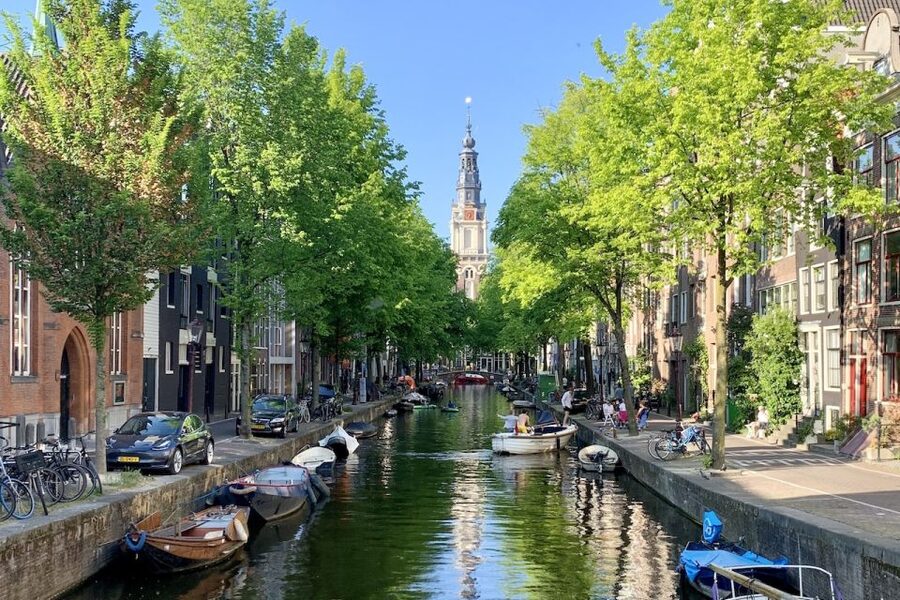
The tour includes the Jewish Historical Museum with a short guided stop. Even without an extended museum visit, this pause gives you a clearer frame for what you just heard.
Along the way, the tour also highlights public memory markers, including Stolpersteine and other commemorations. Stolpersteine are those small brass memorial stones set into sidewalks, meant to keep individuals present in daily life. You’ll also hear about important testimonies linked to the Jewish community and WWII.
There is also a mention in the tour experience of the gate of the old plague cemetery and monuments that commemorate courage and resistance during Nazi occupation. These stops matter because they are not scripted to be dramatic. They are simply there, which makes the story feel more immediate.
Practical note: if you get a little overwhelmed, it’s okay to pause for a minute, read, then rejoin. The tour moves at a steady pace, but guides usually give you time to keep up without rushing your feelings.
Auschwitz Monument, the Dokwerker, and the way Amsterdam faced WWII
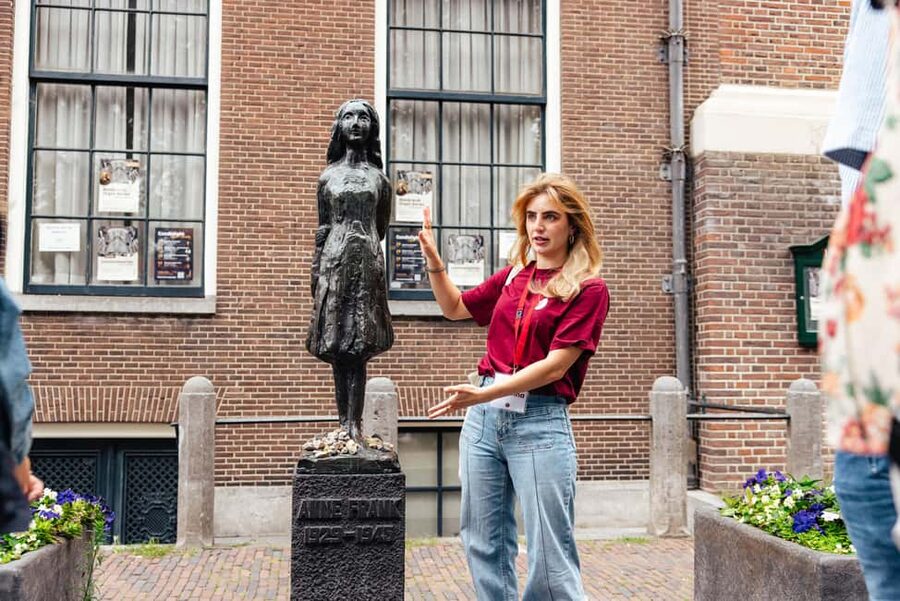
Now the walk moves into direct WWII remembrance with Auschwitz Monument, Amsterdam. This stop is where the story’s stakes stop being theoretical and become brutally specific.
Then you move to The Dokwerker. The name alone signals that this is not a generic history stop. Your guide will connect the occupation era to what Amsterdam did and what people endured, and why the city’s role in the wartime story is part of understanding what happened to Jewish residents.
A major strength of this tour is that it doesn’t only list crimes. It also focuses on resistance, including courageous actions by both Jews and non-Jews. That matters because it gives you a fuller moral picture. Survival was not only about luck. It was also about people choosing action while risking everything.
National Holocaust Names Monument, ending with names not just numbers
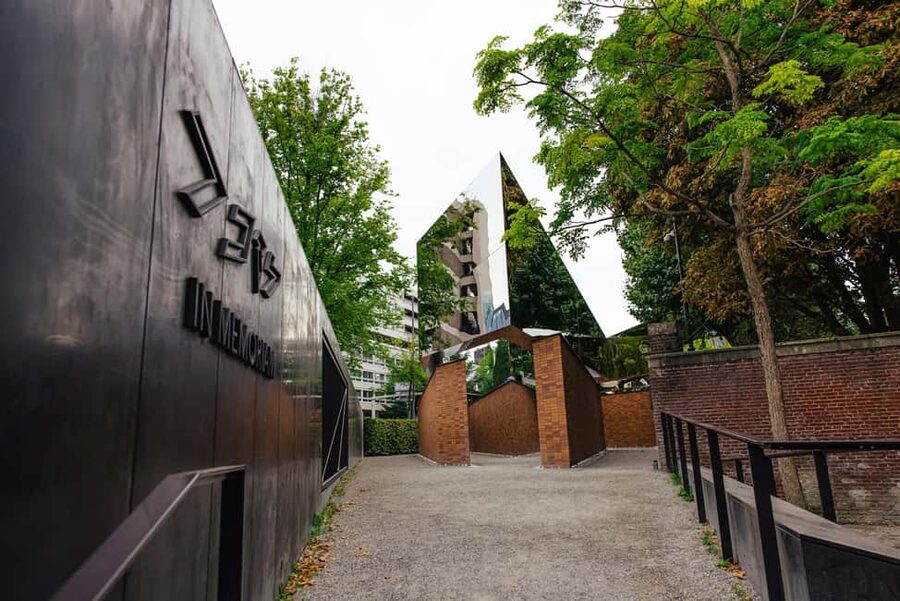
You finish at the National Holocaust Names Monument. This is a fitting end point because it turns the story from a timeline into a direct human record.
The tour’s framing helps you get why this ending works. Earlier you learned about Anne Frank’s diary, about deportation, and about how thousands were affected. Here, the message shifts into remembrance you can see and take in slowly.
If you want a clean final moment to absorb the tour, this stop is it. Give yourself a minute before you head back into the city.
Your guide matters: what the best EN, DE, IT, ES guides do
This experience depends heavily on the guide, and the guide quality is the part that most often lifts it from informative to memorable.
I especially like the way many guides incorporate the Anne Frank diary passages. Guides such as Emilia and Valentina are often praised for reading excerpts in a way that makes the historical context land, and for answering questions with clear structure. Lili and Bianca are also noted for making the story emotionally real while keeping the tone respectful, and David and Deborah are praised for pacing and for keeping things understandable.
A few practical things to look for once you meet your guide:
- They check in with the group and keep a steady walking tempo.
- They give enough time for questions instead of sprinting onward.
- They connect each stop to the diary story without losing the local Amsterdam thread.
If you booked in English, German, Italian, or Spanish, you’ll want the guide to be fluent and confident. Since the tour is not bilingual, this choice is worth taking seriously.
Price and value: why 28 dollars can go farther here
At about $28 per person for a 2-hour walking tour, this can be great value for Amsterdam, especially because you’re not paying admission fees during the tour. The sights included are described as free to access, which keeps the overall cost from creeping up.
You also get more than just a front-of-building description. The tour covers a compact route with multiple meaningful stops, including synagogues and major memorials. If you are doing the Jewish Quarter for the first time, this saves you from piecing together the story on your own.
One more value point: the tour includes a live guide, not just audio. For heavy history topics, that matters. A human guide can adjust pace, explain nuance, and handle questions.
Who this tour is for, and who might want to tweak plans
This is a strong fit if you:
- want a guided overview of the Jewish Quarter and WWII in Amsterdam
- want Anne Frank’s story in a contextual route, not only as a standalone memorial reference
- like walking tours that stay focused on one theme
- value human explanation and short diary passages
You might reconsider if you:
- dislike emotional or difficult history topics
- want a tour that includes the Anne Frank House, since this one does not visit it
- plan to do multiple long walking activities back-to-back, since the route still adds up to a 2 to 3 kilometer walk
Practical tips: shoes, weather, and choosing the right language
Bring comfortable shoes. The route is short enough for many people, but the number of stops means you’ll want to stay comfortable.
Bring water, and dress for all weather conditions. This tour runs in rain too, so plan for an umbrella if the forecast looks wet.
Pick your language carefully: the tour is offered in German, English, Spanish, or Italian, and it is not bilingual. If you choose the wrong language option, you may miss parts that would otherwise make the story click.
One more useful detail: the tour is marked as wheelchair accessible, and a private group option is available if you want more control over the pacing and questions.
Should you book this Anne Frank Walking Tour?
If you want the Jewish Quarter story in a guided, respectful way that connects Anne Frank’s diary excerpts to real streets and memorials, this is an easy yes. The combination of local landmarks, WWII context, and diary readings makes it feel less like a checklist and more like a guided walk with meaning.
Book it if this is your first serious day of Jewish Quarter sightseeing, especially if you want help understanding why this neighborhood mattered before the Holocaust, and what resistance looked like when people had reason to fear.
Skip it only if you want a lighter, purely scenic Amsterdam walk, or if your main goal is the Anne Frank House itself, since this tour does not go there.
FAQ
How long is the Amsterdam Anne Frank walking tour?
It lasts about 2 hours. Starting times depend on availability.
Where does the tour start?
Meet your guide at the entrance to the restaurant De Waag in the middle of Nieuwmarkt Square (Waag). Your guide wears a red name tag.
Where does the tour end?
The tour ends back at the meeting point, at the National Holocaust Names Monument.
Does this tour include entry to the Anne Frank House?
No. The Anne Frank House is not visited or seen during this tour.
What languages are available?
The live guide is offered in German, English, Spanish, or Italian. The tour is not bilingual, so choose the correct language option.
Is there a lot of walking?
It is a walking tour of about 2 to 3 kilometers, so you should wear comfortable shoes.
Are there admission fees for the stops?
No. The tour states that you won’t have to pay any admission fees during the tour because the sights can be visited for free.
What should I bring?
Comfortable shoes, water, and weather-appropriate clothing. An umbrella is recommended if rain is expected.
Is the tour wheelchair accessible?
Yes, it is listed as wheelchair accessible.
Is a private group available?
Yes, a private group option is available.
Recently reviewed around Amsterdam
- Rotterdam Center: Cocktail Bar Walking Tour – Self Guided★ 2.9 · 9 reviews
- Rent a bike in Amsterdam | 1, 2, 3+ hours★ 4.5 · 68 reviews
- Amsterdam: Rijksmuseum Masterpieces Guided Small Group Tour★ 4.9 · 31 reviews
- Romantic Photoshoot Experience for Couples in Amsterdam★ 4.7 · 25 reviews
- Amsterdam: Queer Nightlife Tour★ 4.8 · 7 reviews
- Amsterdam: Self-guided Red Light District Pub Crawl Mystery★ 3.7 · 6 reviews
- Amsterdam: Red-Light District Pub Crawl and Booze Boat Tour★ 4.1 · 120 reviews
- Amsterdam: Private Red Light District and Food Tour★ 4.8 · 62 reviews
Anne Frank & Jewish History Tours, compared.
Anne Frank’s Story – Guided Walking Tour through Amsterdam
Read our review →
Life of Anne Frank and World War II Walking Tour
Read our review →
Anne Frank Walking Tour Amsterdam Including Jewish Cultural Quarter
Read our review →
Anne Frank’s Last Walk & See Anne Frank House in Virtual Reality
Read our review →
Anne Frank and Jewish Quarter Amsterdam Private Walking Tour
Read our review →

Browse the lists this tour appears in