
Reviewed · AMSTERDAM CANAL CRUISES
Amsterdam: Historic City Sightseeing Canal Cruise
A short canal cruise in Amsterdam is interesting because it gives you a moving street-view of the city. You get to spot landmarks in seconds, then think about them later. This one is especially handy because the route focuses on the UNESCO Canal Ring angle and keeps moving through a lot of classic scenes in about an hour.
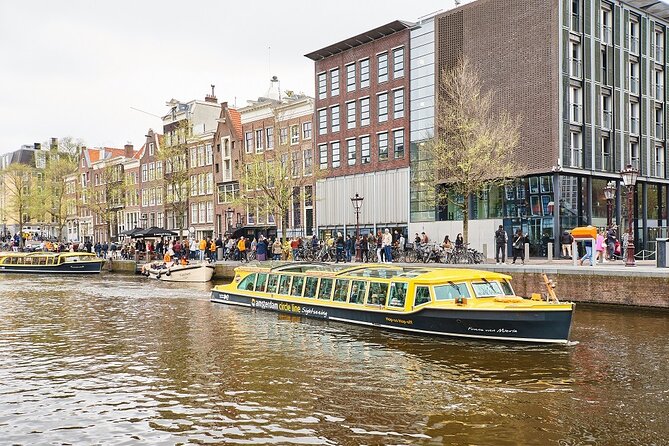
I like the easy meeting point right in front of the Anne Frank House. I also like the feel of the boat setup, with views through windows and a glass ceiling so you can actually see the buildings close to the waterline.
One thing to consider is that narration is partly recorded, so sound quality and language switching can vary by seat and departure. If you are picky about hearing every word, choose your spot carefully and be ready for some muffling in certain areas.
Key highlights to know before you go
- Meeting point by Anne Frank House makes it simple if you plan to visit the museum
- UNESCO Canal Ring views from the water, fast and efficient
- Pass 400+ years of canal-belt city life, from churches to opera and waterfront architecture
- A houseboat museum stop in the route adds texture beyond postcard views
- You get an hour-long format, great when your Amsterdam days are already packed
Why This 1-Hour Canal Cruise Works So Well for First Timers
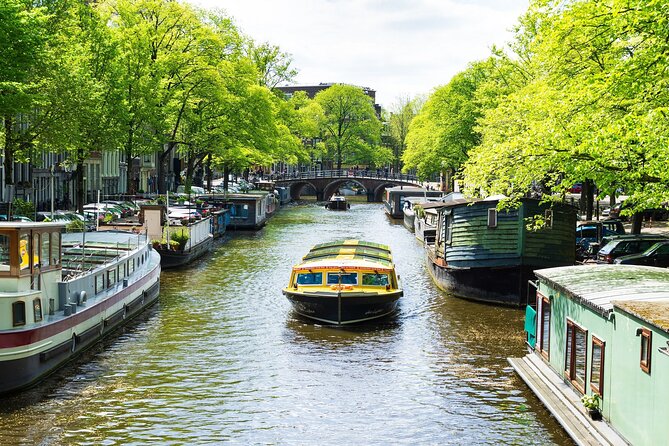
This cruise is built for people who want the Amsterdam “wow” without spending half a day on logistics. In one hour, you glide through parts of the canal belt that show why Amsterdam grew along water routes, not streets. You’ll see everything from historic canal houses to modern waterfront buildings, and the transition happens quickly.
I like that the time feels respectful. It is long enough to get a real sense of the canal system, but short enough that you can still wander afterward on your own. At around $18.71 per person, it is also a practical way to get value early in your trip, when you are still figuring out where things are.
The route is also a smart intro to the UNESCO Canal Ring. Even if you do not know canal history yet, the sights do the teaching.
More Amsterdam canal cruises to compare:
- Amsterdam Luxury Canal Cruise + Unlimited Drinks & Bites option
★ 5.0 · 30,518 reviews - Amsterdam: 75 Minute City Canal Cruise with Audio Guide
★ 4.4 · 17,501 reviews - Amsterdam: City Centre Canal Cruise
★ 4.2 · 12,827 reviews
Start Smart: Finding the Boat by Anne Frank House
The meeting point is easy. You go to the dock in front of the Anne Frank House, so you can orient yourself fast in central Amsterdam. If you are also planning to tour the museum, this layout is a convenience win.
You get a mobile ticket, and the operation is set up for an English experience. The group size is capped at 68, which usually means you will not feel like you are packed into a human blender.
A small but real tip: arrive a few minutes early. In a city with canal events and regular crowds, you do not want your timing dependent on perfectly calm boarding. (One review mentioned a disruption tied to a Pride Parade date, so it pays to stay flexible on special event days.)
The Route Through Time: From the Museum of the Canals to the UNESCO Canal Belt
The cruise frames the city as a story told by its canals. Early on, you are sent back to the idea of the canal system as Amsterdam’s backbone, with the Museum of the Canals as the “past and present” anchor.
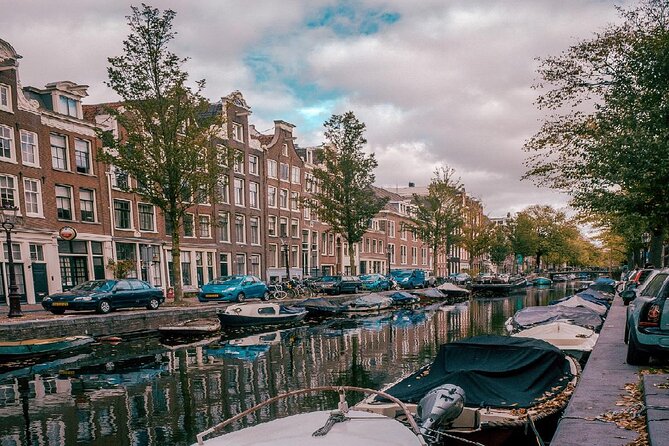
From there, the boat keeps shifting your viewpoint. Instead of looking at façades from street level, you catch buildings straight on, with reflections and angles that you do not get anywhere else. That matters, because canal-belt architecture is meant to be seen from the water, not just from the curb.
Expect a mix of older landmark types as you pass: churches, canal houses, and civic buildings. Even if some details blur while you are moving, you will come away with a stronger mental map of where the canal ring sits and how neighborhoods relate to each other.
Anne Frank House and Westerkerk: Seeing Two Icons in One Sweep
Two of the most memorable moments are the water views of Anne Frank House and the Westerkerk.
Anne Frank House sits on Prinsengracht and is tied to the story of the Secret Annex, the hidden rooms behind the main building. Even from the canal, you get context for why this site became such a powerful symbol. If you have not booked the museum yet, doing it the next day is a natural pairing because the cruise gives you location context first.
Then you pass the Westerkerk, a Reformed church in the Calvinist tradition. Its position in the Grachtengordel neighborhood and the way it sits between major canals makes it an easy landmark to orient yourself around later when you walk.
If you are hoping for a lot of deep biography on the water, keep your expectations aligned with the format. This is a short cruise, so you get meaningful direction and highlights, not an extended museum-style lecture.
More history-led tours in Amsterdam:
- Amsterdam Food and Cultural Tour with Tastings
★ 5.0 · 2,442 reviews - Amsterdam: Haunted History and Ghost Walking Tour
★ 4.5 · 488 reviews - Amsterdam High-End Dutch Food & History Tour – Up to 8 guests
★ 5.0 · 482 reviews - Anne Frank and the Jewish History of Amsterdam Private Tour
★ 5.0 · 307 reviews
Houseboat Museum and Leidsegracht: The City Feels Personal, Not Just Historic
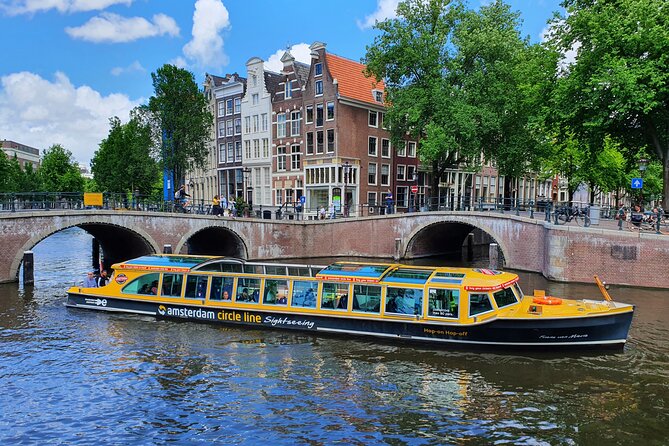
The Houseboat Museum is a clever stop to include on a cruise route. It gives you a real-life idea of what it meant to live on the water, not just view the water as a scenic backdrop. The museum is housed in the Hendrika Maria, a former cargo ship built in 1914, with the cargo hold converted into a comfortable living space.
That detail matters because it reframes canals from a pretty picture into a working, practical part of city life. You start thinking about size, layout, and how people adapted to a narrow canal world.
Nearby, Leidsegracht adds a different feel. It is a cross-canal that connects Herengracht, Keizersgracht, Prinsengracht, and Lijnbaansgracht. So you see it as more than just a curve, it is a connector in the canal network. That makes it easier to understand why the area has always been important for movement and daily life.
De Beulingsloot and the Bartolotti House: Small Canals, Big Details
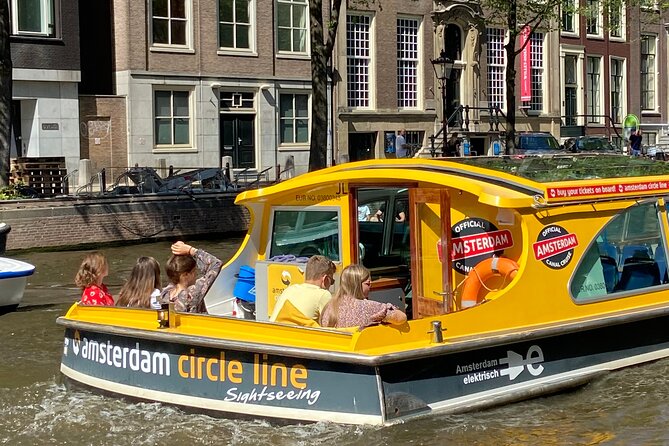
Not every impressive canal moment is wide and famous. The cruise includes De Beulingsloot, one of the oldest and shortest canals in central Amsterdam. Passing smaller canal sections helps you see the canal belt as a living grid, not a single loop.
Then there is the Bartolotti House on Herengracht (around 1617). The background is the kind of information that makes canal houses feel specific: it was built for Willem van den Heuvel tot Beichlingen, who inherited money through marriage from the Giovanni Battista Bartolotti family. From the water, those dates and names stick better than they do when you just read a sign at street level.
If you like architecture, this is the part where the cruise earns its keep. You are not only seeing the city, you are learning how wealth, trade, and canal location shaped the buildings.
Melkmeisjesbrug and Brouwersgracht: Bridges That Explain the City
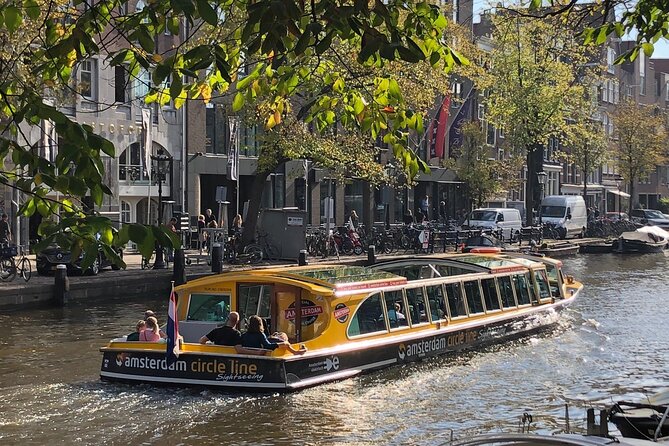
Bridges in Amsterdam are never just bridges. The cruise passes the Melkmeisjesbrug, a fixed bridge with centuries of history. It got mapped and signed by cartographers over time, and its modern evolution traces back to when shipping patterns changed and builders had to solve the practical problem of fitting a bridge to canal traffic.
It also connects to local market life. The bridge name links to the milk market that once took place nearby, and the area had a milkmaid image sign tied to later establishments.
Then you reach Brouwersgracht, which forms a boundary northwestern border of the Grachtengordel. It also helps explain neighborhood structure, acting as a border between the canal belt and the Jordaan area. There is an interesting bit of civic pride attached to Brouwersgracht, it was voted the most beautiful street in Amsterdam by readers of Het Parool in 2007.
This is one of those moments where the cruise works like an orientation tool. You start seeing Amsterdam as a set of edges and connections, not random canals on a map.
17th Century Church Stories and Posthoornkerk
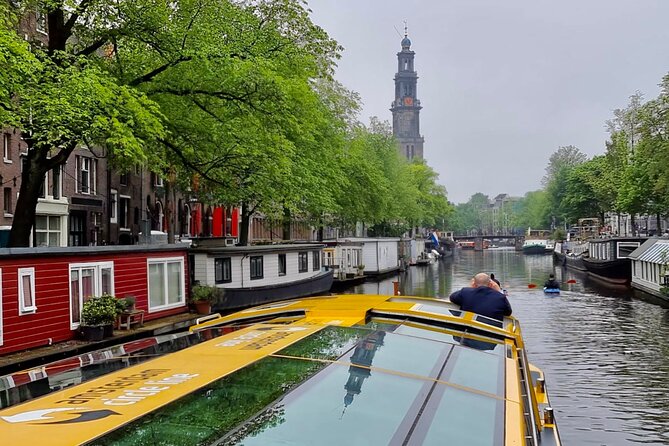
The cruise route includes a church stop tied to Adriaan Dortsman. It was opened in 1671, then rebuilt after near destruction in 1822, and later linked to a music and concert identity. Over time, it transitioned in use, and even saw changes connected to a nearby hotel providing tunnel access. The dome fire in 1993 is another sharp reminder that buildings in Amsterdam have layers of survival behind the beauty.
From a visitor perspective, these church stops are useful because they show how Amsterdam reused structures as the city changed. You are not just looking at old stone, you are watching the city adapt.
The route also includes the Posthoornkerk, designed by P.J.H. Cuypers and built in phases starting in 1860. Its exterior is neo-Gothic, but the interior design drew inspiration from the Munsterkerk in Roermond. The point here is not to memorize architecture terms. It is to understand how Amsterdam borrowed and reshaped styles while rebuilding within tight space constraints.
If you are a person who likes details, these stops give you enough to look up later. If you are not, they still land because you get variety beyond canal façades.
Amsterdam Centraal, the IJ, and EYE Filmmuseum: A Modern Shift on the Water
After the canal belt moments, the cruise moves into the modern part of the river waterfront. Amsterdam Centraal comes into view, designed by Pierre Cuypers, who is also behind the Rijksmuseum. The cruise framing notes that he focused heavily on decoration, while railway engineers handled structural design, which is a fun reminder that big landmark projects often involve teamwork across disciplines.
Then you are out on the IJ, Amsterdam’s waterfront water area. This change of scenery matters. It adds breathing room to the trip and keeps the hour from feeling like nonstop looking at the same canal-belt style.
The EYE Filmmuseum building follows, designed by Delugan Meissl Associated Architects. You get a sense of how Amsterdam’s culture scene is not only museums and galleries, it is also purpose-built architecture for film screenings, with multiple cinema spaces in the building.
If you time it with decent light, the glass and angular building forms can look especially crisp.
Stopera and the Amstel: When the Cruise Blends Civic Life and Culture
The Stopera complex shows up as a “city at work” sight. It houses both Amsterdam’s city hall and the Dutch National Opera and Ballet. Even the name has a story tied to protests: Stop the Opera was the slogan behind it.
That naming detail is more than trivia. It tells you the building exists because of public debate, not just design cleverness. From the canal, you see how Amsterdam’s civic and cultural identities share space.
Then the cruise moves to the Amstel, the river that flows toward the IJ. The route framing even notes how old the formation is, around 1050 BC, and it is tied to annual events like Liberation Day concert and rowing matches. Again, you may not catch every event detail on the water, but you feel the river’s significance as a stage for big community moments.
Hermitage Amsterdam on the Amstel: A Museum That Feels Built for a Water City
One of the best “culture payoff” stops is Hermitage Amsterdam on the banks of the Amstel. It is a branch museum of the Hermitage Museum of Saint Petersburg and sits in the former Amstelhof, a classical style building from 1681.
The space description is detailed enough to suggest why it works well even for people who only plan a short museum visit. It is currently the largest satellite, with exhibition areas across multiple rooms and halls, plus support spaces and a restaurant.
On the cruise, you mostly experience the building from the water. But if you plan your trip well, you can use the cruise as the lead-in and then schedule a museum visit on a separate half day.
Comfort and Sound: How to Choose Your Seat (So You Do Not Miss the Story)
This is where the cruise experience can vary. Many departures use a narration system, and sound can be an issue depending on where you sit. Some people note that rear seats offer great views through windows, but you might have trouble hearing narration clearly there.
In cold or windy weather, you will likely appreciate being able to switch between inside and outside spaces. One review also suggested offering hot drinks for cold times, which fits the practical reality of Amsterdam weather. If you are going in winter, dress for wind, not just temperature.
Language switching is another factor. You might hear narration in multiple languages, sometimes with incomplete switching. My advice is simple: if hearing every sentence is important to you, sit where audio works best and do not count on perfect clarity.
On some departures you may hear a guide or captain add extra personality. I have seen mentions of guides like Robert and captains like Rolif, with humor and local context. That kind of added color is exactly what turns a recorded route into a more personal experience.
Price and Value: Does $18.71 Buy Enough?
For about $18.71 per person and around an hour, this is priced like a budget-friendly “high impact” activity. You are paying for speed and breadth: canal-belt landmarks, bridge and church pass-bys, and a modern waterfront view, all without walking between stops.
For time-pressed visitors, that is the real value. Amsterdam can eat your hours fast. A cruise like this helps you start your trip with a mental map and a shortlist of what you want to explore deeper on foot.
It is also a good choice if you want something that works even when you do not want to commit to a museum schedule. You can treat it like a primer, then pick your deeper dives later.
One practical note: it is often booked in advance, with an average booking window around 14 days. If your dates are fixed, book early so you are not stuck with a less ideal departure time.
Who Should Book, and Who Might Want Something Longer
This cruise is a strong fit if you:
- Want main-sight coverage without a long day
- Like getting your bearings in central Amsterdam
- Enjoy canals, architecture, and bridge history in a quick format
- Plan to visit at least one big site like Anne Frank House and want it to feel more connected
You might consider another option if you:
- Need highly detailed stop-by-stop explanations, every minute, with clear audio
- Are sensitive to audio quality and language switching
- Are hoping for a full live guide lecture throughout, every single landmark
This is also why pairing works. If you want the emotional and historical depth of Anne Frank House, do the museum visit separately. The cruise can set the stage, then you can handle the heavier material when you have time to slow down.
Should You Book Amsterdam Circle Line’s Historic Canal Cruise?
Yes, I think you should book it if you want an efficient canal overview that covers both classic canal-belt sights and modern waterfront architecture. The meeting point near Anne Frank House is a big convenience, and the hour format is ideal if your Amsterdam schedule is tight.
I would book with the mindset of: this is a fast route with narration, not a replacement for museum time or a long guided walk. If you do that, you will get a lot out of it for the money.
FAQ
How long is the Amsterdam Historic City Sightseeing Canal Cruise?
It lasts about 1 hour.
Where do I meet for the cruise?
The meeting point is in front of the Anne Frank House.
Is the tour offered in English?
Yes, it is offered in English.
Is this a mobile ticket?
Yes, you receive a mobile ticket.
How large can the group be?
The cruise has a maximum of 68 travelers.
Can most people participate?
Most travelers can participate, and service animals are allowed.
Can I get a full refund if my plans change?
Yes. You can cancel for a full refund if you cancel at least 24 hours in advance of the experience start time. Free cancellation is available up to 24 hours before departure.
Recently reviewed around Amsterdam
- Rotterdam Center: Cocktail Bar Walking Tour – Self Guided★ 2.9 · 9 reviews
- Rent a bike in Amsterdam | 1, 2, 3+ hours★ 4.5 · 68 reviews
- Amsterdam: Rijksmuseum Masterpieces Guided Small Group Tour★ 4.9 · 31 reviews
- Romantic Photoshoot Experience for Couples in Amsterdam★ 4.7 · 25 reviews
- Amsterdam: Queer Nightlife Tour★ 4.8 · 7 reviews
- Amsterdam: Self-guided Red Light District Pub Crawl Mystery★ 3.7 · 6 reviews
- Amsterdam: Red-Light District Pub Crawl and Booze Boat Tour★ 4.1 · 120 reviews
- Amsterdam: Private Red Light District and Food Tour★ 4.8 · 62 reviews
Amsterdam Canal Cruises, compared.
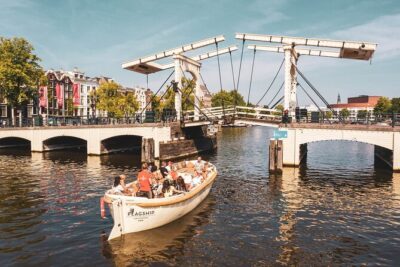
Amsterdam Luxury Canal Cruise + Unlimited Drinks & Bites option
Read our review →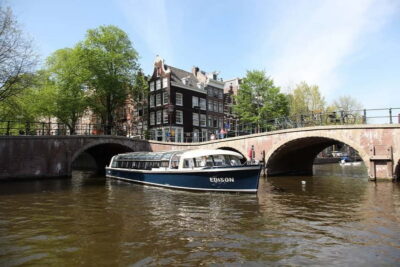
75 Minute City Canal Cruise with Audio Guide
Read our review →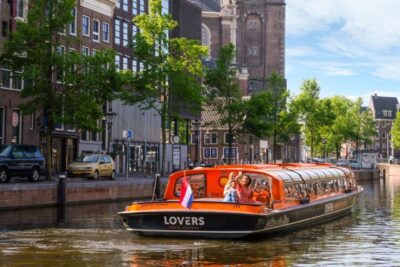

City Canal Cruise and Heineken Experience Ticket
Read our review →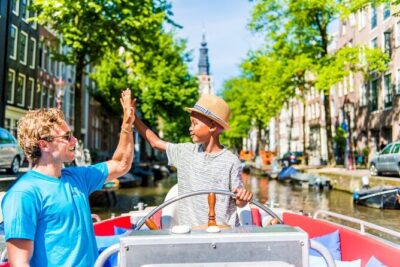
Amsterdam Canal Cruise in Open Boat with Unlimited Drinks Option
Read our review →

Amsterdam Evening Canal Cruise with Live Guide and Onboard Bar
Read our review →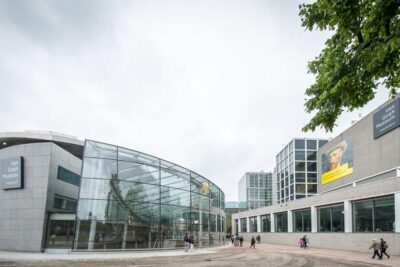
Browse the lists this tour appears in