
Reviewed · AMSTERDAM WALKING TOURS
Amsterdam: Small-group Guided Walking Tour (French/English)
Amsterdam is interesting because the city reads like a stack of eras. You can stand on a square built for power, then look down at 400-year-old canals, then walk into neighborhoods shaped by trade and migration, all without getting on a tram. I love that this tour moves fast through the historical center, hitting the big-picture sights and the small human details along the way.
My second favorite thing is the guide interaction. You get a live French or English local who answers questions and gives you practical follow-up ideas, and the name Chris shows up as the kind of host who turns stops into stories. That two-part approach, landmarks plus real-life tips for food and sightseeing, is what makes this feel efficient instead of rushed.
One possible drawback: you are doing a lot of walking and a lot of quick photo stops, so if you want long museum time at each site, you will likely feel the pace is too brisk. Bring good shoes, expect wind and rain, and treat this as your orientation base for the rest of your Amsterdam days.
Key points before you go
- Small-group pacing that keeps you moving without feeling like you are being herded
- UNESCO canal-belt views tied to how Amsterdam became a trading heavyweight
- Real local recommendations for dining, shopping, and even boat ideas after the walk
- Surprise stops like Ons’ Lieve Heer op Solder, plus corners linked to everyday Dutch life
- Time-efficient orientation for first-timers who want the city center mapped fast
- Q and A friendly guide who actually responds, including humor and fun facts
Walking the canal belt in a short window, without feeling lost
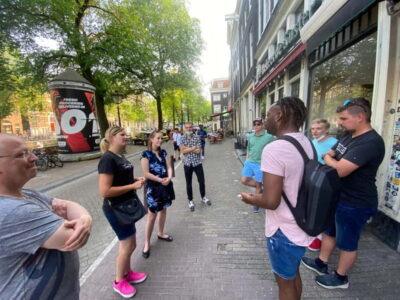
This is the kind of Amsterdam tour you book when you want clarity quickly. In 2 to 3 hours, you can cover a wide sweep: classic sights around Dam Square, the canal belt area, and the Jordaan vibe, plus the in-between streets that make Amsterdam feel like a lived-in city.
You also avoid a common trap in Amsterdam: trying to plan everything on your own from a map. When you are walking with a local guide, you learn what you are looking at, why it matters, and where to go next after the tour ends.
And because it is a small-group format, you get a bit more give-and-take than on larger bus tours. If you ask a question, you are more likely to get an actual answer that fits your travel style.
More walking tours in Amsterdam:
- Anne Frank’s Story – Guided Walking Tour through Amsterdam
★ 5.0 · 11,619 reviews - Amsterdam: Life of Anne Frank and World War II Walking Tour
★ 4.8 · 10,467 reviews - Absolutely Amsterdam – the Essential Introductory Walking Tour
★ 5.0 · 3,629 reviews
Where you start at Pancakes Amsterdam at the IJ, and how to spot your guide
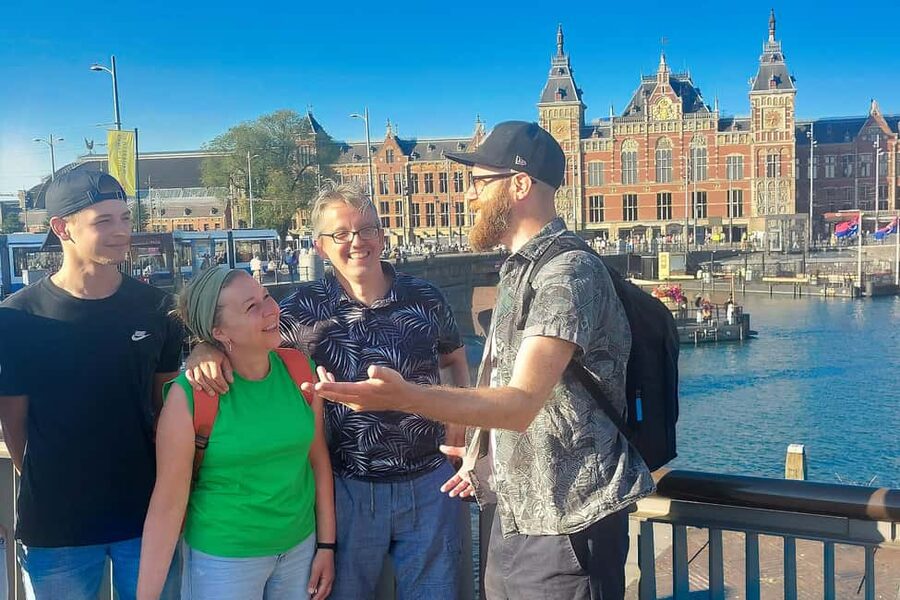
You meet behind Amsterdam Centraal Station, by the white and blue ferries heading to Amsterdam North. The key landmarks are the Pancakes Amsterdam at the IJ near the water, plus a big D ferry halte sign by the bike lane. It is a straightforward meeting point once you orient to the station area.
Your guide wears glasses, a beard, and a baseball hat. That sounds like a small detail, but in a busy hub like Centraal, it saves you time and stress.
Plan to bring comfortable shoes, plus an umbrella and water. Weather in Amsterdam can change fast, and this tour is mostly outdoors, with quick stops rather than long indoor breaks.
Stop by stop: getting oriented from Centraal to the Dancing Houses
The tour opens at Pancakes Amsterdam at the IJ, which is a good start point because you are right by the water and the ferry edge. From there, you head into the heart of the city and begin matching streets to stories.
Next up is Amsterdam Centraal Station. You get a short photo stop, and this is more than a check-the-box moment. The station area is the gateway to how Amsterdam connects neighborhoods and keeps the city moving, so it works as a mental starting line.
Then comes Dancing Houses, another quick photo stop that hits an idea Amsterdam does well: architecture as a physical clue to history. Even when you are just snapping pictures, your guide helps you see what makes these buildings recognizable and why people talk about them.
You then reach the Basilica of Saint Nicholas. Because this is a photo stop with guided context, you are not expected to spend hours inside. What you can get instead is a sense of why major religious buildings belong in the same story as markets, trade, and daily life.
Zeedijk and the old streets: daily life, small surprises, and a sense of order
Zeedijk Street is one of those Amsterdam lanes where the city’s layers feel close together. You get another quick stop with guided tour time, and the value here is in learning how this kind of street functioned as a corridor for people and commerce.
After that, the tour includes a photo stop at the Major Alida Bosshardt statue. This is the kind of stop that might look random on a self-guided walk, but with a local guide, it becomes a way to understand who is celebrated in public space and what that says about Amsterdam values.
Then you head to Ons’ Lieve Heer op Solder, the Our Lord in the Attic Museum. This is one of the standout ideas on the route because it adds a hidden-in-plain-sight chapter to the city. You are getting a glimpse of how space and belief intersected, and why Amsterdam’s past can be more surprising than the postcards.
A short step later is Oude Kerk. Again, you are not stuck in a long visit, so the trick is to let the guide frame what you are looking at. Old churches and old streets together tell you how the city organized community life before modern Amsterdam took over the skyline.
A few more Amsterdam tours worth comparing
- Amsterdam: 75 Minute City Canal Cruise with Audio Guide
★ 4.4 · 17,501 reviews - Amsterdam: Johan Cruijff ArenA Tour with Optional Guide
★ 4.6 · 8,954 reviews - Amsterdam: Royal Palace Entry Ticket and Audio Guide
★ 4.6 · 6,475 reviews - Amsterdam: Guided Zaanse Schans, Windmills & Cheese Tour
★ 4.4 · 4,826 reviews
Oude Zijde, Chinatown, and trading history around De Waag and the VOC
As you move on, you reach Burgwallen Oude Zijde, a canal-side area that helps you understand the canal-belt logic from street level. This is where Amsterdam starts to look less like a list of landmarks and more like a system.
Then the tour brings you to Amsterdam Chinatown. You get a photo stop, but the guide’s context helps you connect neighborhood identity to migration patterns and shifting communities over time. It is a reminder that Amsterdam is not only old history, it is also ongoing change.
De Waag Restaurant is next on the route. Even though this is a quick stop, it points to Amsterdam’s older economic pulse. When you hear the story behind places like De Waag, you start understanding why so many buildings are tied to trade, measurement, and city regulation.
After that, you pass the VOC, the Dutch East India Company. This matters because Amsterdam’s wealth did not grow in a vacuum. Your guide ties the city’s trading role to what you see on the streets, so the stories stop feeling abstract.
You then see the Narrowest House in Europe. This is brief and photo-focused, but it has an excellent purpose: it makes the point that Amsterdam’s canal houses were shaped by tight plots, clever building, and the practical realities of urban growth.
Dam Square and the Royal Palace: power in the center of it all
Dam Square is the emotional center for many first-time visitors, and this tour treats it as such. You get a photo stop with guided walking time, plus story context that explains why this space became the city’s public stage.
The Royal Palace, Amsterdam is next. You are not going inside on this tour as described, but you still get the value of seeing how royal power is placed directly in the flow of regular pedestrian life. That contrast is a big part of why Amsterdam feels distinctive compared with cities where political history stays behind fences and gates.
Next is Magna Plaza. This is a quick stop, but it helps you switch gears. After the older civic core, you get a glance at a more modern Amsterdam layer, where shopping and city life still move at street pace.
Then you cross toward Torensluis Bridge. Bridges are a cheat code for understanding Amsterdam. They force your eyes to line up canals, streets, and the direction of flow, so the city feels navigable.
Grachtengordel UNESCO views: what to notice so it sticks
Now you reach the Grachtengordel, the canal belt UNESCO World Heritage site. This is a highlight because it ties everything together: architecture, trade, wealth, and urban planning all show up in the same frame.
Here is what I recommend you do with your camera or your phone. Don’t just shoot one canal view. Look for how the canal edges, bridges, and building heights relate, then listen to how your guide connects it back to the Golden Age canal houses and Amsterdam’s role as a European trading hub.
This is also where the tour’s “fast efficiency” makes sense. You get a coherent story about how the city evolved, from a small fishing village on the Amstel River to a trading center that pulled in money, ideas, and people.
And because the guide is French or English, you get the story delivered in a way that is easy to follow, not watered down for mixed languages.
Anne Frank House, Westerkerk, and the Jordaan: a human-scale ending
The Anne Frank House stop is another photo stop on the route. Even with limited time at the site, your guide brings in the story of Anne Frank, which changes how you look at the street. You are not just seeing a famous address, you are learning why the place matters in the bigger Amsterdam narrative.
After that, you reach Westerkerk. This is another strong “listen while you look” moment. Churches and towers help you read Amsterdam’s skyline like a timeline, and your guide uses the viewing angle to explain why this area developed the way it did.
Finally, you end in the Jordaan neighborhood area. The Jordaan is where Amsterdam shifts from monument mode into lived-in neighborhood mood. You get a photo stop plus guided time, and the guide’s context helps you understand why this area feels different, even when it is still only minutes from the central ring.
If you want to keep wandering after the tour, Jordaan is a smart place to start because it is built for strolling. You can use the orientation you gained on the walk to choose where to linger, where to duck into side streets, and where to grab a bite.
What makes this tour worth the $33: the guide’s follow-up and street smarts
Price is $33 per person for a 2 to 3 hour walking tour, which is fair when you consider how much ground you cover and how much you get in guidance per hour. Most self-guided city days cost you time, and time in Amsterdam is expensive in its own way, because you spend it deciding what to do instead of learning what you see.
The biggest value is the way the guide helps you transition from “what did I just see?” to “what should I do next?” You get recommendations for dining, shopping, food and drinks, boats, and sightseeing. You also receive helpful links to make the rest of your trip smoother.
In the experience notes shared by guests, one recurring theme is that Chris does not just list suggestions. He tends to answer questions with specifics and offers practical ideas that fit what you actually like, whether that is a cozy café stop or a classic Dutch bite.
A fun example that stands out: recommendations around bitterballen. It is the kind of suggestion that makes the city feel approachable, and it is also the kind of detail you will miss if you only rely on broad travel guides.
You should also know the tour style is interactive. Guests describe it as friendly, engaging, and full of interesting facts that connect to daily life. If you like asking questions while walking, this format suits you.
Practical tips so your shoes and your schedule survive the walk
This tour is wheelchair accessible, which is a big plus to know upfront. Still, it is a walking route, so bring the shoes you can actually stand in for a couple of hours.
Bring an umbrella even when the forecast looks friendly. Amsterdam rain can be light but persistent, and you will do better if you are ready.
Pack water. The stops are quick, and if you are learning while walking, you will often forget to drink until you feel it.
Also, plan for slight itinerary shifts. The route might be adjusted for construction or to match your interests when possible. If you are hoping for a specific timing window at a particular sight, consider pairing this tour with flexible follow-on plans.
Who should book this small-group walk
This is ideal if you want:
- An efficient orientation for the central areas of Amsterdam
- A guide-led mix of landmarks and neighborhood streets, including the Jordaan
- A real Q and A feel, not a lecture-only format
- Clear next-step ideas for food, shopping, and other activities after you walk
It may be less ideal if you want deep time inside museums at every stop, or if you dislike walking from one corner to another with mostly photo-focused visits.
If it is your first trip to Amsterdam, this tour is a strong anchor. You leave with a mental map that makes later exploring feel less chaotic.
Should you book this Amsterdam walking tour?
Yes, if you want to understand Amsterdam quickly, in plain terms, with a guide who shares stories and also helps you plan what comes after. The combination of major sights like Dam Square and the Royal Palace, plus canal-belt context and a Jordaan finish, is a smart use of a half-day.
You should also book it if you like practical travel support. The emphasis on dining, shopping, food and drinks, boats, and sightseeing links is the difference between seeing the city and using what you learned.
Skip it only if you hate brisk walking, or if you are determined to spend a long time inside specific attractions as part of the same session. In that case, you can still do Amsterdam, but you might want to pair this with a separate slower day.
If you are ready for street-level history with useful takeaways, this is one of those tours that tends to pay off fast.
FAQ
What languages are the guides available in?
The tour is offered with a local guide in English or French.
How long is the Amsterdam walking tour?
The duration is 2 to 3 hours.
What is the price per person?
The price is $33 per person.
Where do I meet the guide?
You meet behind Amsterdam Centraal Station, near Pancakes Amsterdam at the IJ by the water, next to the big D ferry halte sign near the bike lane.
What should I bring for the walk?
Wear comfortable shoes, and bring an umbrella and water. Dress for the weather.
What is included in the tour price?
Included: the walking tour, a local English or French-speaking guide, and recommendations plus helpful links for dining, shopping, food and drinks, boats, and sightseeing.
Is food or drinks included?
No. Food and drinks are not included.
Can the itinerary change on the day?
Yes. The itinerary might be adjusted for interests if possible, construction work, or other unforeseen circumstances.
Recently reviewed around Amsterdam
- Rotterdam Center: Cocktail Bar Walking Tour – Self Guided★ 2.9 · 9 reviews
- Rent a bike in Amsterdam | 1, 2, 3+ hours★ 4.5 · 68 reviews
- Amsterdam: Rijksmuseum Masterpieces Guided Small Group Tour★ 4.9 · 31 reviews
- Romantic Photoshoot Experience for Couples in Amsterdam★ 4.7 · 25 reviews
- Amsterdam: Queer Nightlife Tour★ 4.8 · 7 reviews
- Amsterdam: Self-guided Red Light District Pub Crawl Mystery★ 3.7 · 6 reviews
- Amsterdam: Red-Light District Pub Crawl and Booze Boat Tour★ 4.1 · 120 reviews
- Zaanse Schans Windmills, Fishing Villages & Countryside★ 5.0 · 18 reviews
Amsterdam Walking Tours, compared.
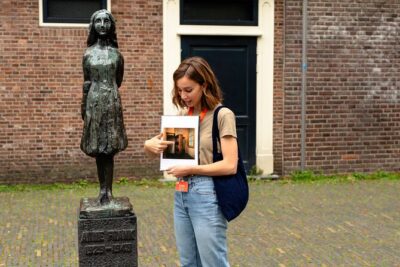
Anne Frank’s Story – Guided Walking Tour through Amsterdam
Read our review →
Life of Anne Frank and World War II Walking Tour
Read our review →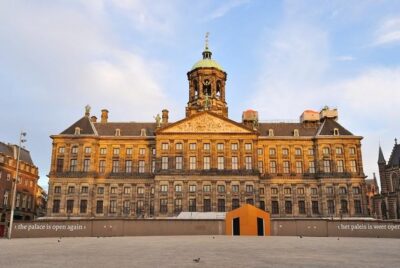
Absolutely Amsterdam – the Essential Introductory Walking Tour
Read our review →

Anne Frank Walking Tour – Guided in EN/DE/IT/ES
Read our review →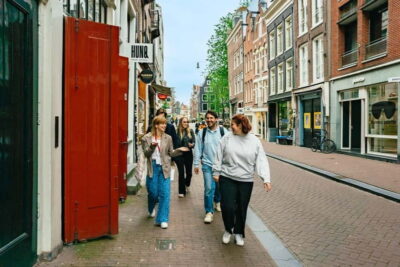
Anne Frank Walking Tour Amsterdam Including Jewish Cultural Quarter
Read our review →Browse the lists this tour appears in