Reviewed · PRIVATE
Explore hidden streets with friends – Private Tour
This private walk through Amsterdam is interesting because you are not just ticking off sights. You get a guided route that leans into the quieter, lived-in city, with stops built around courtyards, tucked-away streets, and the stories behind major civic buildings. It is the kind of private tour that helps you see Amsterdam beyond the crowds without feeling rushed.
Two things I really like about this experience are the way it blends big-city history with human-scale details, and the strong guide energy from Christian and Michael. The route also spotlights places you are unlikely to find on your own, especially the courtyard world of Karthuizerhof and the street-and-square feel of the Jordaan.
One possible drawback: it is still a walking tour. You should be able to walk about 2.5 hours, roughly 2.5 miles (4 km), so wear comfortable shoes and plan for a steady pace.
Key highlights that make this tour worth your time
- A private route that avoids the main crowd flow while keeping you near the city’s essentials
- Christian and Michael’s storytelling, with a mix of trade, daily life, and local culture
- Karthuizerhof courtyard history (1650 widows and early social housing)
- Jordaan backstreets and squares that feel authentically Amsterdam, not staged
- Canal Ring context, including how the medieval city expanded
- Church stops that connect art and civic life, including Rembrandt’s burial at Westerkerk
Why a private Amsterdam walk helps your whole trip
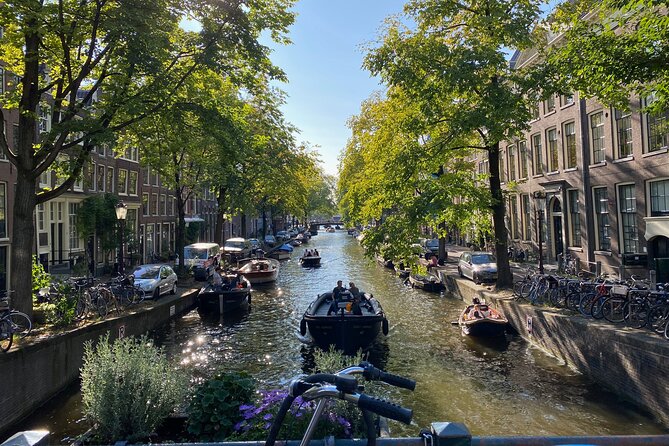
Amsterdam is one of those cities where the obvious stops can swallow a day fast. The streets are pretty, sure, but when everyone is doing the same thing at the same time, you start seeing crowds, not city character.
This tour is designed to solve that problem. You start from a central point and then work outward into quieter lanes and enclosed courtyards. That shift matters. It teaches you how Amsterdam actually “holds” its neighborhoods, with building courtyards and small squares doing much of the social work. By the time you are done, you understand not only where things are, but why this city grew the way it did.
Because it is private, you are also not sharing your guide’s attention with strangers. That tends to improve the flow of questions, and it helps you get more practical takeaways, like what to do next and where to go for a specific mood.
A few more Amsterdam tours worth comparing
- Rijksmuseum Amsterdam Small-Group Tour with Private Upgrade
★ 4.5 · 1,547 reviews - Van Gogh Museum Tour Reserved Entry Semi Private
★ 5.0 · 1,437 reviews - Private Amsterdam Red Light District and Coffee Shop Tour
★ 5.0 · 763 reviews
Getting oriented at Beursplein, where trade helped shape the city
You kick things off at Beursplein 1-3, a practical starting point because it sits right in the pulse of Amsterdam’s historic center. The opening focus is Amsterdam’s origins, with a special emphasis on the world’s first stock market. That is a big claim, but it fits Amsterdam’s identity. Long before the city became known for canals and houseboats, it was a trading hub, and the money trail left physical traces.
From there, the guide explains why the central square matters and what it represents. Even if you have visited Amsterdam before, hearing how commerce, civic power, and public space connect gives you a new lens for looking at nearby streets and buildings.
Then you get the story behind a key building that originally served as the town hall of Amsterdam. This is useful because many tours rush through architecture like it is decoration. Here, it is treated like evidence. The building’s original role helps you understand the square’s purpose, and it makes the rest of the route feel less like random sightseeing.
Crossing the Canal Ring and understanding medieval expansion
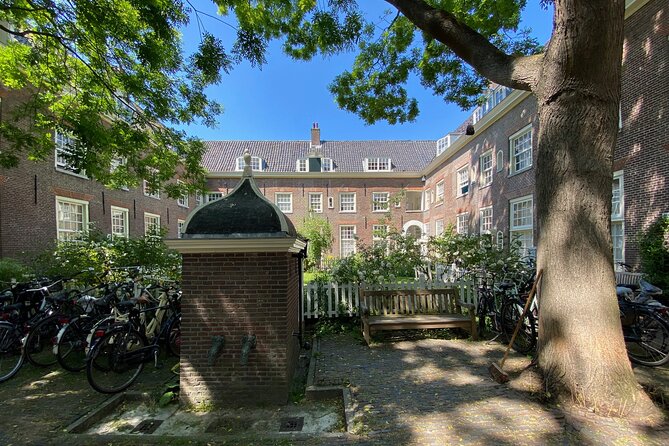
One hour of your walk is dedicated to the Canal Ring, and you are not just admiring waterways. You are learning how the city extended during medieval times. That matters because Amsterdam’s canal system is not only scenic. It is also structural, tied to growth, defense, commerce, and planning decisions.
As you cross the ring, keep an eye on how the street grid and water edges guide movement. Even without any fancy map skills, this context helps you read the city. You begin to see canal crossings as more than photo moments.
Also, at least for this segment, the tour information lists admission ticket free, which is nice when you are trying to keep a trip budget-friendly. You get the value through walking and explanation, not through paid entries.
The “shopping away from crowds” streets, and why that works
After the Canal Ring, you move into a cozy area where the nine streets have become a shopping zone away from the densest tourist flow. I like this part because it is practical. You are given a mental model for where the city eases off, instead of staying stuck in the busiest corridors all day.
This is the sort of segment where the guide can help you avoid the classic Amsterdam trap: wandering into a street that looks charming but is packed and overpriced. Here, you get a sense for where local-scale shopping and daily-life energy sit.
You can also use this stretch as a chance to reset. You have been learning and walking. Browsing time gives your brain a break, and it often makes the later neighborhood stops feel more interesting instead of exhausting.
Same city, a different kind of day out:
- Amsterdam Classic Saloon Boat Cruise with Drinks and Cheese
★ 5.0 · 31,825 reviews - Amsterdam Luxury Canal Cruise + Unlimited Drinks & Bites option
★ 5.0 · 30,518 reviews - Amsterdam: Heineken Experience Ticket
★ 4.6 · 30,055 reviews - Amsterdam: Rijksmuseum Entry Ticket
★ 4.7 · 25,535 reviews
Jordaan’s hidden streets and squares, with the quiet Amsterdam lesson
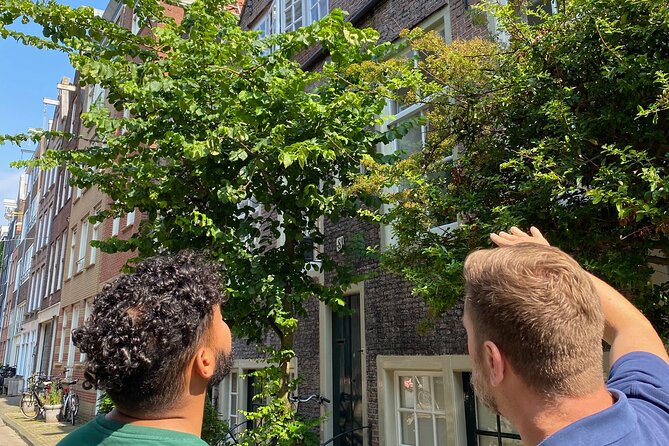
The heart of the experience is the Jordaan, and the route is built around hidden streets and squares that help you understand how this neighborhood stayed authentic. Jordaan is often described as picturesque, but this tour treats it as lived-in. That is the difference between a pretty neighborhood and a place with texture.
You spend about 1 hour 20 minutes in this area. You are shown not just streets to look at, but tiny spaces that reveal how people use the city day to day. Small courtyards, side streets, and square corners all contribute to the feeling that Amsterdam is not only about canals.
A couple of specific moments matter here:
- You learn about the church for the poor and why it was constructed exactly here. The placement detail is the point. It connects religion, social need, and city planning.
- You will pass by the Anne Frank House during the stroll. This gives you a sense of location without turning the walk into a line-up or ticket sprint.
For this Jordaan portion, the tour information also notes admission ticket free. That makes the experience feel more like a smart guided walk and less like a ticket bundle.
Karthuizerhof courtyard: widows, 1650, and one early social housing model
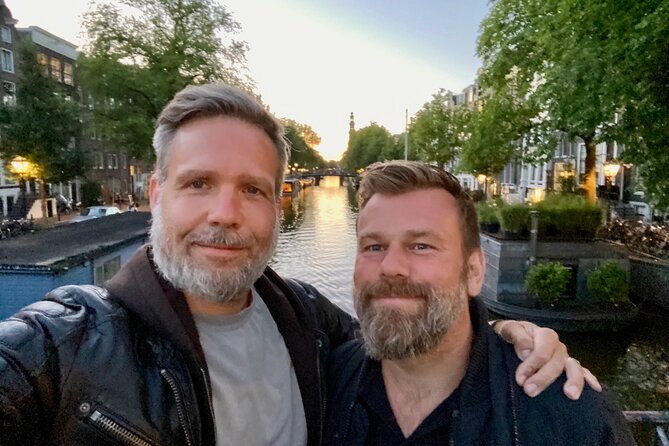
One of the best stops on this route is Karthuizerhof, a beautiful courtyard constructed in 1650 for widows. The standout detail is that it is described as one of the first social housing projects in the world.
I like courtyard stops because they teach you the Amsterdam “inside-out” idea. From the street, you can be in one mood. Then you step into a shared enclosed space and everything changes: the sound, the pace, even the way you notice light. Karthuizerhof is perfect for that.
The courtyard stop is short, around 10 minutes, and the information lists it as admission ticket free. Still, it carries a lot. You are not just seeing a pretty place. You are learning how compassion, housing, and community organization were built into the city fabric centuries ago.
If you want one reason this tour earns strong marks, it is this kind of detail. Courtyards here are not filler. They are the main idea.
Westerkerk and the story of Rembrandt’s burial
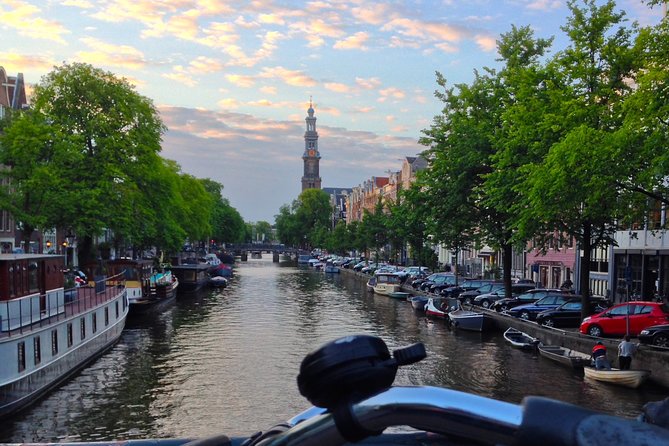
As you continue through the Jordaan and toward the end of the walk, you reach Westerkerk, described as a marvel of a church. The route includes a specific art-and-memory connection: Rembrandt was buried here.
This is a classic Amsterdam move, connecting the city’s civic identity to names that shaped European culture. I find church stops most valuable when a guide makes the location feel real, not museum-like. In this case, Rembrandt’s burial detail gives Westerkerk more weight than its architecture alone.
It also helps that this stop lands after the quieter neighborhood sections. By the time you reach Westerkerk, you are already thinking in layers: trade at Beursplein, planning around the canal ring, neighborhood life in the Jordaan, and then cultural memory at the church.
Timing, walking distance, and what that means for your day
The tour runs about 2 hours 30 minutes. In that time you cover roughly 2.5 miles (4 km) at a walking pace that suits most people. The practical takeaway: schedule it when you still have energy. If you put it right after a long flight and a full-day canal cruise, you might feel it.
Because there are multiple start times, you can pick one that fits your itinerary. I’d choose a time that protects your best energy window, not the one that cuts into your meal plans or forces you to sprint across the city afterward.
You also receive a mobile ticket, and confirmation comes at the time of booking. That is helpful if your schedule is flexible or you do not want extra paper.
Price and value: what about $101.15 per person buys you
At $101.15 per person for about 2.5 hours, the price can look steep until you break down what you are paying for.
What you are really buying is:
- A private format, meaning only your group joins
- A focused route that swaps mass crowd time for quieter streets and courtyards
- A guide who connects the city’s story across trade, civic space, neighborhood life, and art locations
- Tailored recommendations after the walk, which can save you time and disappointment during the rest of your trip
You also get practical cost control. Several segments are listed as admission ticket free, including the Canal Ring crossing segment, the Jordaan portion, and the Karthuizerhof courtyard stop. That means your money goes into the guidance, not into a stack of attraction tickets.
There is also mention of group discounts. Even without exact math shown here, it signals that the tour price structure is meant to work better when friends travel together, which fits the experience title.
Who this tour suits best
This works well if:
- You want Amsterdam context, not just a checklist
- You like neighborhoods with character, especially Jordaan
- You enjoy courtyard spaces and small historic details
- You are traveling with friends and want time to ask questions as you walk
- You want a guide to give you next-step ideas after the tour
It might not be the best match if you want a sit-down style tour, or if long walking times are a problem. This is a 4 km, 2.5 hour stroll with real movement between stops.
If you care about architecture and city planning, you will likely enjoy the mix: Beursplein’s commerce story, medieval canal growth, and the way civic buildings and churches connect to the people who shaped the city.
Should you book this hidden-streets private walk?
Yes, if you want Amsterdam in a way that feels less like a theme park. This route is built around quiet streets, enclosed courtyards, and clear historical links, and it is guided by Christian and Michael, who consistently bring a passion for how the city works.
I would book it when you want to get your bearings fast, while also learning enough to make your later choices feel smarter. Choose it early in your trip if you can, so the tailored recommendations actually have time to guide your day.
FAQ
How long is the Explore hidden streets with friends private tour?
It runs for about 2 hours 30 minutes.
Where does the tour start and end?
The tour starts at Beursplein 1-3, 1012 JW Amsterdam, Netherlands and ends at Elandsgracht, Amsterdam.
Is this tour private?
Yes. It is a private tour, so only your group participates.
What language is the tour offered in?
The tour is offered in English.
How much walking is involved?
You should be able to walk about 2.5 hours over a distance of approximately 2.5 miles (4 km).
Do I need to buy tickets for the stops?
Some parts of the itinerary are listed as admission ticket free, including the Canal Ring segment, the Jordaan segment, and the Karthuizerhof stop.
What kind of ticket do I receive?
You receive a mobile ticket.
Can I bring a service animal?
Yes, service animals are allowed.
What is the cancellation window for a full refund?
You can cancel for a full refund if you cancel up to 24 hours in advance of the experience start time. If you cancel less than 24 hours before, the amount paid is not refunded.
Recently reviewed around Amsterdam
- Amsterdam Highlights Canal Cruise with a Drink★ 5.0 · 66 reviews
- Private walking tour Amsterdam. English or Spanish.★ 5.0 · 21 reviews
- Guided Private Bar Tour in Amsterdam City Center★ 5.0 · 4 reviews
- Amsterdam Private Boat Trip With Skipper, Burger and Beers★ 5.0 · 5 reviews
- Arrival Private Transfer Amsterdam Airport to Amsterdam City Center by Minibus★ 4.5 · 7 reviews
- Private Arrival Transfer: Schiphol Airport Amsterdam★ 3.5 · 30 reviews
- 2-Hour Private Anne Frank Walking Tour with Drink★ 5.0 · 3 reviews
- Private Amsterdam WW2 walking tour★ 4.5 · 15 reviews
Private, compared.

Rijksmuseum Amsterdam Small-Group Tour with Private Upgrade
Read our review →
Van Gogh Museum Tour Reserved Entry Semi Private
Read our review →
Private Amsterdam Red Light District and Coffee Shop Tour
Read our review →
Anne Frank and Jewish Quarter Amsterdam Private Walking Tour
Read our review →
Amsterdam Airport & Non-Airport Private Transfer to City Center
Read our review →
Private Excursion to Zaanse Schans, Edam, Volendam and Marken
Read our review →
Van Gogh & Rijksmuseum w/ Reserved Entry Semi-Private 8ppl Max
Read our review →