
Reviewed · ANNE FRANK & JEWISH HISTORY TOURS
Liberal Amsterdam: Small-Group Walking Tour & Anne Frank VR
This tour is interesting because Antonis turns Amsterdam’s WWII sites into a real back-and-forth story, not a dry lecture. Two things I really like: the relaxed, conversation-style pace, and the optional Anne Frank House VR finale that keeps the focus on people, not just places.
One drawback to plan around: it is not suitable for wheelchair users, since it is an on-foot route with bridges and city sidewalks.
Key things I’d circle before you go
- Small-group size keeps it personal, with time for questions and laughter
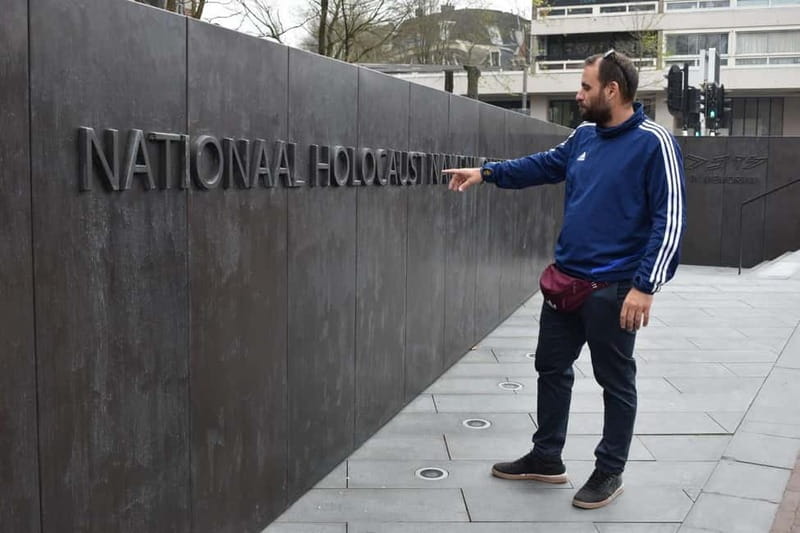
- WWII storytelling threads through the Jewish Quarter, the National Holocaust Names Monument, and reflective memorial moments
- Water and architecture themes explain why Amsterdam leans, floats, and works the way it does
- Coffee break extras include warm coffee, bottled water, and a daily Dutch sweet
- Souvenirs that matter: mini Polaroid plus a postcard with a personalized handwritten message
- Optional Anne Frank VR uses one headset, passed around only if you want to try it
Liberal Amsterdam With Antonis: A Walk That Talks Back to You
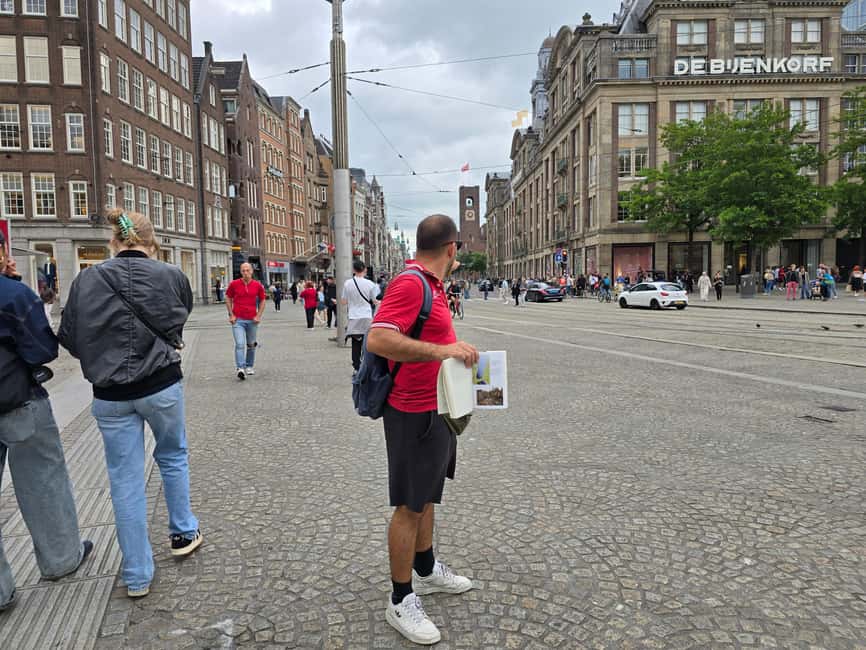
This is the kind of Amsterdam tour where you do not just watch history go by. You get pulled into it through questions, humor, and the very human details that make WWII feel close, not distant. Antonis uses real conversation skills, plus simple tools like books and chalk drawings, so the stories land in your brain instead of bouncing off like museum audio.
I like the focus on Amsterdam’s liberal soul, the idea that freedom, art, resistance, and compassion are part of the city’s DNA. You also get practical city context, like how water management shaped the place, and why daily life looks the way it does. That mix is why this feels more like meeting a local than checking off a list.
The tour is also built for comfortable momentum. It is a relaxed walk with pauses, so you can ask for clarification without feeling rushed. If you prefer tours where everyone stares straight ahead and takes photos in silence, this may not be your style, but if you want meaning with your photos, it works.
More Anne Frank and Jewish history tours:
- Anne Frank’s Story – Guided Walking Tour through Amsterdam
★ 5.0 · 11,619 reviews - Amsterdam: Life of Anne Frank and World War II Walking Tour
★ 4.8 · 10,467 reviews - Amsterdam: Anne Frank Guided Small Group Walking Tour
★ 4.8 · 2,722 reviews
How Antonis Uses Stories, Not Lectures, to Make WWII Feel Understandable
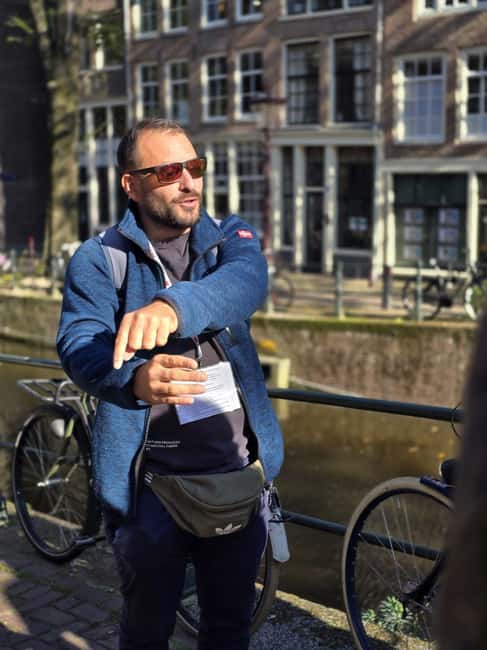
The big reason this tour gets such high marks is how Antonis tells the story. He does not treat WWII like a set of facts to memorize. He turns it into a chain of people, choices, fear, courage, and aftermath. He even uses chalk drawings and books, which sounds simple, but it makes the timeline easier to follow.
You also get interaction, not just narration. You will have chances to ask questions, and the guide’s tone stays friendly and engaged. That matters because Holocaust content can be heavy, and a guide who keeps the group comfortable helps you stay present instead of shutting down.
Another plus is that Antonis brings Amsterdam into the story beyond the war years. He connects liberal values to what you see today, including calm corners of the Red Light District that are handled thoughtfully. The result is not shock value. It is context, so your mental map of Amsterdam becomes more accurate.
And yes, you get insider help along the way. You get a list with recommendations, and the guide also offers practical tips for nearby bars and restaurants. That is not fluff. After a few hours of walking, you want a sensible place to eat, and not a random place you found on a map at 9:00 pm.
Kattengat to Amsterdam Centraal: Starting Places That Set the Tone Fast
You begin near De Silveren Spiegel at Kattengat 4-6. It is a fitting starting spot because the tour moves quickly from everyday city life into the WWII layer underneath it. Right away, you are in the mood to notice details instead of just counting bridges.
The early part includes a stop at the HIV/AIDS monument. You will have a photo stop and a short safety briefing, and the guide uses the moment to keep the theme of human stories moving forward. It is not a random detour. It matches the tour’s bigger idea that Amsterdam’s liberal values show up in many chapters of history, not just the famous ones.
From there, you pass by Amsterdam Centraal Station for a photo stop and guided look. This is a good time to get your bearings because the station area can feel chaotic if you do it solo. Having someone point out what to notice helps you read the city instead of getting overwhelmed.
Then there is a quick stop for Tony’s Chocolonely. This is brief, but it adds a light, modern Amsterdam beat to balance the heavier WWII pieces. It also fits the tour’s style, where even something playful is still part of a broader culture story.
Bridges, Leaning Houses, and Water Management: Amsterdam’s Practical Side in Real Places
If you only know Amsterdam as canals and postcards, this tour nudges you into the practical side. You learn about the importance of water management, and how it shaped the city’s design and daily routines. You also hear about the leaning houses and the charm of houseboat life, which sounds whimsical until you realize Amsterdam’s geography and building choices are the reason.
You get several bridge moments that help you understand how people live with water instead of pretending it is background scenery. You’ll stop around places like the Aluminium Bridge, Staalmeestersbrug, Magere Brug, and Blauwbrug. The photo stops are short, but the guided commentary connects the visual to the deeper point: Amsterdam is built on managing water and negotiating space.
One of my favorite kinds of tour details is when a guide points out odd bits of daily life. Here, you may hear about quirky Dutch habits, even small stuff like weird toilets, because those details explain how Amsterdam works as a community. It is the kind of information that makes your next walk through the city feel easier.
The tour also talks about hidden spaces connected to WWII. You are not just hearing dramatic lines. You’re learning how ordinary city infrastructure could hide resistance efforts, and how people used the landscape as cover. That makes the city feel smarter, not just older.
More walking tours in Amsterdam:
- Absolutely Amsterdam – the Essential Introductory Walking Tour
★ 5.0 · 3,629 reviews - Amsterdam: Anne Frank Walking Tour – Guided in EN/DE/IT/ES
★ 4.9 · 2,676 reviews - Amsterdam: Guided Cultural Walking Tour
★ 4.9 · 2,384 reviews - Amsterdam: Guided Ganja Walking Tour of Coffee Shops
★ 4.2 · 2,092 reviews
The Jewish Quarter and Holocaust Memorial Moments: How the Tour Holds Real Weight
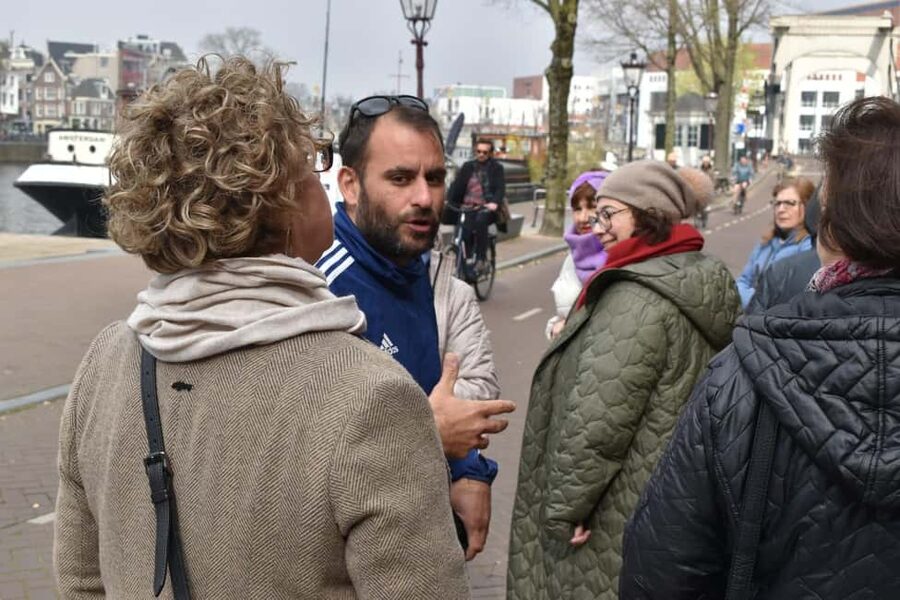
This is where the tour becomes deeply serious. You move into the Jewish Quarter for a guided stop, where the guide focuses on WWII resistance stories and human stakes. The time is short, but the content is structured to help you understand why these neighborhoods mattered and what “hidden” really means in an urban setting.
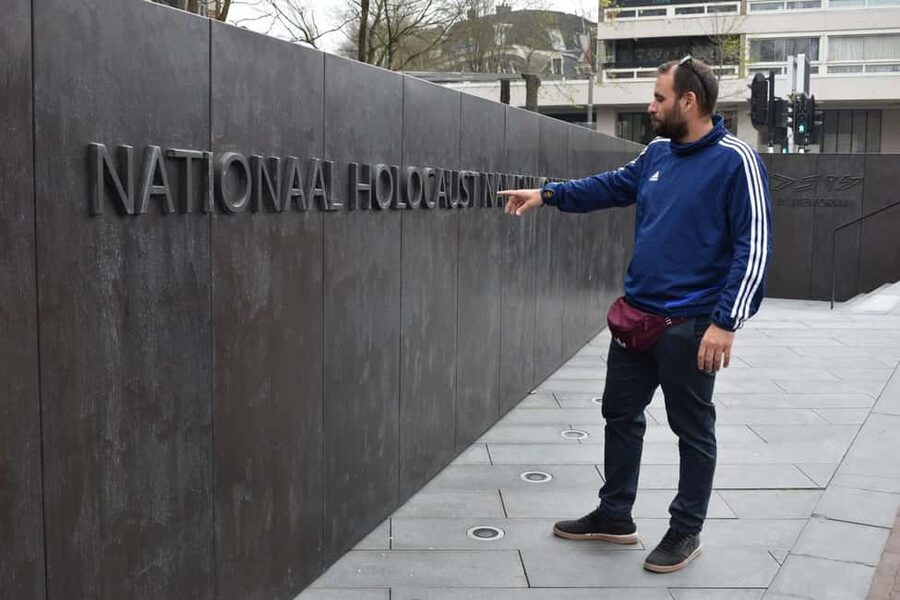
Next comes the National Holocaust Names Monument with a guided segment. This is not the kind of place you rush through. You get time to reflect, and the guide frames the meaning carefully. The emotional tone stays respectful, and the way the tour is paced matters here, because you need a moment to absorb.
The tour also includes Holocaust-related memorial reflection and quiet passages that keep the focus on compassion and remembrance. If you are sensitive to heavy topics, plan for that. But if you show up ready to listen, you will get a guided experience that does not try to turn grief into entertainment.
One smart detail: the guide ties the WWII story to Amsterdam’s present-day liberal values. You are not left thinking history is just tragedy and distance. You come away thinking about how cities choose to remember, and how people choose to act when they have power.
Zuiderkerk, Nieuwmarkt Square, and Waag: Liberal Values in the Everyday City
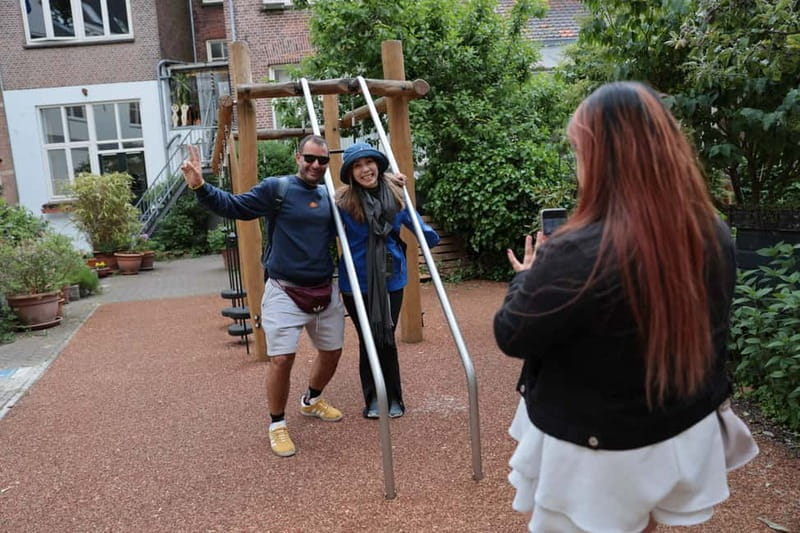
After the WWII core, the tour keeps moving through central Amsterdam with stops like Zuiderkerk and Nieuwmarkt Square. These are photo stops plus guided commentary, and they help connect the dots between old civic life and modern social attitudes.
This is also where you learn about the Dutch educational system and how it supports the country’s progress. You will hear the guide’s take, and it fits the tour’s overall theme: freedom and opportunity are not abstract. They shape how communities function, and they show up in everyday institutions.
You finish at Waag. That closing area feels like a good way to cap the walk, because it brings you back toward the center of the action without leaving you feeling like the tour abruptly ended. If you like to keep walking after tours, this is a nice position to continue exploring on your own.
Also, you get a steady rhythm. The tour alternates heavier moments with lighter city observations, like modern storefront culture and everyday architecture. That balance is one reason people leave feeling like the time flew by, even though the topic was serious.
The Coffee Break, Dutch Sweet, and Souvenirs You Will Actually Keep
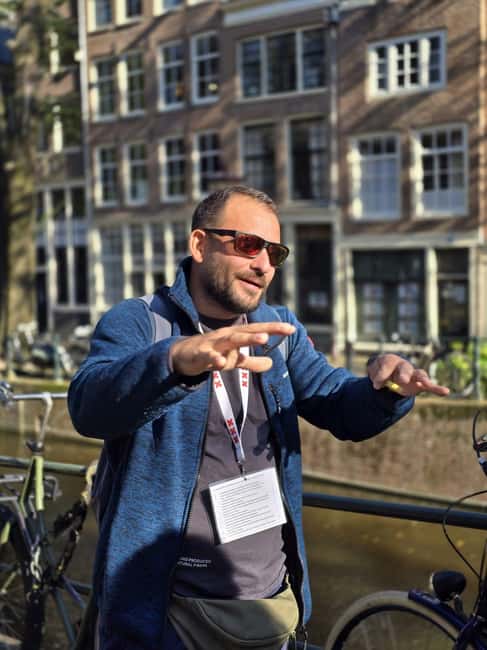
The tour includes a coffee break, and it is not just sitting down for a quick sip. It is a real reset point where you can catch your breath, ask extra questions, and connect the earlier story threads to what you are seeing now. Warm coffee is included, and you also get bottled water.
Then comes the sweet surprise. The guide provides a local sweet treat that changes daily, sometimes chocolate and sometimes Dutch cookies. It is a small thing, but it adds warmth to the experience. You are finishing a long walking and thinking stretch, and suddenly you are rewarded with something that tastes like the place.
You also get photo and postcard souvenirs. You receive a mini Polaroid photo taken during the tour, plus a unique postcard of Amsterdam with a personalized handwritten message and an official stamp. I like this because it is not the generic “buy a postcard at the airport” approach. It feels connected to your time on the ground.
Finally, you get a list of recommendations. This matters because the guide is already thinking in practical terms: where to eat, where to unwind, and how to spend the rest of your day without wandering in circles.
Optional Anne Frank House VR: One Headset, Passed Around, No Pressure
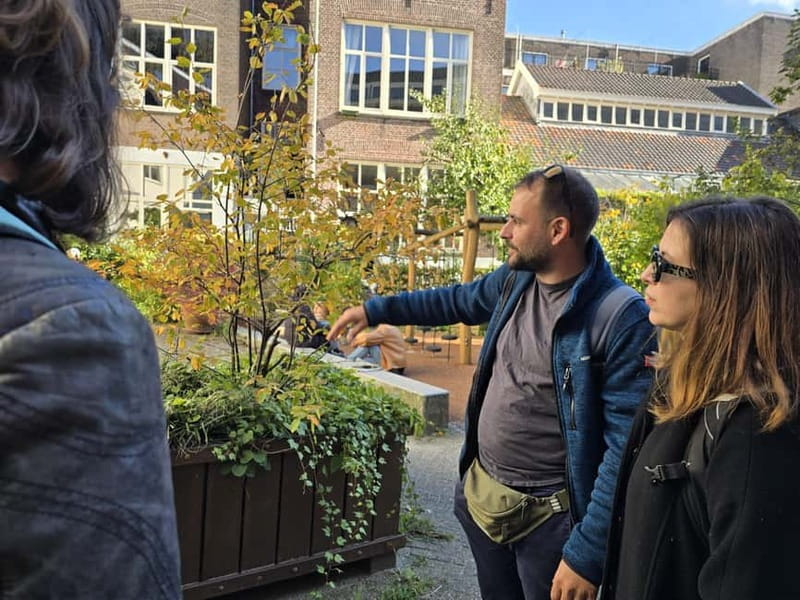
The finale is the Anne Frank House VR experience. The key detail is that it is totally optional, and it is not a scripted performance. There is just one headset, and it gets passed around only if people feel like trying it.
That low-pressure setup changes how you experience it. Instead of feeling like you must participate, you can watch, listen, and talk during the VR session. It also keeps the group vibe relaxed, so you can still process the day even if you skip the headset.
You step virtually into the Secret Annex. The guide frames it as a conversation starter, something fun to try while you hang out and unwind. And if you did not plan far enough ahead for tickets, this VR format is a useful alternative, because you still get a sense of place and perspective.
If you do want to try it, go in expecting a strong emotional tone. VR can intensify your feelings, and this topic is already heavy. The upside is that it makes the story feel more concrete, and it gives your earlier walking stops a sharper emotional connection.
What You Get for $33, and Why the Small Group Matters
At $33 per person for about three hours, this tour is priced like a typical paid walking experience, but the inclusions make it feel more complete. You get guided time with Antonis, warm coffee, bottled water, a Dutch sweet, a chocolate inclusion, a Polaroid, and a postcard with a handwritten message and stamp. You also get the optional VR finale.
The value piece for me is not only the extras. It is the small-group size and the relaxed pace. When a guide can remember names and answer questions without juggling a crowd, you get better explanations and more attentive storytelling.
You also get practical support after the tour, through the guide’s recommendations for bars and restaurants. That kind of local guidance is hard to replicate on your own, especially after you have been walking for hours.
If you want a tour that mixes central sights, WWII context, and real conversation, this is a strong deal. If you only want quick viewpoints and minimal talking, you might feel like you paid for something you could have done alone.
Should You Book This Tour With Antonis?
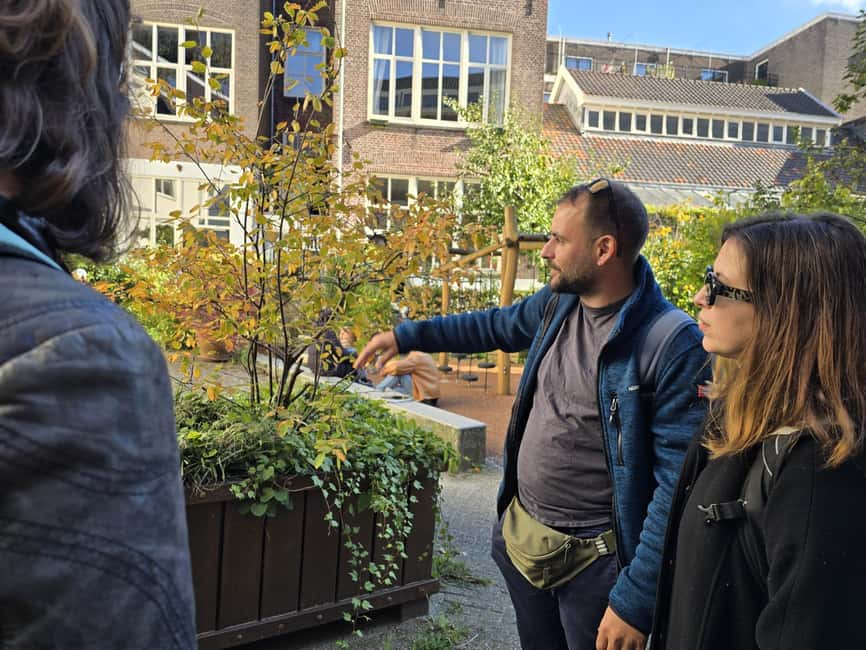
Book it if you want Amsterdam that feels human, not just photogenic. You’ll likely enjoy it most if you care about WWII context, appreciate respectful memorial moments, and like tours where the guide chats back and forth with the group. The optional VR at the end is a bonus, especially if you are curious but do not want to deal with tickets.
Skip it if mobility is a concern, because it is not suitable for wheelchair users and it is designed as an on-foot walk. Also, be aware the WWII and Holocaust topics can be emotionally heavy. If you prefer lighter, mostly scenic tours, you may want to save this for another trip day.
If you do book, come with comfortable shoes and a camera, and bring weather-appropriate clothing. The guide includes water, but you will still want to stay comfortable in the moment. And if you want to keep your plans flexible, it offers free cancellation up to 24 hours in advance.
FAQ
How long is the Liberal Amsterdam tour?
It runs for 3 hours total, with about 2 hours walking and about 1 hour for the coffee break and the VR portion.
Is the Anne Frank VR experience included?
Yes, the tour includes a high-quality Anne Frank House VR experience.
Do I have to do the VR part?
No. The VR part is totally optional. There is one headset, and it is passed around only if people want to try it.
How big is the group?
This is a small-group tour limited to 6 participants.
What is included during the coffee break?
You get warm coffee, bottled water, and a local sweet surprise (which can be chocolate or Dutch cookies).
What souvenirs do I receive?
You receive a mini Polaroid photo and a unique postcard of Amsterdam with a personalized handwritten message and an official stamp.
Where do we meet, and where does the tour end?
You meet in front of the restaurant De Silveren Spiegel, and the tour ends at Waag. The activity is also described as ending back at the meeting point.
Is the tour wheelchair accessible?
No, it is not suitable for wheelchair users.
What should I bring?
Bring comfortable shoes, a camera, water, and weather-appropriate clothing.
Recently reviewed around Amsterdam
- Rotterdam Center: Cocktail Bar Walking Tour – Self Guided★ 2.9 · 9 reviews
- Rent a bike in Amsterdam | 1, 2, 3+ hours★ 4.5 · 68 reviews
- Amsterdam: Rijksmuseum Masterpieces Guided Small Group Tour★ 4.9 · 31 reviews
- Romantic Photoshoot Experience for Couples in Amsterdam★ 4.7 · 25 reviews
- Amsterdam: Queer Nightlife Tour★ 4.8 · 7 reviews
- Amsterdam: Self-guided Red Light District Pub Crawl Mystery★ 3.7 · 6 reviews
- Amsterdam: Red-Light District Pub Crawl and Booze Boat Tour★ 4.1 · 120 reviews
- Amsterdam: Private Red Light District and Food Tour★ 4.8 · 62 reviews
Anne Frank & Jewish History Tours, compared.
Anne Frank’s Story – Guided Walking Tour through Amsterdam
Read our review →
Life of Anne Frank and World War II Walking Tour
Read our review →

Anne Frank Walking Tour – Guided in EN/DE/IT/ES
Read our review →
Anne Frank Walking Tour Amsterdam Including Jewish Cultural Quarter
Read our review →
Anne Frank’s Last Walk & See Anne Frank House in Virtual Reality
Read our review →
Anne Frank and Jewish Quarter Amsterdam Private Walking Tour
Read our review →
Browse the lists this tour appears in