
Reviewed · ROTTERDAM TOURS
Rotterdam: Architecture Highlights Tour including the Depot
This tour is interesting because Rotterdam treats architecture like a live experiment, and you get the behind-the-scenes context plus a rare rooftop view. I love the chance to get up close to Depot Boijmans van Beuningen, especially the curved mirror facade and the engineering story behind it.
I also like how the route connects big landmarks to the city’s design mindset, from Markthal (housing plus a food scene) to Rotterdam Central Station’s bold presence. One consideration: it is not suitable for people with mobility impairments, even though it is listed as wheelchair accessible, so it is worth thinking hard about steps and walking.
Key things I’d highlight before you go
- Rooftop entrance included, with different start points for weekend versus weekday tours
- Depot Boijmans van Beuningen’s double-curved mirror facade, explained with the construction and statics angle
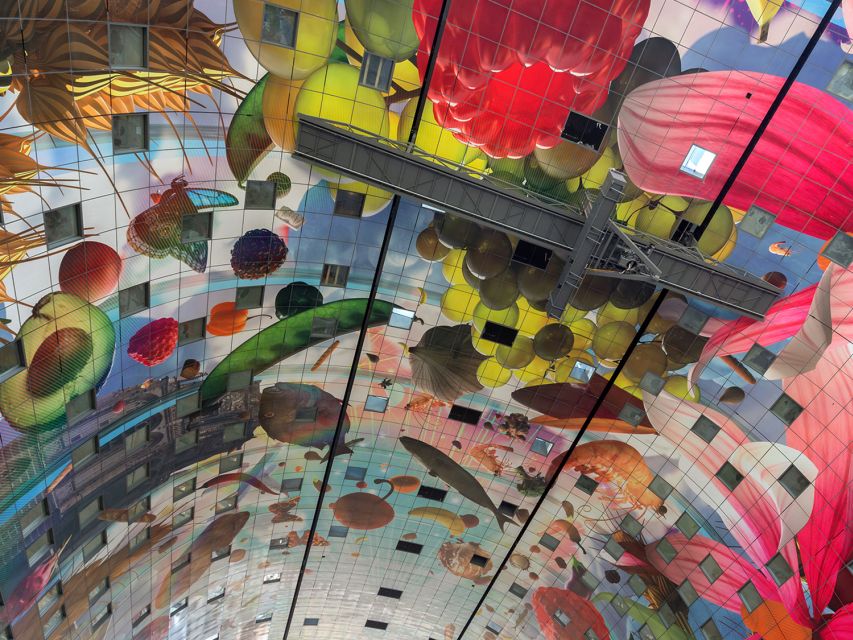
- Markthal walk-through, designed by MVRDV, where architecture and daily life meet
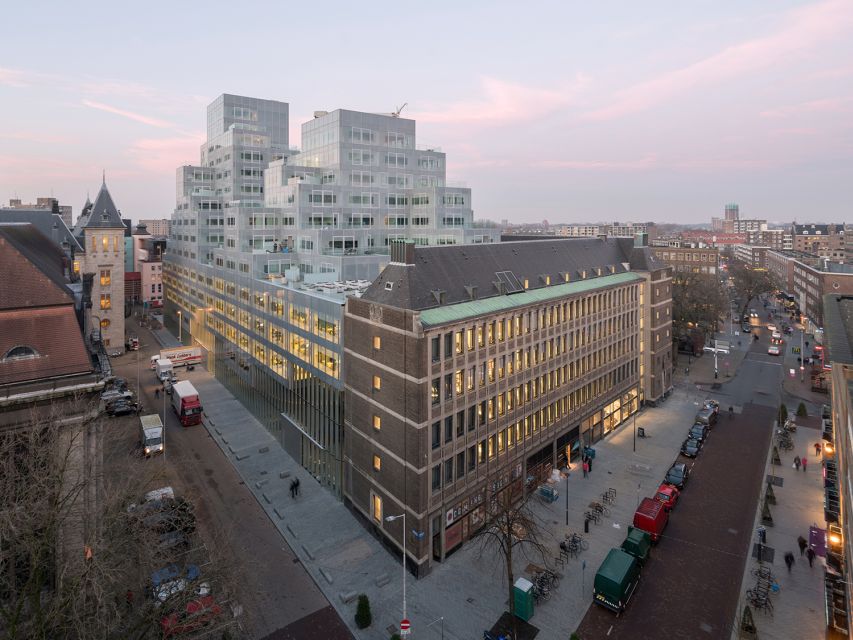
- Timmerhuis stop tying a 1950s municipal block to a pixellated steel-and-glass structure by OMA
- A tight 2.5-hour loop across modern icons and post-war monuments without wasting time
- Value add-ons: 50% Cube Houses ticket discount, plus postcards by Ossip van Duivenbode
Rotterdam architecture, the “why” behind the wow in 2.5 hours
Rotterdam can feel like a city built on reinvention, and this tour is a fast way to see how that attitude shows up in real buildings. The best part is that you are not just looking. You get an expert local guide who ties each stop to how it was designed, how it was made, and why it needed to work in the city’s conditions.
I like tours that have a point of view, and this one clearly does. You’ll hear about Rotterdam’s urge for non-stop innovation while moving between experimental forms, historic survivors, and new icons. Even on a short schedule, the guide keeps the “architecture talk” practical so it makes sense in your head, not just in the abstract.
Because it is only 2.5 hours, you should expect a purposeful pace. This is great for first-time visitors who want structure, but it means you will not have long, slow lingering time at each photo spot.
More Rotterdam tours and day trips:
- Rotterdam: Harbor Sightseeing Cruise
★ 4.3 · 7,599 reviews - Rotterdam: 1-Hour Sightseeing Splash Tour
★ 4.5 · 3,299 reviews - Rotterdam: Rotterdam Zoo Blijdorp Entry Ticket
★ 4.6 · 2,754 reviews
Starting outside the Witte Huis, then building momentum
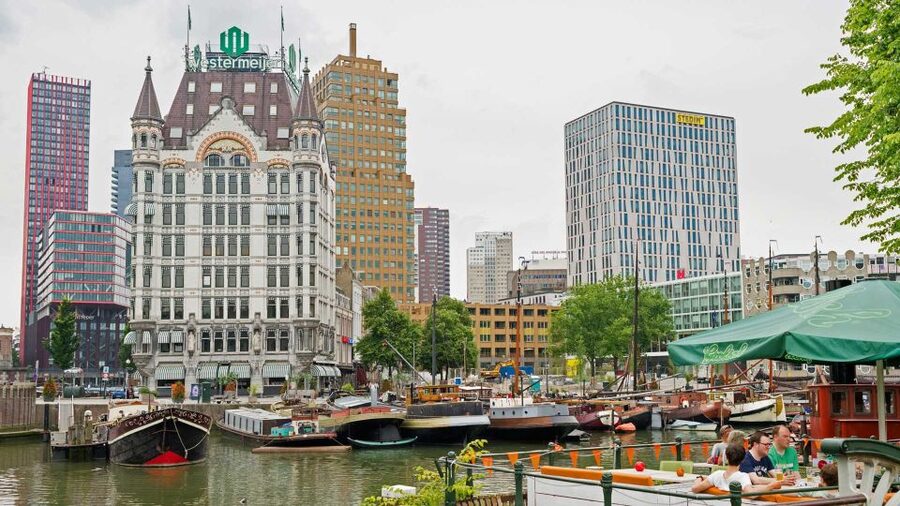
The meeting point is outside the entrance of the Witte Huis. That is a smart start, because it places you at a visual anchor right away, with the city center spreading out in front of you once you head to the rooftop (on the weekend version of the tour).
From there, the tour flows like this: rooftop views first, then walking routes through the central core, with stops that mix modern signatures with post-war landmarks. You cover a lot of ground, but it is not random. Each segment has a theme, and the guide connects the dots for you as you go.
The tour is a private group, which helps with pacing and questions. If you like asking why a facade bends the way it does, or how a building system supports those big shapes, this format tends to work well.
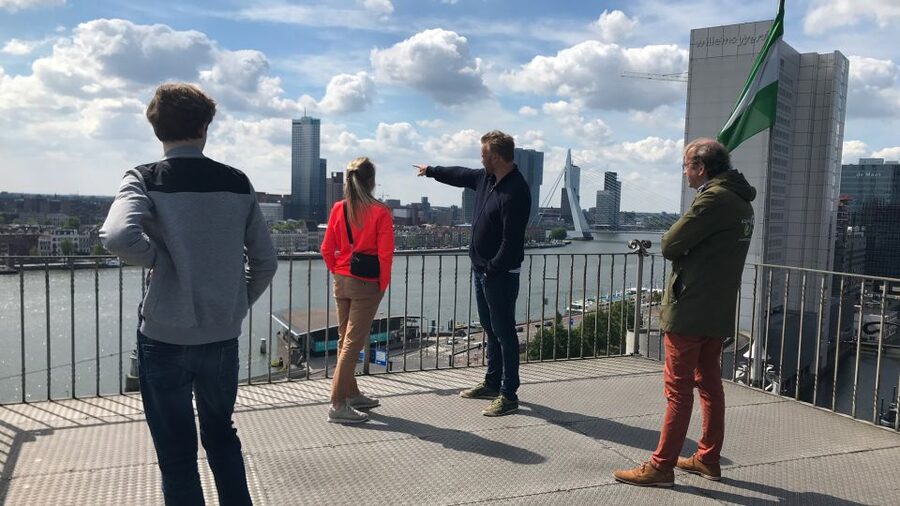
Weekend rooftop magic: Het Witte Huis roof views across the skyline
On weekend tours, you start with rooftop access at the Het Witte Huis. This is the kind of place you usually cannot just wander into, and the view helps you understand why Rotterdam looks the way it does.
From up top, you get wide sightlines over Markthal, the Cube Houses, and the Erasmus Bridge. You can also see the Willems Bridge and De Rotterdam, so your brain starts mapping the city quickly. That is the practical value of a rooftop start: by the time you walk into the streets, you already know what you’re looking at.
Het Witte Huis itself is special context. It is described as the oldest skyscraper of Europe, and when you look at it from the roof, it feels like a marker of when Rotterdam started building upward and bold.
If your group is into photography, this is where you’ll likely burn the most time. Try to plan for a couple of minutes of quiet looking before you shoot.
Weekday rooftop time near Grotekerkplein and the Timmerhuis entrance
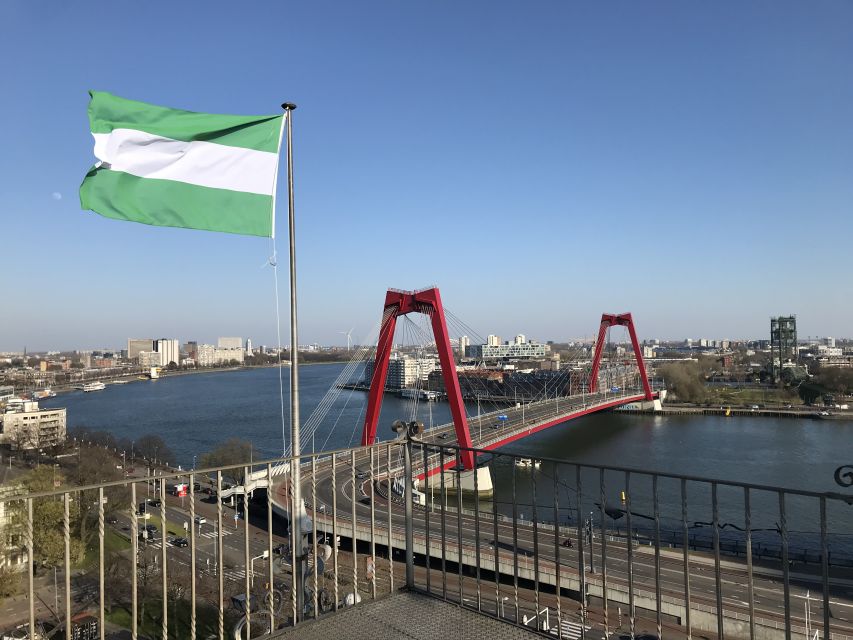
On weekday tours, the rooftop experience is handled differently. You enter a rooftop terrace near Grotekerkplein, and rooftop entrance is included for Timmerhuis on weekdays.
This matters because it changes the angle of the story. Instead of starting with the Het Witte Huis skyline panorama, you start with a viewpoint connected to the city’s center redevelopment energy. From that perch, you’re better set up to understand why the walk stops keep returning to major redevelopment projects and major civic buildings.
Then you move on to Timmerhuis. This is where the tour gets technical in a good way.
Same city, a different kind of day out:
- Rotterdam: Euromast Lookout Tower Ticket
★ 4.4 · 2,549 reviews - Rotterdam: Pancake Cruise
★ 4.4 · 1,986 reviews - From Amsterdam: Rotterdam, Delft & The Hague Guided Day Tour
★ 4.2 · 1,765 reviews - Rotterdam: Kinderdijk UNESCO World Heritage Entry Ticket
★ 4.6 · 1,477 reviews
Timmerhuis by OMA: old municipal block plus pixellated steel-and-glass
The Timmerhuis stop is one of those rare moments where you can see how redevelopment can respect the past while still pushing the look forward.
You will pass Dudok’s Dudok and arrive at the Timmerhuis. The key idea here is that renowned Rotterdam-based architectural firm OMA merged a municipal office block from the 1950s with a pixellated steel-and-glass structure.
That wording can sound like a brochure line, but on site it becomes a real visual contrast. You can think of it as two time periods forced to work together. The older chunk gives the redevelopment a base, and the newer component adds a different rhythm and light behavior.
Practical tip: keep an eye on how the glazing and steel grid change the way the building reads as you walk around it. It is not just about looks. The guide’s explanations help you connect the grid to structure and function.
Markthal (MVRDV): walking through housing and a food scene concept
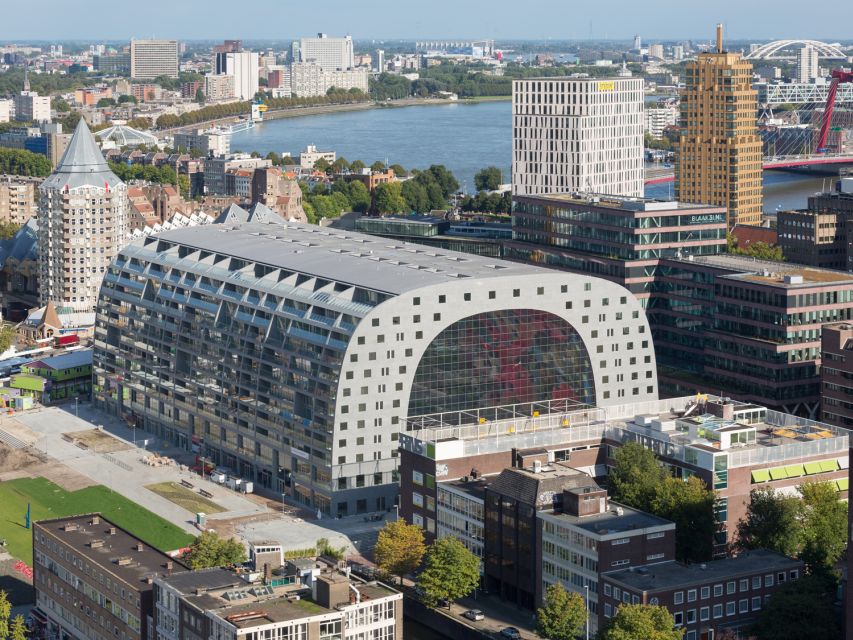
After the first rooftop moments, you head toward Markthal, and you actually walk right through it. It is designed by MVRDV, and the concept is simple but effective: housing meets a lively food scene in one building.
I like Markthal because it is architecture you can test in real life. You’ll see how people flow, where they pause, and how the public interior works as a social hub. Even if you are more into buildings than food, you still get the point. This is design that supports daily movement, not a monument you just look at.
Also, having Markthal near the rooftop views earlier in the day helps. You can turn your memory into orientation. From above it’s a shape on the skyline. From inside, it becomes a place.
If your group is short on time, Markthal is also a good “architectural meaning per minute” stop. You get a lot of understanding without needing a long museum-style commitment.
Grotekerkplein: public square energy and a rooftop terrace view
A big part of this tour is the route around Grotekerkplein, a refurbished public area that now includes a public stage for music and dance. Even though you are on a focused architecture schedule, this stop reminds you that city design is not only about buildings.
On weekday tours, this is part of the rooftop-terrace story near the square. On other days, you still get the broader feel of the central-city redesign logic as you walk through the area.
When a guide includes a civic space like this, it usually means the tour is aiming to show you how architecture supports public life. You should pay attention to sightlines and street widths here. Rotterdam’s designers care about how people actually move.
Rotterdam Central Station: striking architecture you will recognize fast
Next up is Rotterdam Central Station, and it is a good mid-tour anchor. It’s one of the places where you can look at the station and immediately understand it is not trying to be subtle.
The guide’s job here is to help you connect the station’s style to the city’s bigger pattern: bold forms, clear structure, and a willingness to build for modern needs. Even if you are not chasing details, you will still come away with a better sense of how the station fits into the Rotterdam system.
Here’s a practical thought: plan to spend a moment looking before you walk. Stations move quickly, and it helps to pause once so the architecture registers.
Central Station area monuments and redevelopment clues along the walk
As the walking route continues, you pass a series of stops that help you understand Rotterdam’s layers, not just its newest icons.
You will see historical and post-war monuments like the post office and the de Bijenkorf-warehouse. Then you move past the Forum on your way to Schouwburgplein and through Kruiskadeplein. Along the way, you get views of Groothandelsgebouw, Central Station, and de Delftse Poort.
The tour also includes the Calypso, Pauluskerk, and de Unie buildings. That cluster matters. Rotterdam has a way of mixing big, new statements with older structures that anchor the city’s identity. This is one of those routes where you start noticing patterns instead of just collecting names.
If you like architecture because you like context, you’ll enjoy this middle segment the most. It gives you a street-level understanding of what “innovation” looks like when it has to fit alongside older urban fabric.
Museumpark calm: Sonneveld House and Het Nieuwe Instituut
As the tour shifts toward Museumpark, you reach a quieter, more museum-like stretch. You will arrive at the Sonneveld House and Het Nieuwe Instituut.
These stops break the momentum in a helpful way. After seeing major redevelopment projects and landmark facades, it’s useful to see architecture tied to cultural institutions and preserved or designed domestic spaces. The Sonneveld House gives you a different scale of attention. Het Nieuwe Instituut adds a layer of how architecture thinking gets expressed through a museum or research setting.
Even if you cannot go inside everywhere, just seeing the placement and relationship to the park helps you understand why Rotterdam planners keep building around public space.
Depot Boijmans van Beuningen: the reflecting panels and the big-door engineering story
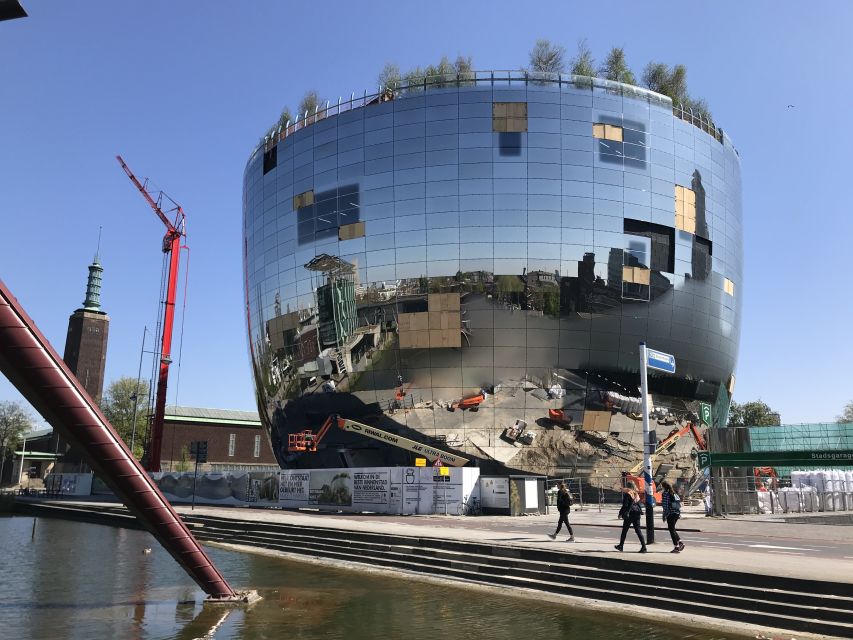
Then you reach the tour’s headline modern icon: Depot Boijmans van Beuningen. This is where the architecture explanation gets very specific, and it is also where the experience feels most different from a generic city walk.
You’ll marvel at the curved mirror facade described as the latest eye catcher. You also get a rare entry access that makes the depot feel less like something you just photograph from outside.
What really sticks is the guide’s focus on concept and construction. You learn about the reflecting panels creating a double-curved facade, and you get the engineering angle behind the huge entrance doors. The tour description even notes aviation engineering techniques needed to operate those massive doors, which gives you a sense of how serious the technical work was.
This is one of those stops where you’ll likely look back later and realize why the city is known for bold design. It is not only about form. It is about systems that can handle real-world demands.
Cube Houses value add: a 50% discount ticket you can use
The tour includes a 50% discount entrance ticket to the Cube Houses. Even if you do not get a long stop there during the walk, the discount is a clear “use it if it fits your schedule” value.
This matters for planning. Architecture fans often want to see the Cube Houses in person, not only as skyline postcards. With the discount built in, you can turn part of your time in Rotterdam into a more complete architecture day without paying full price at the door.
Price and value: $494 per group, what you’re really buying
At $494 per group up to 6, the price is not about buying one person a ticket. It is about buying a private, guided, highly structured architecture experience for a small group.
Your effective cost per person depends on how full your group is. With the maximum of 6, it can feel much more reasonable than many per-person tours. Even without doing exact math, the value comes from what is included: expert local guide, rooftop entrance tied to Timmerhuis or Het Witte Huis depending on day, 50% Cube Houses discount, and three postcards by architectural photographer Ossip van Duivenbode.
The postcards are a small thing, but I like them because they give you something to remember a tour by, and they match the architecture theme instead of being generic souvenirs.
Also, the duration is just 2.5 hours, which is a fair length for city-center walking. You get a strong overview without turning your day into a half-sleepy slog.
Who this tour fits best, and who should think twice
This tour is a great match if you:
- want a structured introduction to Rotterdam’s architecture
- like rooftop views and want access that is usually limited
- enjoy explanations about how buildings are constructed, not just what they look like
- like traveling in a private group, where questions and pacing are easier
You might think twice if you have mobility impairments. The tour data says it is wheelchair accessible, but also says it is not suitable for people with mobility impairments. That tells me there may be movement or building-step factors that might not work for everyone, even if a wheelchair can be used in some parts.
Should you book it?
I’d book this architecture highlights tour if you want the most useful kind of Rotterdam sightseeing: rooftops for orientation, major landmarks for context, and clear explanations about how the design works. The standout for me is the mix of iconic city views and hands-on, up-close access at Depot Boijmans van Beuningen, paired with a Markthal walk-through that turns theory into something you can literally experience under one roof.
If your group is small and you care about architecture details, this $494 private price can feel like good value. If your main goal is slow wandering and long time inside lots of places, the tight 2.5-hour loop might feel a bit fast, but the trade-off is you will leave with a strong map of what to explore next.
FAQ
How long is the Rotterdam architecture highlights tour?
The tour lasts 2.5 hours.
Where do we meet the guide?
Meet your guide outside the entrance of the Witte Huis.
Is there rooftop access on this tour?
Yes. Rooftop access is included, either at Timmerhuis on weekdays or at Het Witte Huis on weekends.
Which building do you visit on weekends?
On weekend tours, you start on the roof of Het Witte Huis.
Which building do you visit on weekdays for the rooftop experience?
On weekday tours, you enter a rooftop terrace near Grotekerkplein, and the rooftop entrance included is for Timmerhuis.
What else besides the guide is included?
You get 3 postcards by architectural photographer Ossip van Duivenbode, and a 50% discount entrance ticket to the Cube Houses.
How much does it cost and what group size is included?
The price is $494 per group, for groups up to 6 people.
Are pets allowed?
Pets are not allowed, but assistance dogs are allowed.
What languages are offered?
The live guide is available in Dutch, English, and German.
Recently reviewed around Rotterdam
- Rotterdam: City Highlights Guided Bike Tour★ 4.8 · 112 reviews
- Rotterdam: Markthal Tour, Meet & Taste, and Het Witte Huis★ 4.3 · 36 reviews
- Rotterdam Private 2-Hour Food Tour with Tastings★ 4.3 · 12 reviews
- Rotterdam: De Rotterdam, Cube Houses, Watertaxi and Markthal★ 4.7 · 112 reviews
- Rotterdam: Food Tour by Bike★ 4.8 · 31 reviews
- Rotterdam Center: Cocktail Bar Walking Tour – Self Guided★ 2.9 · 9 reviews
- Discover Rotterdam: Classic Highlights Bike Tour by a Local★ 5.0 · 3 reviews
- Rotterdam: National Museum of Photography Entrance Ticket★ 3.8 · 24 reviews
Rotterdam Tours, compared.

Kinderdijk UNESCO World Heritage Entry Ticket
Read our review →
Browse the lists this tour appears in