

Reviewed · AMSTERDAM WALKING TOURS
The Hague: Courtyard Walking Tour
The Hague’s courtyards are interesting because you can stand on a normal street and still miss the calm, sheltered world inside. This walk guides you into the spaces that sit behind walls and houses, where the city noise fades fast. You’ll get a real sense of how living around courtyards works in The Hague.
I love Renaissance design details you can spot once you’re in the right place. I also like the way the guide frames the courtyards as a charity story, with poor and old people historically living there, then later transitioning into quieter homes for residents.
The main drawback is expectations. If you come hoping for only the most spectacular “courtyard-only” scenes nonstop, you might feel the route mixes in other interesting streets and monuments along the way.
Quick hits
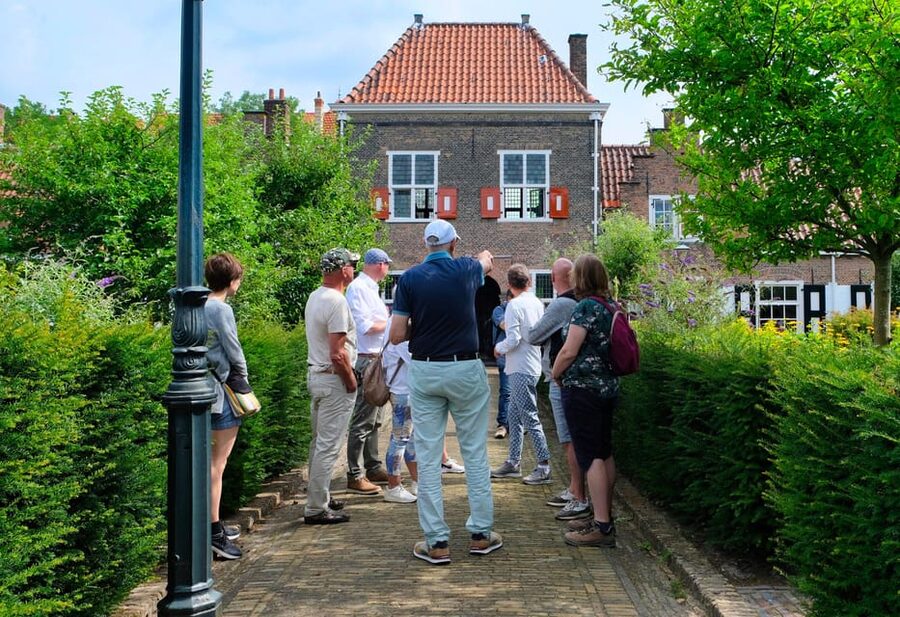
- Hidden-from-the-street courtyards: Many entrances are barely visible until you’re standing right in front of them.
- Renaissance touches you can actually see: Once you’re inside, design details make more sense.
- Charity roots explained: The guide connects the courtyards to how people once lived, including those who were poor or old.
- Small group, limited to 10: Better questions, smoother pace, and less rushing.
- Dutch-speaking guides who share with care: Guides take time and adjust their delivery when needed.
Courtyards behind walls, a side of The Hague you can miss
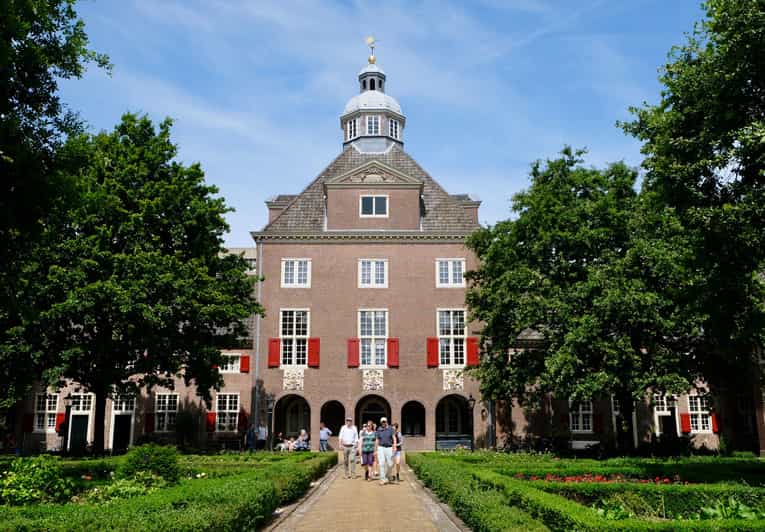
If you only see The Hague from the big roads, you miss the city’s quieter rhythm. Courtyards here can feel like a separate place, because they sit behind gates and boundaries that block your view from street level. The result is a very Dutch feeling of privacy, order, and daily life tucked away from the public sidewalk.
What makes this walk worth your time is that it is not just a sightseeing loop. The guide explains what you’re looking at, so you understand why these spaces exist and why they’ve lasted. The courtyards date back to the 16th century, yet the atmosphere still works today.
I also like that the theme is human. Yes, you’ll notice architecture and the Renaissance references. But the strongest thread is charity and community, tied to places where poor and old people once lived. That angle turns “pretty courtyards” into something more meaningful, without becoming heavy or preachy.
More trips to The Hague and Scheveningen:
- The Hague: Mauritshuis Entrance Ticket
★ 4.7 · 2,706 reviews - The Hague: City Canal Cruise
★ 4.6 · 2,024 reviews - From Amsterdam: Rotterdam, Delft & The Hague Guided Day Tour
★ 4.2 · 1,765 reviews
From ‘t Goude Hooft to the first courtyard gate
The tour starts at ’t Goude Hooft, pleintje. It’s a simple meeting point, and that helps you get on with the walk instead of hunting for instructions. Plan to arrive a few minutes early so you can start with the group, not after it already absorbed the first bit of context.
Right away, you begin the key skill of courtyard walking in The Hague: paying attention to what’s not obvious. Many courtyards sit behind walls and buildings, and their entrances can be subtle. When you realize how easily you could walk past them without noticing, you understand why a guided walk matters here.
Once the group is moving, the pace is built for listening. The guide takes time to tell you the history or a feature connected to what you’re seeing. That means you’re not just passing through, you’re processing, comparing the street view with what opens up inside.
A practical note: this is a 1.5-hour tour, so the structure is tight. You’ll see a handful of courtyards and related sights, but it won’t feel like a long, slow wandering day. Think “focused walk,” not “all afternoon.”
Courtyard houses and the 16th-century living model
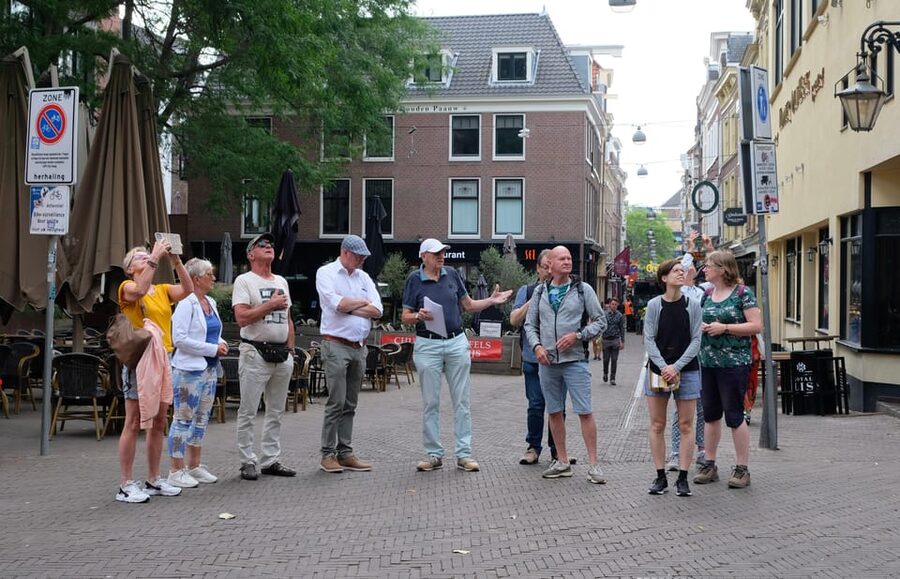
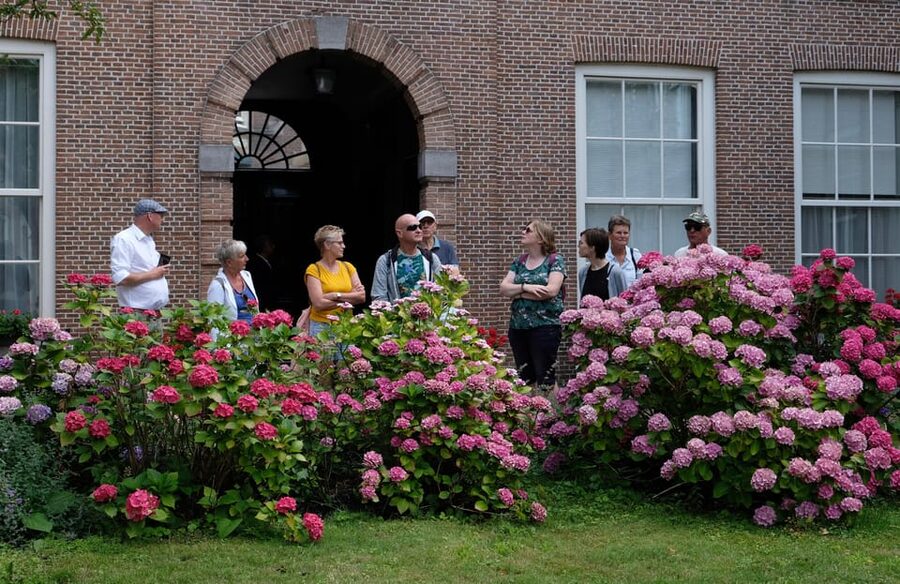
The tour’s core experience is the courtyards themselves. They represent a traditional Dutch way of living that began centuries ago. From the way they’re enclosed and organized, you can read the logic of everyday life: shared space, protected privacy, and a neighborhood feel that doesn’t rely on street-level exposure.
On this walk, you’ll learn how these spaces were used in the past. The guide focuses on courtyards where poor and old people historically lived. That matters because it changes how you view the setting. You stop thinking of courtyards as decorative backdrops and start seeing them as housing solutions shaped by real needs.
Once the guide explains the original purpose, the present-day atmosphere clicks into place. You’ll hear how residents now enjoy peace and quiet while the city stays active outside the walls. In other words, the courtyards still do what they were built to do, just with modern daily life instead of past hardship.
One thing I appreciate is that the walk includes other interesting locations and monuments along the way. That prevents the tour from feeling like a repeated pattern of doors and gates. You get variation, while still staying centered on the courtyard theme.
Renaissance clues and the charity history you’ll hear from the guide

The highlights include Renaissance and charity, and the strongest part of the experience is how those two themes connect. You’ll get a tour where the design and the social purpose are linked, not treated as separate facts.
The Renaissance angle shows up through what you can observe once you’re inside these enclosed spaces. Even when details are subtle, the guide helps you interpret what you’re seeing. That turns architecture into something you can actually read, instead of just admiring.
Then charity provides the emotional anchor. Courtyards were tied to people who needed a place to live, especially those who were poor or old. The guide’s job is to translate that into plain language while you’re standing in the right physical context, not just reciting dates and names.
This is also where the guide quality really shows. Several people highlighted the guides’ ability to explain in a way that feels respectful toward the courtyards and the residents. One review praised Hans for knowing a lot and even adjusting the tour for two foreign guests, which is a big deal if you want the information to land clearly. Another guest praised Kees for being enthusiastic and sharing a lot, and that energy can make the history feel alive without becoming theatrical.
If you care about design, you’ll get enough architecture to satisfy that interest. If you care about society and how cities supported people, you’ll get the charity thread without losing the sightseeing.
More walking tours in The Hague:
- The Hague: City Walking Tour
★ 4.5 · 156 reviews - The Hague: Old City Private Walking Tour
★ 4.4 · 81 reviews - Anne Frank’s Story – Guided Walking Tour through Amsterdam
★ 5.0 · 11,619 reviews - Amsterdam: Life of Anne Frank and World War II Walking Tour
★ 4.8 · 10,467 reviews
How the small-group format keeps the walk personal
This is a small group tour, limited to 10 participants. That limit matters more than it sounds. Smaller groups mean the guide can slow down when someone needs clarification, and the tour doesn’t turn into a rushing herd of headphones.
You’ll also get more of the guide’s time. The tour isn’t described as a fast “point and go.” Instead, the guide takes time to explain history or features. With a small group, you’re more likely to hear that context instead of half-watching it from the edge.
The tour is Dutch-speaking. That may limit you if you only speak English, but the guide is still a live guide, so you can usually follow the pace and key ideas through explanation and direction. If you’re comfortable with basic Dutch, even better. If you’re not, plan to rely on the visual side and the guide’s body language.
One real-world consideration is pets. The rules say pets are not allowed, though assistance dogs are allowed. Still, one review mentions that a guest arrived with a dog based on information and the guide ultimately made an exception. That tells me two things: you should not assume pets will be allowed, and you might want to think about your comfort level around dogs when choosing to go.
Practical value: price, timing, and what fits your day
At $9 per person for a 1.5-hour guided walk, the value is strong on paper. You’re paying mainly for access and interpretation: the courtyards are often difficult to notice from the street, and the guide helps you understand what you’re seeing. That combination is exactly where even a short tour can feel worth it.
Timing-wise, it’s a good fit for an afternoon break or a morning reset. You’ll be walking, but it’s not long enough to drain the day. After the tour, you’ll likely look at The Hague differently because you now know what to look for, even from a distance.
Accessibility is also a plus. The tour is wheelchair accessible, which means the route and pacing are designed with that in mind. If you use a wheelchair, it’s smart to arrive early and be ready for tight turning points that can happen in older city areas, but the key point is that wheelchair access is listed as supported.
The main “value trade-off” is the tour length and focus. You are seeing a curated slice of courtyard life plus some other monuments. If you want a full-day deep exploration of every courtyard corner, this will not be enough by itself. But if you want a guided orientation in a compact time window, this is a good deal.
Who this tour is best for (and who should skip)
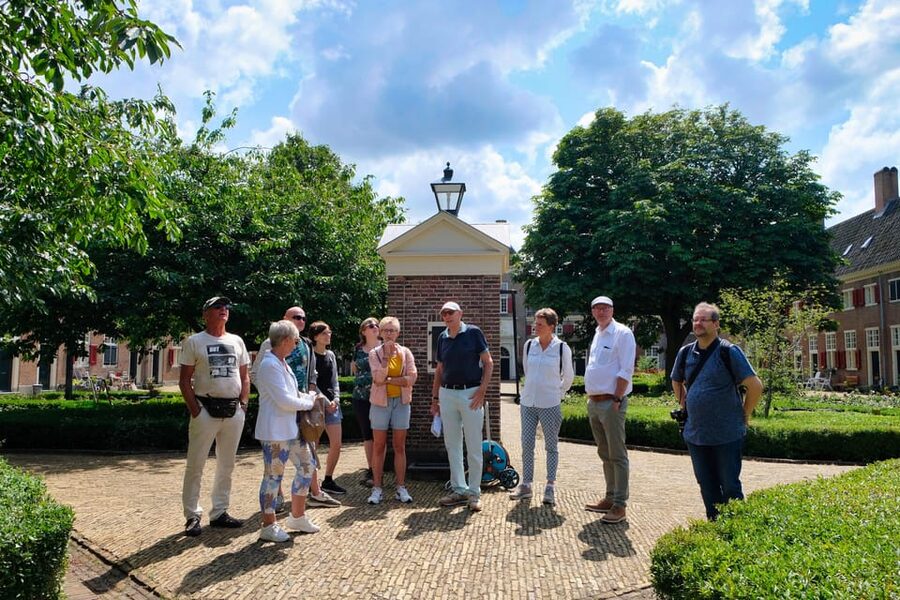
This walk is best for you if you like quiet places with clear purpose. If you enjoy architecture that’s tied to real human stories, you’ll get a lot out of it. The history angle focuses on how people lived, especially poor and old residents, and that theme makes the courtyards more than just pretty backdrops.
You’ll also enjoy it if you like being guided through places that are easy to miss. Courtyard entrances are hidden behind walls, so without a guide you might not find the same kind of experiences. This tour gives you the “how to spot it” knowledge while you walk.
Should you skip it? Consider skipping if you strongly prefer open, street-level walking only, because much of the magic is moving from public street into enclosed courtyard spaces. Also consider your comfort level with animals. Even though the official rule is pets not allowed, the one reviewed exception means not everyone will treat it exactly the same day-to-day.
Finally, if you came specifically chasing only the most famous courtyard examples, one review mentioned hoping to see slightly more of the most authentic courtyard types. That doesn’t mean the tour is weak. It just means your best-fit depends on whether you enjoy the mix of courtyards plus other interesting sights.
Should you book The Hague Courtyard Walking Tour?
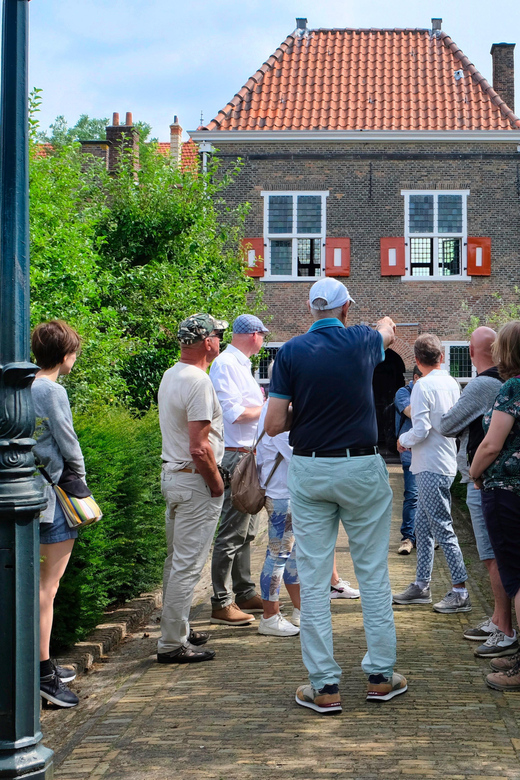
I think this is a solid booking if you want a short, meaningful introduction to The Hague’s quieter side. The combination of hidden courtyards, a guide who explains context, and the charity-and-living story makes it feel more substantial than a typical “pretty streets” walk. At $9 for 1.5 hours with a small group of 10, it’s also priced in a way that lets you take a chance without overcommitting.
Book it if:
- You want to see courtyards you would likely miss on your own.
- You enjoy history that connects directly to the place you’re standing in.
- You like small-group pacing and questions.
Maybe skip it if:
- You need an English-only explanation, since the guide language is Dutch.
- You are highly uncomfortable around the possibility of dogs, even though pets are normally not allowed.
If you’re curious about courtyard life in The Hague, this tour gives you a neat, focused hour and a half, and it leaves you with new instincts for what to look for when you’re back on the streets.
FAQ
How long is The Hague: Courtyard Walking Tour?
The tour lasts 1.5 hours.
What does the tour cost?
It costs $9 per person.
Where do I meet the guide?
You meet at ’t Goude Hooft, pleintje.
What language is the tour guide?
The live tour guide speaks Dutch.
Is the tour wheelchair accessible?
Yes, it is wheelchair accessible.
Is the group size limited?
Yes, it is a small group limited to 10 participants.
Are pets allowed?
Pets are not allowed, though assistance dogs are allowed.
Can I cancel for a refund?
Yes, you can cancel up to 24 hours in advance for a full refund.
Do I have to pay when I book?
You can reserve now and pay later, meaning you can book your spot without paying immediately.
Recently reviewed around The Hague
- The Hague: Old City Private Walking Tour★ 4.4 · 81 reviews
- The Hague: Glowgolf Glow in the Dark Indoor Minigolf★ 4.1 · 89 reviews
- From Amsterdam: Rotterdam to The Hague and Delft★ 4.6 · 15 reviews
- From Amsterdam: Rotterdam, The Hague & Delft Private Tour★ 4.6 · 7 reviews
- From Amsterdam: Day Tour to Rotterdam, Delft and The Hague★ 4.8 · 98 reviews
- Private half-day Delft and The Hague tour★ 5.0 · 3 reviews
- The Hague: City Walking Tour★ 4.5 · 156 reviews
- Amsterdam: Zaanse Schans, The Hague & Rotterdam Tour★ 4.8 · 33 reviews
Amsterdam Walking Tours, compared.

Anne Frank’s Story – Guided Walking Tour through Amsterdam
Read our review →
Life of Anne Frank and World War II Walking Tour
Read our review →
Absolutely Amsterdam – the Essential Introductory Walking Tour
Read our review →

Anne Frank Walking Tour – Guided in EN/DE/IT/ES
Read our review →

Anne Frank Walking Tour Amsterdam Including Jewish Cultural Quarter
Read our review →Browse the lists this tour appears in