
Reviewed · HISTORICAL TOURS
Historical tour of Amsterdam with Italian guide
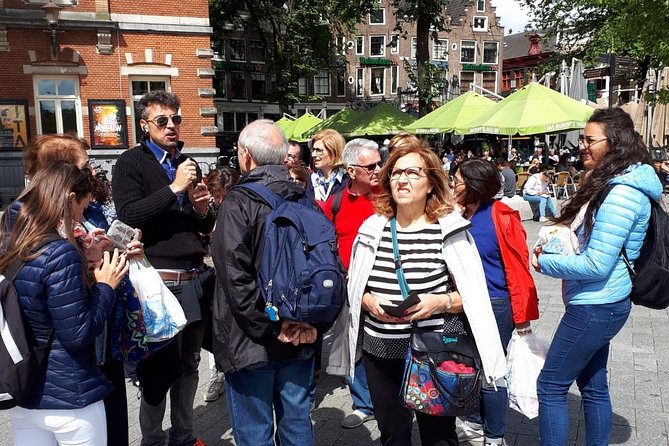
This is the kind of Amsterdam tour that helps you get your bearings fast. You walk the classic historic spine of the city while an Italian mother-tongue guide stitches together stories about trade, religion, and everyday life, with plenty of quick curiosities along the way. I like that it feels like a guided route through real neighborhoods, not a checklist. I also like the low-stress timing, finishing around Museumplein so you can keep going on your own.
One thing to plan for: museum entrances are excluded. You’ll get viewing time and context for major sites, but the tour does not include tickets for places like Anne Frank House or the Van Gogh Museum. If you want to do those inside, you’ll need to buy separately and manage your own time after the walk.
Key points to know before you go
- Italian mother-tongue guide with lots of context and curiosities, so you’re not just looking at buildings.
- Orientation from Central Amsterdam to Museumplein, finishing at a perfect spot to start museums right after.
- Short stops at big landmarks like the flower market and the Anne Frank House area, good for a first visit.
- A route that covers contrasts, from Singel and Dam Square to the Joordan and the Red Light district, with historical framing.
- Small group feel with a cap of 50 travelers and a mobile ticket for smoother check-in.
- Value-focused format at about $28.81 per person for a guided 3.5-hour walk, with museums kept separate.
From Damrak to Museumplein, why the route works
This walk has a smart arc: it starts near Damrak (Park Plaza Victoria Amsterdam, Damrak 1-5) and ends at Museumplein around 1:30 pm. That matters, because Amsterdam sightseeing often turns into a day of backtracking. Here, you get a forward-moving route that takes you from the old center into the museum district.
You also get a helpful rhythm. The tour is long enough to connect the dots, but it’s not so long that you feel fried. In about 3 hours 30 minutes (approx.), you cover a lot of the city’s identity: canals, civic squares, commercial streets, and the cultural belt near Vondelpark and the museums.
For your day planning, the ending location is a practical gift. Museumplein is where you can switch gears quickly, whether that means going to the Van Gogh Museum or the Rijksmuseum afterward. Even if you skip paid entries, you’ll still have plenty of open-air “keep exploring” options nearby.
More history-led tours in Amsterdam:
- Amsterdam Food and Cultural Tour with Tastings
★ 5.0 · 2,442 reviews - Amsterdam: Haunted History and Ghost Walking Tour
★ 4.5 · 488 reviews - Amsterdam High-End Dutch Food & History Tour – Up to 8 guests
★ 5.0 · 482 reviews
Italian mother-tongue guidance, and how it keeps the walk interesting
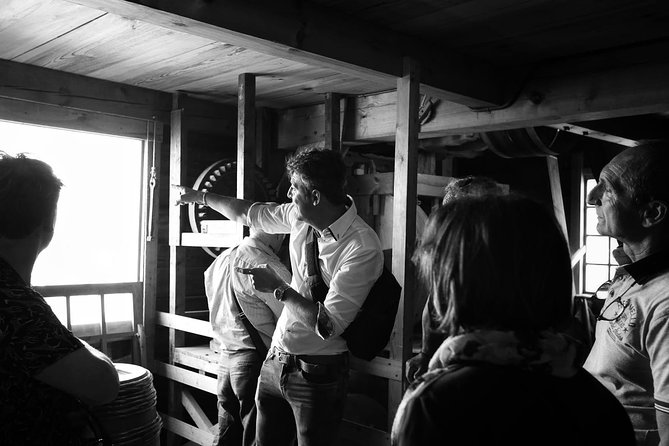
The headline benefit here is the guide. This is run by an Italian mother-tongue operator, and the emphasis is on professionalism, experience, and friendliness. In plain terms, you’ll hear the kind of explanation that makes the city feel logical.
I especially like how the stories match the street-level route. When you pass through places tied to trade and the famous Dutch global period, you’re not just told dates. You get context about how commerce, power, and culture shaped the city. When the tour touches religion and conflict, it frames the impact on daily life and public identity, not just politics from afar.
The guiding style also seems to prioritize keeping momentum without rushing. People highlight that the walk stays pleasant and informative, not dull. Names like Fabio and Lara come up in the feedback, both described as prepared, available, and consistently upbeat. That’s the kind of combination that makes a first-time Amsterdam visitor feel confident instead of lost.
A small note to set expectations: stops are brief at several major points. This tour is built for orientation and context. If you want long interior visits, you’ll do that on your own after the walk.
Central Amsterdam, Singel, and the old trade vibe
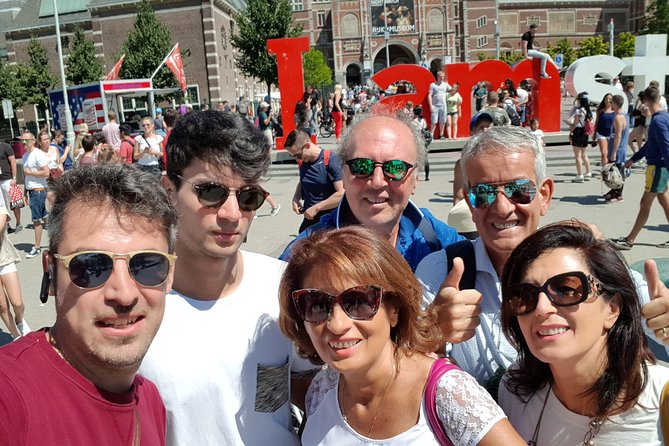
The tour threads through the core historic area, including Singel and Central Amsterdam. This is where Amsterdam’s layout starts to “click.” You see how the canal belt shaped movement and how the city’s centers grew around commerce and civic space.
You’ll also hear about specific historical landmarks tied to trade, including the spice customs house and the king’s warehouses. Even if you’ve never heard those names before, they give you something concrete to picture. This is one of those moments where a guide’s explanations turn a random facade into a clue about the past.
As you walk, you get the practical side too. You’ll learn how to read the city from the sidewalk: canal lines, street patterns, and where key squares sit relative to each other. That’s useful because Amsterdam can feel like a maze on a first day. After this, you’ll have mental bookmarks.
Drawback to consider: because the route covers ground and includes lots of sights, you need to be comfortable walking at a steady pace. If you’re hoping for extended sitting breaks every 20 minutes, this might feel like you’re always in motion.
Dam Square, the Joordan, and the neighborhoods behind the headlines
The route continues into big public spaces, including Dam Square. Dam Square is one of those places where every direction feels important. In a guided setting, it’s easier to understand why it became such a central stage for the city’s identity.
Then you get the Joordan, a neighborhood that helps you understand Amsterdam beyond the postcard angles. It’s the kind of area where small details matter, and a guide can point out what you might otherwise miss. Since the tour is about customs and traditions as much as dates, this neighborhood stretch is a good bridge between “history museum” and “real-life Amsterdam.”
You’ll also pass through the general area of The Joordan and the canals nearby as part of the larger flow toward other landmarks. The value here is timing. By the time you reach the cultural and museum district, you’ve already seen enough of the older neighborhoods that the city feels connected instead of segmented.
If you love history, you’ll appreciate the tour’s broad themes: from the era of global trade and the early “company” world to later tensions that shaped public life. The goal isn’t to turn it into a lecture. The goal is for you to recognize patterns when you wander afterward.
A few more Amsterdam tours worth comparing
- Amsterdam: 75 Minute City Canal Cruise with Audio Guide
★ 4.4 · 17,501 reviews - Anne Frank’s Story – Guided Walking Tour through Amsterdam
★ 5.0 · 11,619 reviews - Amsterdam: Johan Cruijff ArenA Tour with Optional Guide
★ 4.6 · 8,954 reviews - Amsterdam: Royal Palace Entry Ticket and Audio Guide
★ 4.6 · 6,475 reviews
The Anne Frank House area, without the ticket stress
One of the standout moments is the stop for the Anne Frank House area. You’ll have time to pass in front of the house and hear about its history and importance, with memories of the Second World War. The key detail is that this is a viewing and storytelling stop. Entrance is excluded.
For many first-time visitors, this creates a manageable experience. You get context without the pressure of squeezing in a timed ticket during a walking tour window. If you want to go inside, you’ll need to buy separately and plan your own entry time.
This approach works best if you treat the tour like orientation and meaning-setting. After hearing the story from the guide, you can decide later whether to commit to the inside visit. For some people, that’s the better path because it keeps the walk flowing, instead of turning the day into ticket logistics.
The trade-off is simple: you leave with the outside perspective and narrative, not the full museum experience. If you know you definitely want the inside, plan your schedule so you don’t feel rushed after the tour ends.
Flower market, Leidseplein, and a taste of everyday Amsterdam
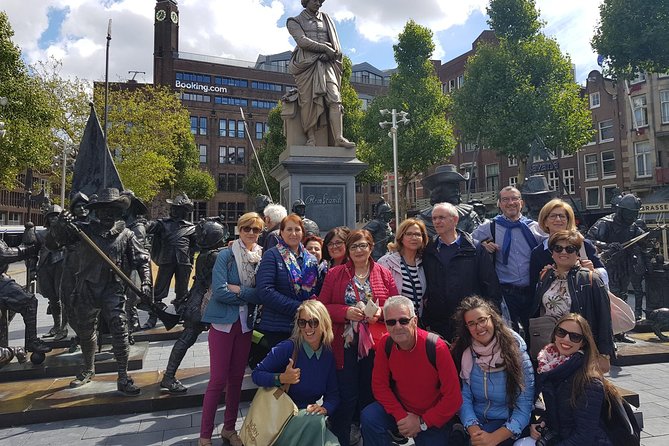
The tour includes a flower market stop that’s carefully timed. You get a 20-minute stop that leads into the flower market area, plus time to simply look around. Even if you’re not buying anything, it’s one of the quickest ways to feel Amsterdam’s sensory side.
You’ll also walk through other central areas on the way toward Leidseplein, including Rembrandtplein and Leidseplein. Leidseplein is a useful landmark because it anchors a lot of energy around the university square vibe. A guided walk helps you understand why these public areas feel like social hubs, especially when you compare them to the more formal civic squares earlier in the route.
You’ll pass through Hard Rock Café and move toward the museum belt, and yes, it’s a bit of an odd contrast: a global pop culture brand sitting along a route through centuries of local history. But that contrast is part of what makes walking Amsterdam fun. It shows how the city layers eras rather than replacing them.
Practical thought for you: if you want photos at the flower market, bring patience. That area can be crowded. Since your stop is time-limited, it helps to decide early whether you’re taking wide shots, close shots of colors, or both.
Red Light district and religious history, handled with context
The route includes stops in the direction of the Red Light district, and it also covers themes like the wars of religion. This combination could sound like a shock-value route, but the way it’s framed is the point.
You’re not being pushed into scandal or sensationalism. Instead, you get historical framing for how public spaces and moral tensions shaped city life. That’s actually a good way to experience Amsterdam, because it prevents you from reducing complex neighborhoods to one stereotype.
I also like that the tour ties these themes to people and ideas connected to European history. Names like Erasmus and Martin Luther come up in the tour’s broader story arc. When you hear those references while you’re looking at the city’s streets, it becomes easier to understand why Amsterdam attracted so many different currents of thought over time.
One consideration: because this portion of the route covers sensitive areas, comfort levels vary by person. If you’re easily bothered by what you might see near the Red Light district, you may want to mentally prepare and treat the stop as a quick orientation moment. The tour format is designed to move on, not linger.
Vondelpark and Museumplein, plus why the timing is so useful
Vondelpark appears on the route as a key scenic break, and the tour also passes by Museumplein, where you can see the major museum cluster. Even if your time at specific park points is brief, Vondelpark signals a shift in Amsterdam’s tone. It’s the move from the older city core into the cultural district mood.
Museumplein is especially convenient because it sets you up for the next step. The tour ends there around 1:30 pm, and that’s a helpful window for museum visits while your energy is still decent. The tour also explicitly points you toward museum options like Van Gogh Museum and the Rijksmuseum, though entrances are not included in the walk itself.
So you get two benefits at once:
1) you understand how you got here, through a guided route
2) you can use the time after for paid museum experiences
If you’re a museum person, this is one of the best ways to do it without feeling like you’re hopping between random points on the map. You’ll already have the geography in your head, and it makes ticketed visits feel more meaningful.
Price, group size, and the mobile ticket for smoother mornings
At $28.81 per person for a walk that lasts about 3 hours 30 minutes, this tour is priced like a value-first city orientation. You’re paying for an expert guide and a structured route. You’re not paying for museum admissions, and that keeps the cost lower.
The group size cap is 50 travelers, which is big enough to be efficient but small enough that you usually still feel guided rather than swallowed. In practice, this size supports the storytelling style without turning it into a chaotic herd.
You’ll also have a mobile ticket, which is the modern kind of convenience. It saves time at meeting points since you’re not hunting paper confirmations. The tour meets at Park Plaza Victoria Amsterdam near Damrak, and it ends at Museumplein, which means you don’t have to fight Amsterdam transit back and forth just to keep your day moving.
One consideration for cost-value math: if you plan to enter multiple museums, your total day spend will go up, because entrances are excluded. Still, you’ll likely enjoy the tour more if you treat it like a guided map plus narrative, not a full ticket bundle.
Who should book this Amsterdam historical walk
This tour is a great fit if you’re:
- in Amsterdam for the first time and want a guided route that hits core landmarks
- interested in how trade, religion, and civic life shaped the city
- looking for a lively, friendly Italian guide who keeps the walk flowing
- happy to see major sites from the outside and decide later about inside tickets
It may be less ideal if you’re:
- expecting a museum-hopping package with included entry fees
- someone who hates walking for 3.5 hours even with short stops
- determined to do multiple inside ticket attractions immediately after, without any buffer time
Should you book this tour or not?
If your goal is to understand Amsterdam quickly, with a guided story that connects neighborhoods, squares, and landmarks, I’d book it. The price feels fair for the length, the Italian mother-tongue guidance, and the way it lines up your route so you finish at Museumplein.
The only real reason to pass is if you’re set on inside museum access during the walk itself. Since entry fees are excluded, you’ll need to plan your own ticket timing for Anne Frank House and the Van Gogh Museum.
If you want, tell me your travel dates and whether you plan to buy Anne Frank and museum tickets. I can help you build a simple schedule around the 1:30 pm end point.
FAQ
How long is the historical walking tour?
It runs for about 3 hours 30 minutes.
What is the price per person?
The price is $28.81 per person.
Where does the tour start and end?
It starts at Park Plaza Victoria Amsterdam, Damrak 1-5, 1012 TM Amsterdam. It ends at Museumplein, 1071 Amsterdam, around 1:30 pm.
Are museum entrances included?
No. Entrance fees to museums are excluded, including stops like Anne Frank House and the Van Gogh Museum (entrance not included).
Which stops are included along the route?
Key stops include the Residence Flower Market area, the Anne Frank House area (view only), Vondelpark, Dam Square, the flower market, Leidseplein, Hard Rock Café area, Museumplein, and the Van Gogh Museum area (entrance not included). The route also passes through areas like Singel, the spice customs house, the king’s warehouses, the first red light, and the Joordan.
What language are the guides?
The tour is operated with Italian mother-tongue guides.
How big is the group?
The tour has a maximum of 50 travelers.
What do I receive for check-in?
You receive a mobile ticket.
Does weather affect the tour?
Yes, it requires good weather. If it is canceled due to poor weather, you will be offered a different date or a full refund.
Recently reviewed around Amsterdam
- Amsterdam Highlights Canal Cruise with a Drink★ 5.0 · 66 reviews
- Private walking tour Amsterdam. English or Spanish.★ 5.0 · 21 reviews
- Guided Private Bar Tour in Amsterdam City Center★ 5.0 · 4 reviews
- Amsterdam Private Boat Trip With Skipper, Burger and Beers★ 5.0 · 5 reviews
- Arrival Private Transfer Amsterdam Airport to Amsterdam City Center by Minibus★ 4.5 · 7 reviews
- Private Arrival Transfer: Schiphol Airport Amsterdam★ 3.5 · 30 reviews
- 2-Hour Private Anne Frank Walking Tour with Drink★ 5.0 · 3 reviews
- Private Amsterdam WW2 walking tour★ 4.5 · 15 reviews
Historical Tours, compared.

Amsterdam Food and Cultural Tour with Tastings
Read our review →
Kinderdijk UNESCO World Heritage Entry Ticket
Read our review →
Hop-on Hop-off Old-Fashioned Heritage Tram Tour
Read our review →


Amsterdam High-End Dutch Food & History Tour – Up to 8 guests
Read our review →
Cruise through the Historic City Center with Guide
Read our review →
Browse the lists this tour appears in