
Reviewed · MUSEUMS
Amsterdam: Houseboat Museum Entry Ticket
A canal house on paper is one thing. A real houseboat museum is something else. You step into the Hendrika Maria, a 1914 cargo ship turned residential houseboat in 1967, and you get to experience that everyday-water-life story up close.
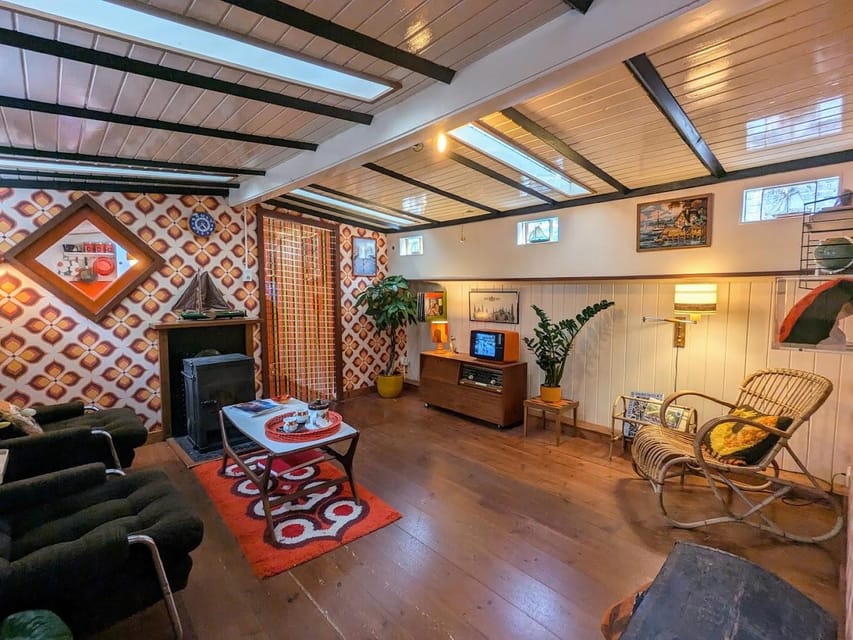
I love how the museum keeps the focus on how people actually lived, including a family of four when it was still used as a freight barge and later as a home. I also like the strong sense of time travel created by the largely original interior from the 1970s, with its warm orange, yellow, and brown palette. The main drawback is simple: it is a small space with steep stairs, so it may feel tight and less comfortable for some people, and the visit can be fairly quick.
Key Highlights You Should Care About
- A 1914 ship made into a home: The Hendrika Maria cargo ship became a houseboat in 1967.
- Original-feeling 1970s interior: Expect the colors and layout vibe of when it started living like a regular house.
- Built-in sailing past: You can see the original mast and leeboard, gear that mattered for trips to Scandinavia.
- Family life across eras: A family of four, moving from freight-bar…ge life to home life, plus a living tradition that spans more than 100 years.
- A tour you can do efficiently: You can follow the audio guide to cover the full space without getting lost.
- It is Amsterdam’s only houseboat museum: A direct, focused experience in one place.
The Hendrika Maria: Amsterdam’s Houseboat Museum in a Real Ship
This is not a staged display in a big building. It is a working-sized home on the water, based on the Hendrika Maria, built in 1914 and later converted into a residential houseboat in 1967. That alone makes the whole experience feel more believable. You are not looking at a history model. You are walking through it.
One neat detail is that the ship is set up so you can understand both lives: the earlier freight days and the later house days. The museum approach helps you connect the dots between practical boating needs and household life. Once you see the setup in person, it makes sense why certain areas are where they are and why some features look like they belong on a boat first.
More museums and galleries in Amsterdam:
- Amsterdam: The Upside Down Museum Entrance Ticket
★ 4.4 · 9,506 reviews - Amsterdam: Red Light Secrets Museum Entry Ticket
★ 4.2 · 5,722 reviews - Amsterdam’s Weirdest Museum: Believe It or Not!
★ 4.5 · 4,086 reviews
What the Entry Ticket Includes, and How Long It Takes
The ticket is straightforward. You pay for entrance to the Houseboat Museum, and that is it. There is no food included, and you should plan to explore and then move on to your next canal stop when you are done.
In terms of how long it takes, you should think in the range of a short, focused visit rather than a half-day adventure. Some tours feel like they land around 15 to 20 minutes when you pace yourself with the audio guide, then you might spend extra time lingering inside if you like details. The museum is around 80 square meters, but since it is a boat home, space changes how quickly you move.
If you only have one day in Amsterdam and you are choosing between multiple canal-area activities, this works well as a “small block of time” stop. It also fits nicely if you want something different from the usual museum boxes, like paintings or rooms behind velvet ropes.
The 1970s Interior Feel: Colors, Tight Corners, and Realistic Living
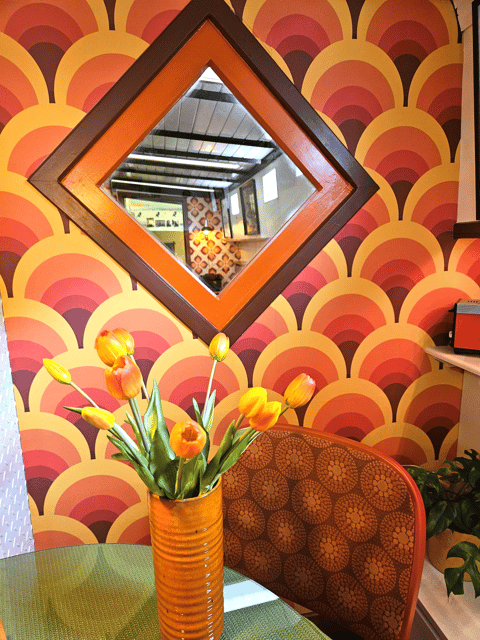
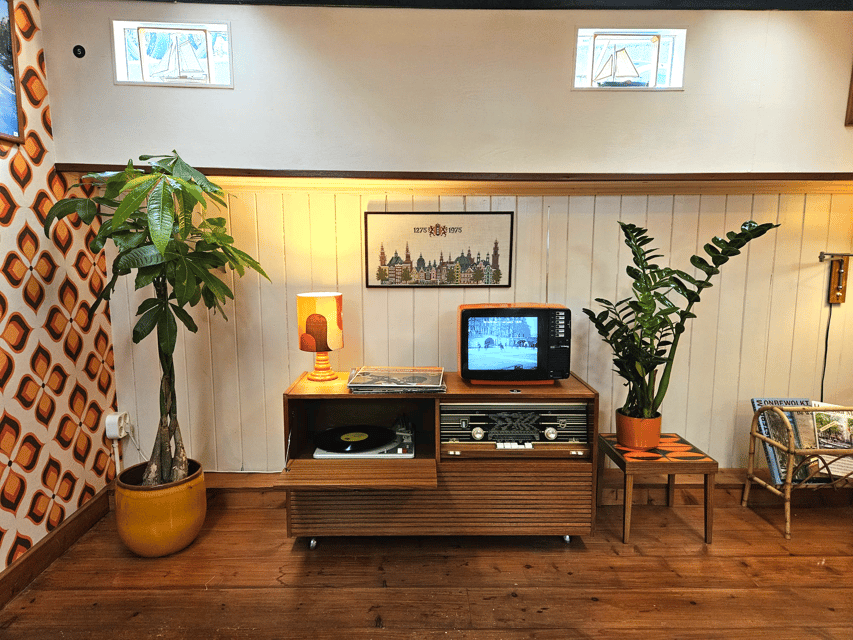
The museum’s interior is designed to feel like it is from the 1970s, when it started being used as a regular house. That shows up quickly, especially in the orange, yellow, and brown look you are warned to expect. The colors are not just decoration. They create the mood of a specific era, and they make the space feel lived in rather than neatly staged for visitors.
Because it is a houseboat, the layout can feel compact in a way that museums on land rarely replicate. You get that physical reminder that life on a boat is about using every available inch. Some rooms feel like they were built for practicality first, comfort second, and then comfort gets added over time.
One practical note: the museum is in a real houseboat, so space is limited. That means you might move more slowly than you planned, especially at stairways and tighter turns. If you do not like confined spaces or you need a lot of room to maneuver, it is worth thinking about before you go.
Freight to Home: The Story of a Family of Four
The museum’s heart is the everyday story: what it meant to live aboard when the Hendrika Maria was used as a freight barge, and then how it became a home. A highlight is the focus on how a family of four used the ship as a residence, first in the earlier freight context and later in the houseboat role.
This matters because it is not just “history as dates.” It is history as routines and tradeoffs. Freight life tells you why certain parts of the boat were necessary for moving goods. House life tells you how those same spaces got re-imagined so people could sleep, cook, and live with water all around them.
The museum also emphasizes that the houseboat residents have lived this way for over 100 years, so the story does not feel like a single moment. It reads like a continuing living tradition, with older practicality feeding into newer domestic comfort.
A few more Amsterdam tours worth comparing
- Amsterdam: Heineken Experience Ticket
★ 4.6 · 30,055 reviews - Amsterdam: Rijksmuseum Entry Ticket
★ 4.7 · 25,535 reviews - Amsterdam: Icebar Entry Ticket with 3 Drinks
★ 4.2 · 14,562 reviews - Amsterdam: Keukenhof Ticket and Roundtrip Shuttle Transfer
★ 4.7 · 11,799 reviews
Sailing Gear You Can Actually See: Mast and Leeboard
If you like boat details, you will probably enjoy this part the most. The museum includes original sailing equipment, including the sailing mast and a leeboard. Those were not decorative items. They were practical tools for the kind of travel the ship did in its earlier freight days, including transport routes to Scandinavia.
Seeing these components helps you understand that the boat’s design was built for movement and control, not for visitor flow. That is why the interior might feel like it has “boat logic,” such as where you notice structure, where beams and fittings are placed, and why some features are hard to compare to a standard home layout.
It is one of those experiences where a few details make the whole place click. You stop thinking of the houseboat as a novelty and start thinking of it as a functional craft that people adapted into living space.
Making It Through the Tour Smoothly (Without Feeling Rushed)
Because this is a small, vertical space, the pacing is everything. I suggest you go in with the mindset of “short but thoughtful.” It is easy to want to sprint, but if you do, you miss the point of how the museum turns a ship’s practical features into daily living.
Many people follow the audio guide to move efficiently through the space and cover it all. That also helps you manage time. If you’re trying to fit the museum between other canal stops, the audio guide gives you a way to see the main story without guessing what to look at next.
Photography is allowed, but flash photography is not permitted. So if you want photos, plan to use normal lighting and keep your camera ready for those tight corners where the color palette really shows up.
Price Check: Is $12 Good Value in Amsterdam?
At $12 per person, this is priced like a smaller-ticket activity, not a premium long-form museum day. Whether it feels like a great value comes down to your expectations.
If you want a quick, high-impact glimpse into a very specific slice of life, this is a strong buy. The museum offers a real object you can walk through (not just a model), plus a clear theme: a cargo ship converted into home life in 1967, with a largely original 1970s interior. That directness is hard to replicate elsewhere in Amsterdam.
If you expected an hour-plus museum experience with lots of rooms and hands-on activities, then $12 may feel steep. One visitor summed up the timing as something like, you see it all quickly. The space is small, and stairs add a natural limit to how long people want to linger.
My take: it is good value if you treat it like a focused stop. It is less compelling if you want a slow, wide-ranging museum marathon.
Who Should Book This Houseboat Museum, and Who Might Skip It
You should go if:
- You like hands-on, real-location history over abstract displays.
- You enjoy niche travel stops where you learn how everyday life worked.
- You want something different from the typical Amsterdam museum lineup.
- You appreciate boat details like the mast and leeboard, and you like seeing how they connect to life.
You might skip or think twice if:
- You feel uncomfortable with steep stairs and tight indoor spaces.
- You want a long, sit-and-stay attraction.
- You have limited tolerance for confined layouts, since this is a museum inside an actual home-sized boat.
It also suits couples, solo travelers, and small groups who want a calm, story-based visit. If you are traveling with kids, it can be a memorable experience, but you’ll want to watch for the stair situation and the compact layout.
Should You Book This Houseboat Museum Entry Ticket?
If you like practical, specific travel experiences, I think you should book it. This museum gives you a rare kind of Amsterdam authenticity: a preserved living environment that lets you understand how ship life became home life. The original-feeling 1970s interior, the freight-to-house story, and the visible sailing gear give you enough structure to make the visit feel complete, even if it is short.
But go in with the right expectation. It is small and it is on a boat. If you need lots of space, long wandering time, or heavy-duty accessibility, it may not be the best fit.
FAQ
FAQ
How much does the Amsterdam Houseboat Museum ticket cost?
The entry ticket is $12 per person.
How long is the visit expected to take?
The activity is listed as lasting 1 day, and in practice the museum visit can be quite short, with some tours taking around 15 to 20 minutes when following the audio guide.
What is included with the ticket?
Your ticket includes entrance to the Houseboat Museum.
Are food and drinks included?
No. Food and drinks are not included.
Is photography allowed inside?
Photography is allowed, but flash photography is not permitted inside the museum.
What makes this museum different from a typical museum?
It is located in a real houseboat, so you explore a historical residential interior rather than viewing objects behind barriers.
What languages is support available in?
Host or greeters are available in English, French, Traditional Chinese, German, Spanish, Portuguese, Italian, and Dutch.
Is free cancellation available?
Yes, you can cancel up to 24 hours in advance for a full refund.
Recently reviewed around Amsterdam
- Rotterdam Center: Cocktail Bar Walking Tour – Self Guided★ 2.9 · 9 reviews
- Rent a bike in Amsterdam | 1, 2, 3+ hours★ 4.5 · 68 reviews
- Amsterdam: Rijksmuseum Masterpieces Guided Small Group Tour★ 4.9 · 31 reviews
- Romantic Photoshoot Experience for Couples in Amsterdam★ 4.7 · 25 reviews
- Amsterdam: Red-Light District Pub Crawl and Booze Boat Tour★ 4.1 · 120 reviews
- Amsterdam: Queer Nightlife Tour★ 4.8 · 7 reviews
- Amsterdam: Self-guided Red Light District Pub Crawl Mystery★ 3.7 · 6 reviews
- Amsterdam: Private Red Light District and Food Tour★ 4.8 · 62 reviews
Museums, compared.


Moco Museum Amsterdam Entrance Tickets with Banksy & More
Read our review →


Amsterdam’s Weirdest Museum: Believe It or Not!
Read our review →


Browse the lists this tour appears in