
Reviewed · MUSEUMS
Amsterdam: ARTIS-Micropia Microbe Museum Entry Ticket
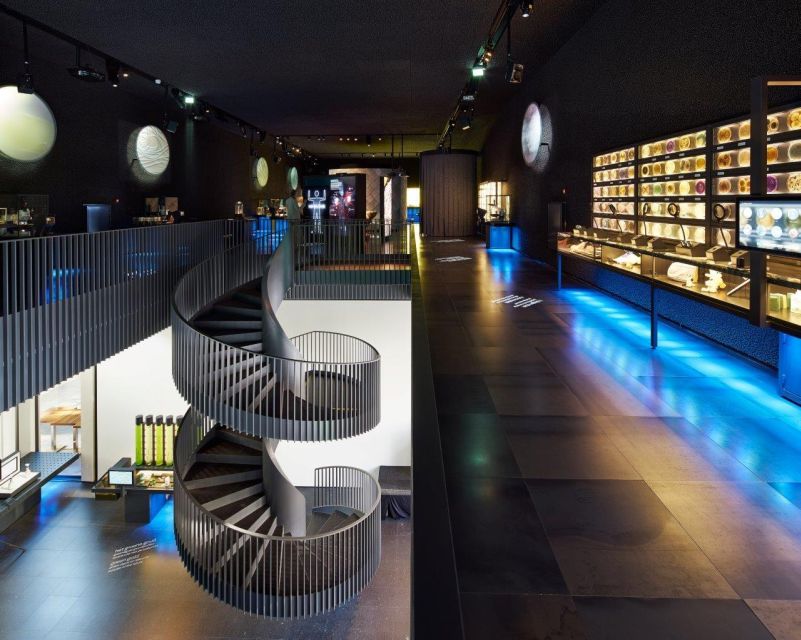
The most interesting part of ARTIS-Micropia is how Amsterdam makes the invisible feel personal. I love the self scan that reveals microbes on and inside you, and I love walking past the Laboratorium area where lab talks add real scientist energy. One possible downside is that at about $21 per person, it can feel a little pricey if you want a long, deep museum marathon.
You are in the ARTIS area, just about a 10-minute walk from the city center, so this fits well with a normal day of sightseeing. Kids can enter for free up to age 12, but the museum’s recommended age is 8+, so plan around that if you are traveling with younger children.
Key things that make Micropia worth your time
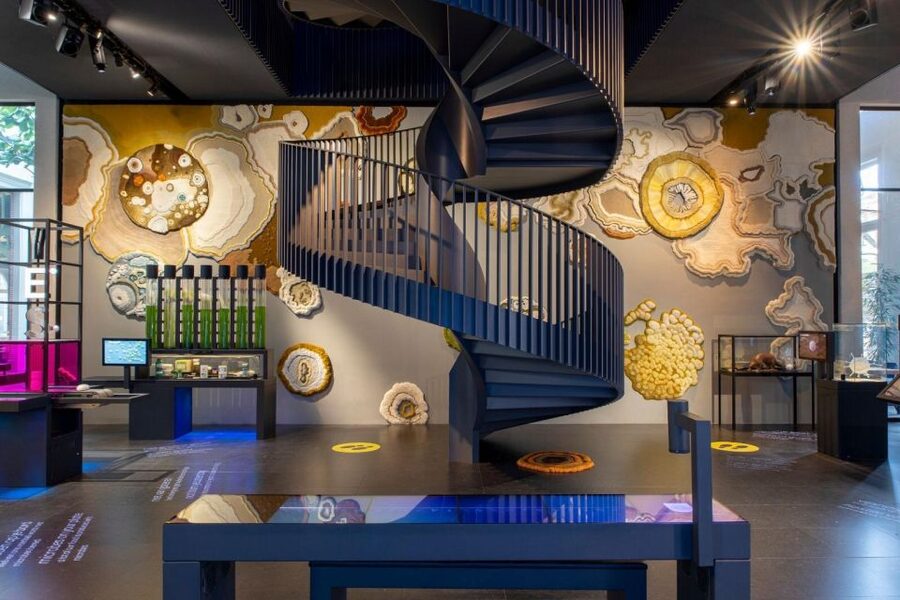
- World’s only microbe museum in the heart of Amsterdam
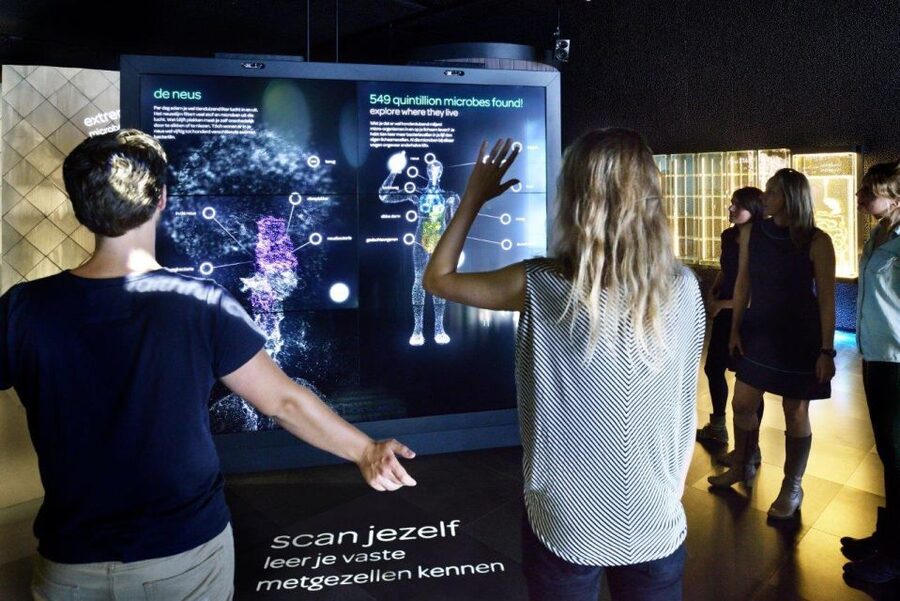
- Scan yourself to discover microbes on and inside your body
- Microbe stamp trail you collect as you move through the museum
- Daily lab talks held in front of the Laboratorium
- Spring break Micro Mission workshop (free, plus a creative workshop for kids)
- Family-friendly hours and setup, open daily 10 am to 5 pm
ARTIS-Micropia turns the invisible world into something you can actually do
ARTIS-Micropia is not a museum where you just read labels and move on. It is built so you interact with the idea of microbes, using living displays, microscopes, and hands-on moments that make the whole topic feel less abstract. Microbes are everywhere, in the air, on your skin, and in your gut. Here, that “invisible everywhere” feeling becomes visible in a way that is easy to understand and hard to forget.
The biggest reason I think you will enjoy it is the museum’s point of view: microbes matter. They affect how food tastes, they help keep you healthy, and they play a role in nature’s balance. You do not get a lecture. You get experiences that lead you to that conclusion step by step.
The second reason is pacing. You can go slow and read lots, or you can enjoy the interactive stations first and accept that some of the science will be “too cool to fully absorb” on one visit. Reviews often mention visits around 45 minutes to nearly 2 hours, which is a good hint that you control your speed. If you want value, aim for about 1 to 2 hours so you hit the interactive bits plus the information.
More museums and galleries in Amsterdam:
- Amsterdam: The Upside Down Museum Entrance Ticket
★ 4.4 · 9,506 reviews - Amsterdam: Red Light Secrets Museum Entry Ticket
★ 4.2 · 5,722 reviews - Amsterdam’s Weirdest Museum: Believe It or Not!
★ 4.5 · 4,086 reviews
Your first big moment: scan yourself and follow the stamp trail
A signature feature is the chance to scan yourself and see what microbes are present on and in your body. This is the kind of attraction that works on two levels. First, it is genuinely fascinating to learn that microbes are part of your everyday life. Second, it is a built-in hook that keeps you paying attention to the rest of the museum.
Right after that, you can use the microbe stamp idea to organize your visit. Instead of drifting, you end up moving through the museum like you are collecting “proof” you have completed each mini story. It turns a self-guided ticket into a light quest.
Here is the practical tip that will help you: start earlier rather than later in your entry window. If you come late, you can still do everything, but you might feel rushed to hit all the interactive stations. Starting earlier gives you time to redo a scanner interaction if you want a second try, and it also helps if a specific area is crowded at that moment.
The Laboratorium: daily lab talks and the feeling of real science in the room
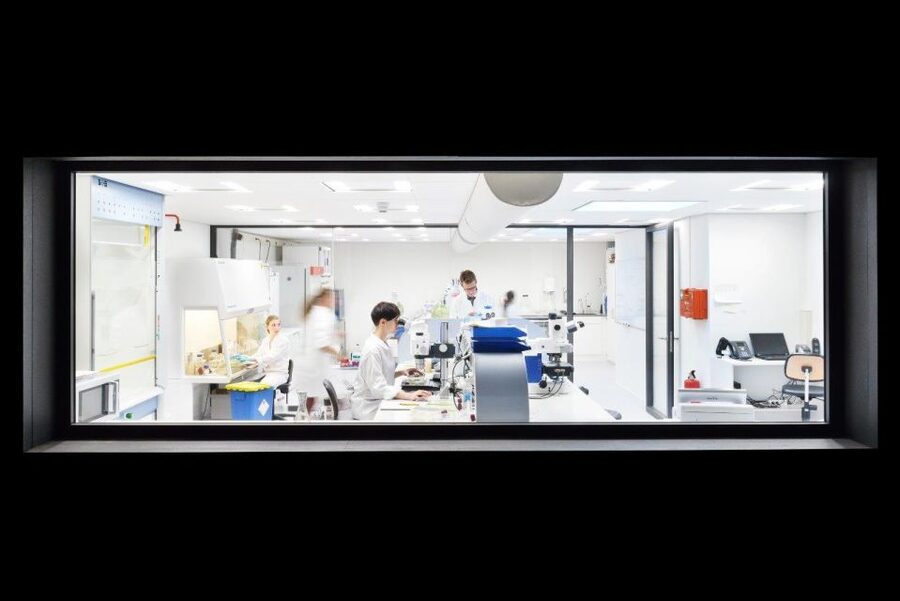
One of the most compelling things about Micropia is how often it connects what you see to what scientists do. There are daily lab talks in front of the Laboratorium, and even if you do not catch every word, you will still get the rhythm: questions, explanations, and how microbes are studied.
As you walk through, you are also dealing with living microbes, microscopes, interactive displays, and stories shared by lab technicians. That matters because microbes are not just “tiny things.” They are living organisms with roles in digestion, health, and ecosystems. When staff explain or model how they are thinking, the museum stops feeling like a science poster and starts feeling like a working lab environment you can walk through.
A few exhibit styles you should look for include:
- Visual effects and animations that make microscopic life easier to grasp
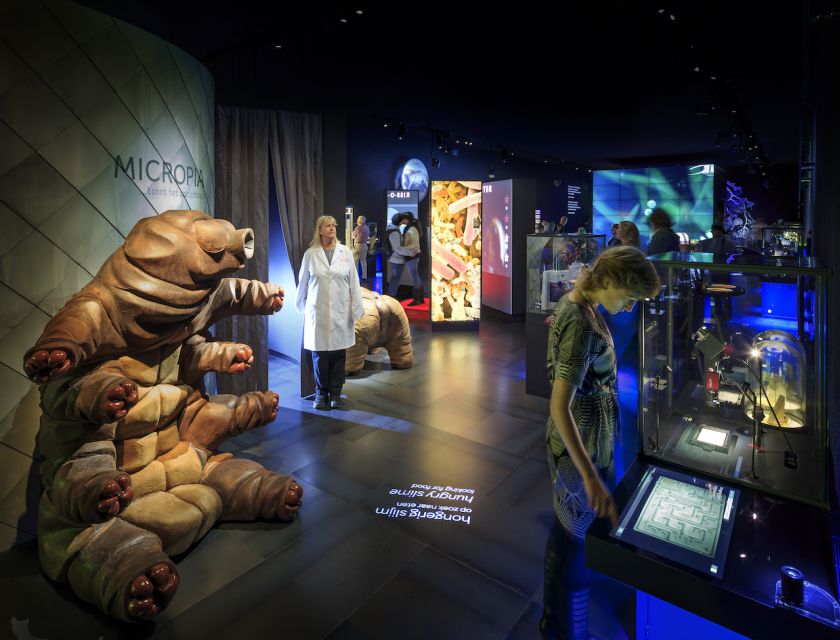
- Sculptures of bacteria and viruses that are more than decorative
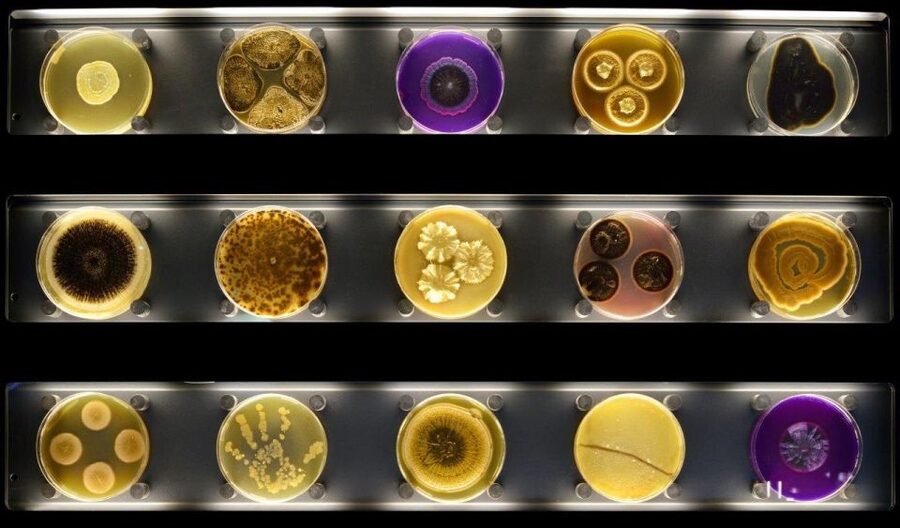
- Plates with growing moulds, which can be thrilling if you like watching biology unfold
In reviews, people also mention being able to see an actual laboratory as you move around. That is the part that makes it feel authentic. You are not just reading about microbes. You are standing near the tools and the mindset that study them.
Living displays, microscopes, and the cool factor you can bring back home
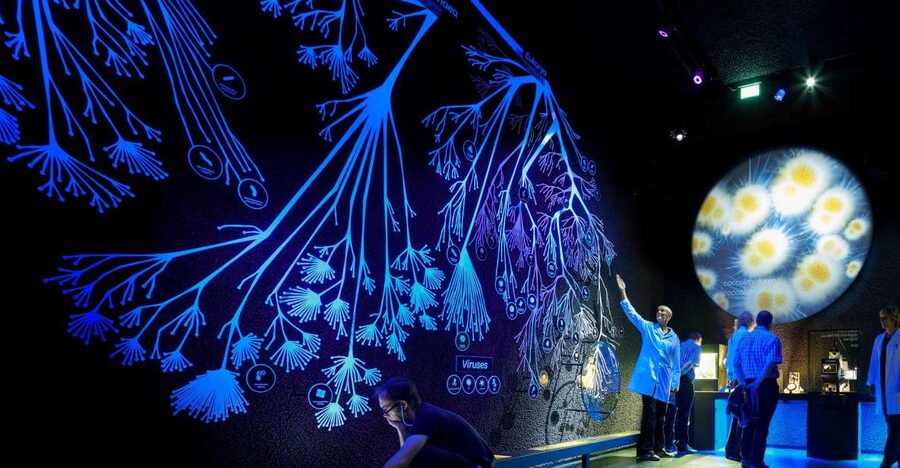
Micropia’s approach mixes scientific seriousness with hands-on curiosity. The museum is designed so adults get plenty of detail, and kids get enough interaction to stay engaged. That balance is not easy to pull off for a niche topic like microbes, but Micropia makes it work by using clear explanations plus visual and interactive moments.
If you like learning by looking closely, microscopes are a big part of the experience. They help you bridge the gap between “I cannot see this” and “Now I can.” Also, several review comments point out that the museum is full of machines and viewing stations for seeing microbes closely.
If you are traveling with family, keep an eye on the interactive areas. Reviews mention kids enjoying collecting stamps and engaging with public participation stations. For your planning, that means you can treat the museum like a choose-your-own-adventure. Pick a station that looks fun, do it, then move to the next story.
If you are a biology fan or even a microbiology enthusiast, you will probably feel right at home. The museum has an actual lab presence, and staff are described as friendly and helpful, which makes questions easier. People with a science background often highlight how detailed the exhibits feel for a museum experience.
A few more Amsterdam tours worth comparing
- Amsterdam: Heineken Experience Ticket
★ 4.6 · 30,055 reviews - Amsterdam: Rijksmuseum Entry Ticket
★ 4.7 · 25,535 reviews - Amsterdam: Icebar Entry Ticket with 3 Drinks
★ 4.2 · 14,562 reviews - Amsterdam: Keukenhof Ticket and Roundtrip Shuttle Transfer
★ 4.7 · 11,799 reviews
The Micro Mission during spring break: free for kids, built around connections
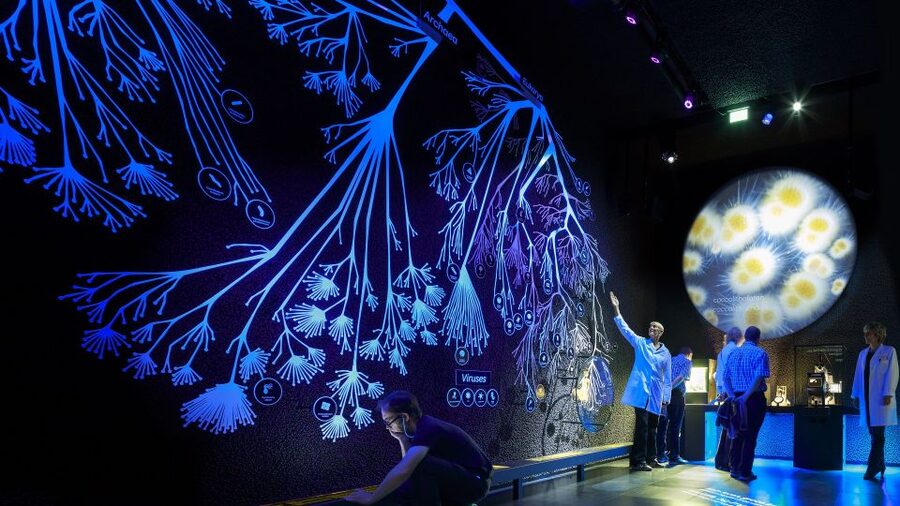
During spring break, Micropia runs a free program called Micro Mission, with a creative workshop. It is available every day during spring break between 10.00 and 17.00, and you can collect it for free at the ticket desk.
What I like about this for families is the theme. No species truly lives on its own, and the Micro Mission is built around how plants, animals, and microbes work together in nature. You even get the practical human angle: the microbes in your gut help you digest your food.
This program is especially useful because it turns the museum’s core ideas into something kids can do, not just something they can watch. If your visit falls on spring break, it is worth checking the Micro Mission timing so you can match your museum entry with that window.
How long to plan and how to pace your route in one day
Your ticket is valid for one day, and the museum is open daily from 10 am to 5 pm. Most people do it in a single sitting, and reviews suggest a broad range, from about 45 minutes to nearly 2 hours depending on reading pace and how many interactions you prioritize.
Here is a practical pacing approach that works well:
- Go in expecting to spend time on the scanner and stamp route first
- Plan at least one stop at the Laboratorium talk area
- Leave buffer time for the displays with microscopes and growing moulds
You do not need to race through. In fact, rushing hurts value here because microbes are the sort of topic where the story clicks when you see several parts in sequence.
Also, give yourself time around entry. The ARTIS neighborhood is part of the day. Reviews mention that the museum sits in a garden setting with cafes and a park nearby, which is helpful if you arrive early or if you finish before your next plan.
Price and value: what $21 buys you in a microbe-focused museum
At around $21 per person, you are paying for a very specific experience: a museum dedicated to microbes alone. That is why it can feel pricey for some people if they expect a bigger “stuff count” like a typical museum.
But if you value interactive learning and hands-on science, the price starts to make more sense. Micropia includes:
- Admission to the microbe museum itself
- A self scan experience tied to your body
- A stamp trail that guides your visit
- Living or visibly active displays, including growing moulds
- Regular daily lab talks
It also has family pricing logic that can improve value for groups. Children up to 12 can enter for free, which can help offset the cost for families traveling with kids.
My honest advice is to think of Micropia as a focused science stop, not a full day replacement for multiple attractions. Pair it with other nearby ARTIS options if that fits your interests.
Pair it with ARTIS-Groote Museum or plan a zoo day nearby
Micropia can be paired with other ARTIS experiences through combination tickets. If you want the science theme to broaden, a combination ticket can also include ARTIS-Groote Museum, where you explore how everything is connected, including human, animal, plant, and microbe.
You can also step outside into ARTIS Zoo for nature right next door. The key is that the Micropia ticket itself is just admission to ARTIS-Micropia, so any additional museum or zoo entry will be separate.
If you like the idea of “connections” rather than isolated topics, the Groote Museum pairing makes sense. If you want a break after the science, the zoo can provide a more familiar animal-focused contrast.
When to go: daily hours and holiday schedules you should note
Micropia is open daily from 10 am to 5 pm. If you plan around specific dates, here are the holiday hours that are explicitly listed:
- 24 December, 9 am to 5 pm
- 25 December, 9 am to 5 pm
- 26 December, 9 am to 5 pm
- 31 December, 9 am to 4 pm
- 1 January, 10 am to 5 pm
If you are visiting during spring break, keep an eye on Micro Mission availability from 10.00 to 17.00 during that period. Plan your day so you do not miss that free workshop time slot.
Practical logistics: meeting point, languages, and entry rhythm
For your arrival plan, the meeting point is Plantage Kerklaan 38-40. The ticket is an entry ticket with validity for one day, and you should check availability to see starting times.
Host or greeter language includes Dutch and English. The museum is also wheelchair accessible, which matters if you plan ahead for a smoother route through the exhibits.
One more tip: if you are traveling with a lot of bags or coats, plan to use lockers if available. Reviews specifically mention free lockers, which is a big deal for making interactive stations easier.
Should you book ARTIS-Micropia tickets?
Book it if you want hands-on science in Amsterdam, and you like experiences where you do something, not just look. It is a strong choice for families with kids age 8+ who enjoy interactive exhibits and for adults who like biology, health, or just weird, fascinating facts.
Skip it, or at least think twice, if you only want a short museum stop and you feel $21 is too much for a smaller attraction. Also consider that some facilities can vary in cleanliness day to day, so if restrooms are a deal breaker for you, it is smart to treat this as a science-first visit, not a “perfect comfort” one.
If your trip needs one memorable, brain-friendly stop with a clear theme, Micropia is a great fit. You will walk out thinking about microbes in a whole new way, and that is a rare kind of souvenir.
FAQ
What is included with the ARTIS-Micropia ticket?
The ticket includes admission to ARTIS-Micropia.
How long should I plan for the visit?
You should plan for a half-day style visit. Reviews mention times ranging from about 45 minutes to nearly 2 hours, depending on how much you read and interact.
Are children allowed free of charge?
Yes. Children ages 0 to 12 can enter for free.
What is the recommended age for Micropia?
The recommended age for Micropia is 8 years or older.
What are the opening hours for ARTIS-Micropia?
The museum is open daily from 10 am to 5 pm, with specific holiday hours listed for 24 to 26 December, 31 December, and 1 January.
Can I cancel or change my plan after booking?
You get free cancellation, with a full refund if you cancel up to 24 hours in advance. There is also a reserve now & pay later option.
Recently reviewed around Amsterdam
- Rotterdam Center: Cocktail Bar Walking Tour – Self Guided★ 2.9 · 9 reviews
- Rent a bike in Amsterdam | 1, 2, 3+ hours★ 4.5 · 68 reviews
- Amsterdam: Rijksmuseum Masterpieces Guided Small Group Tour★ 4.9 · 31 reviews
- Romantic Photoshoot Experience for Couples in Amsterdam★ 4.7 · 25 reviews
- Amsterdam: Queer Nightlife Tour★ 4.8 · 7 reviews
- Amsterdam: Self-guided Red Light District Pub Crawl Mystery★ 3.7 · 6 reviews
- Amsterdam: Red-Light District Pub Crawl and Booze Boat Tour★ 4.1 · 120 reviews
- Amsterdam: Private Red Light District and Food Tour★ 4.8 · 62 reviews
Museums, compared.

Moco Museum Amsterdam Entrance Tickets with Banksy & More
Read our review →

Amsterdam’s Weirdest Museum: Believe It or Not!
Read our review →

Browse the lists this tour appears in