
Reviewed · MUSEUMS
Amsterdam: Museum of the Canals Ticket with Audio Guide
Amsterdam’s canal story is one of those things you only truly get after you see how it was built into daily life. This ticket gives you a structured way to understand why the canals mattered then, and why they still matter now, with a multimedia presentation and an audio tour.
I especially like the visit to a beautiful 17th-century canal house on Herengracht and the way the museum frames the city’s big idea: canals as infrastructure, not just scenery. I also like that you’re not stuck reading wall text, because the included audio guide supports multiple languages.
One consideration: the multimedia production can feel dated to some people, so if you are very picky about presentation quality, you may judge value differently than others.
Key things I’d prioritize before you go
- Herengracht location: You start in a classic canal corridor, which makes the museum’s subject feel immediate.
- A real 17th-century canal house: You are not only learning about the buildings, you are standing in one.
- A museum story built around 400 years: The canal timeline helps you connect earlier choices to later results.
- Permanent plus temporary exhibitions: You get more than one angle on Amsterdam’s water system.
- Multilingual audio guide: Dutch, English, German, French, Spanish, Italian, Russian, Japanese, and Chinese are supported.
- Audio tour format: It’s a practical way to pace yourself through rooms and exhibits without overload.
Why Amsterdam’s canal story feels different here
Most museums can tell you that Amsterdam has canals. This one helps you understand how canals shaped the city’s movement of people, goods, and power. The Museum of the Canals, in a historic canal house, turns a common sightseeing theme into an actual explanation of how Amsterdam functions.
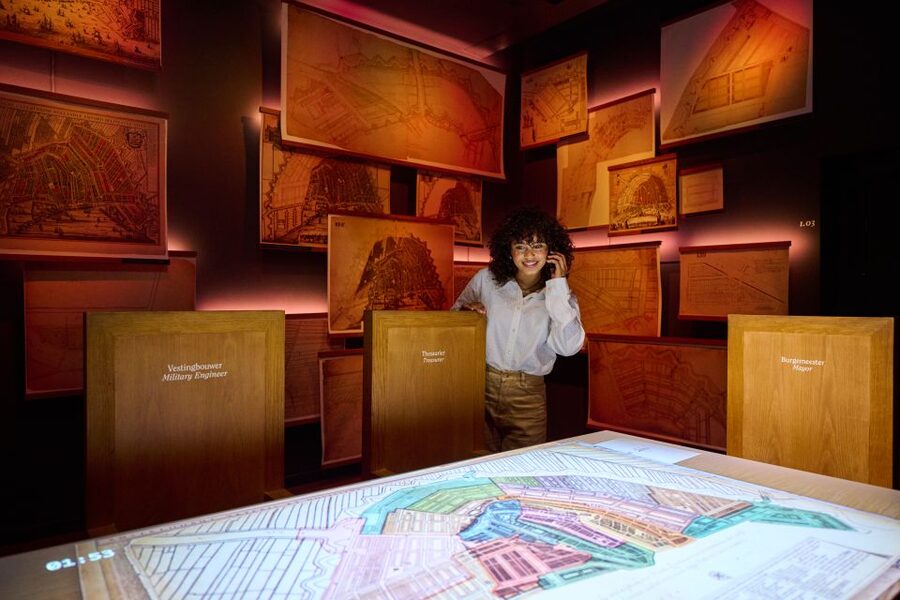
What makes it interesting is the museum’s approach. It uses a multimedia exhibition to show the evolution of the city through its waterways, then you follow that thread through rooms inside the building itself. It’s not just pretty canals outside, it’s the reasoning behind them, plus where you might see that logic still at work today.
You’ll also get the message that the canals are not a museum piece. They were important in the past, and they are still central for the future, which makes the visit feel timely instead of purely historical.
More museums and galleries in Amsterdam:
- Amsterdam: The Upside Down Museum Entrance Ticket
★ 4.4 · 9,506 reviews - Amsterdam: Red Light Secrets Museum Entry Ticket
★ 4.2 · 5,722 reviews - Amsterdam’s Weirdest Museum: Believe It or Not!
★ 4.5 · 4,086 reviews
The 17th-century canal house on Herengracht
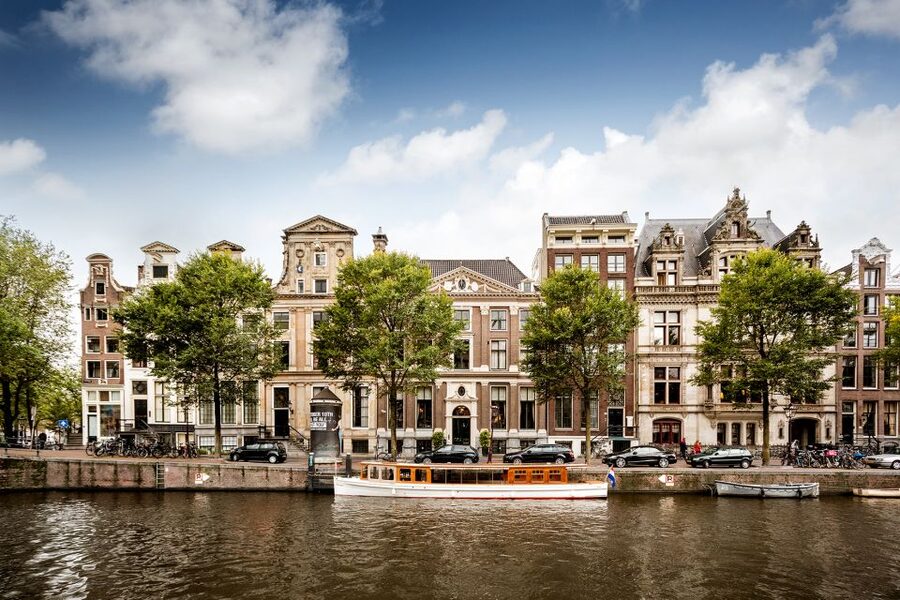
Your visit starts inside a 17th-century canal house on Herengracht, one of Amsterdam’s best-known canal streets. That matters because canal houses are part of the city’s “system.” The museum is literally housed in the kind of architecture people built when canals were the practical routes for life and business.
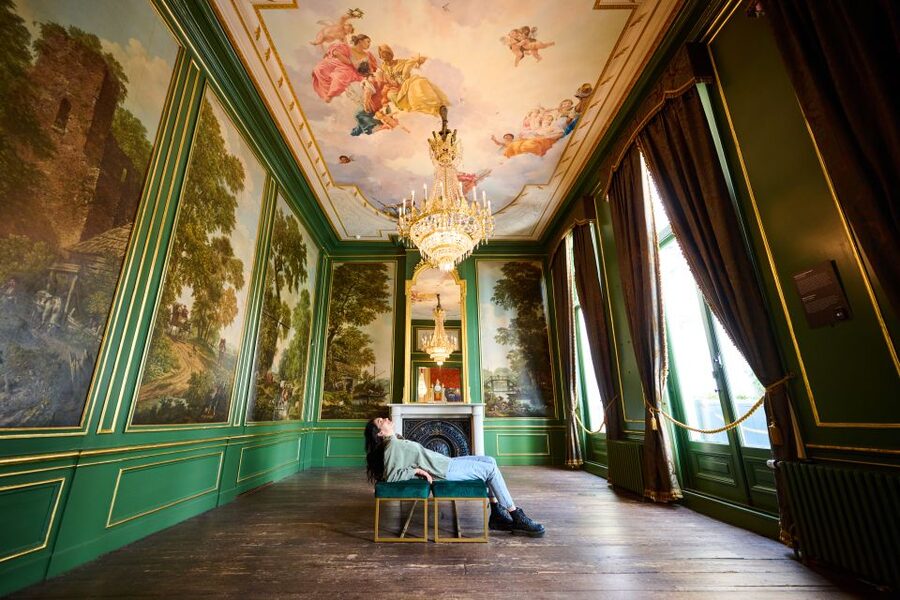
The museum includes classical period rooms, which help you picture the setting. Even if you do not know architecture details, the rooms give you scale and context. You can look at how space is organized in period interiors and connect that to the idea that canals shaped trade and daily movement.
Also, because the canal house is in the city center, the experience pairs well with a short canal walk afterward. You get a quick learning loop: museum explanations, then a reality check on the street.
The multimedia exhibit that tracks Amsterdam through the canals
The heart of the experience is the museum’s multimedia presentation. It takes you back roughly 400 years and lays out how Amsterdam’s canals supported the city’s growth and the people living there.
Think of it as a guided map of cause and effect:
- Canals helped move the city’s essentials.
- That movement supported settlement and commerce.
- Over time, the city’s choices and the water system shaped each other.
This is why I like it for first-time visitors. You can leave the museum with fewer random facts and more connected ideas. Instead of seeing canals as a postcard, you understand them as the engine behind the city’s layout and momentum.
One practical tip: if you notice your attention drifting, switch from watching to listening. The museum’s focus is visual, but your audio guide can keep you anchored to the main points as you move between sections.
Classical period rooms, what to look for beyond the obvious
Inside, the museum’s classical period rooms add texture. The canal story becomes tangible when you are in a space that feels designed for a different pace of life. You might find yourself noticing how rooms connect, how light enters, and how the building layout communicates status and function.
You do not need to become an architecture expert. The point is to help your brain build a mental model. If you can imagine how people used canal access to bring goods and guests, the rooms stop being decoration. They become part of the canal logic.
And since the museum is about canals, the rooms reinforce a theme you will keep seeing: Amsterdam’s design is not random. It developed around a water-based reality.
A few more Amsterdam tours worth comparing
- Amsterdam: 75 Minute City Canal Cruise with Audio Guide
★ 4.4 · 17,501 reviews - Amsterdam: Royal Palace Entry Ticket and Audio Guide
★ 4.6 · 6,475 reviews - Amsterdam: Canal Cruise with Live Commentary & Audio Guide
★ 4.4 · 1,034 reviews - Amsterdam Sightseeing Canal Cruise with Audio Guide
★ 3.5 · 828 reviews
Permanent and temporary exhibitions, how to choose your time
Your ticket includes the permanent exhibition plus access to temporary exhibitions. That combination is useful because the permanent part helps you get the “main storyline,” while temporary shows can add a second viewpoint, such as how the canal system is interpreted in different ways.
Here’s how I’d manage your time without rushing:
- Start with the main story first, so you have the framework.
- Save the temporary exhibition for later, when you can recognize references instead of starting from scratch.
If you only skim, you can miss the value. The museum’s big idea is that canals mattered for the past and keep mattering. The permanent exhibition is where that argument lands, and the temporary space often helps you see it with a newer lens.
The audio guide, languages, and how to use it well
You get an audiotour, with options in Dutch, English, German, French, Spanish, Italian, Russian, Japanese, and Chinese. That’s an unusually wide set of languages for a specialized museum experience, which makes this ticket friendlier for international visitors.
How to get more out of the audio:
- Listen for the “why,” not only the “what.” The museum’s emphasis is on importance and reason, so follow that thread.
- When you hit a section that feels repetitive, change your listening focus. Instead of absorbing details, ask yourself what concept the audio is building toward.
- If you are with someone who reads slower, the audio can keep both of you moving through the museum with fewer pauses.
Also note the museum provides host or greeter support in Dutch and English. If you have practical questions, that can help you avoid awkward guesswork.
Price and value at $22 per person
At about $22 per person, what you’re really paying for is more than entry. You get:
- Entrance to the permanent and temporary exhibitions
- An included audio guide
- A museum experience inside a historic 17th-century canal house
In a city like Amsterdam, where many indoor experiences charge for entry alone, this ticket’s bundle makes it feel more cost-effective. You are not only seeing rooms, you are getting a structured explanation tool that you can use during the visit.
That said, one review concern fits a real-world pattern: if you are sensitive to production quality, the multimedia presentation might not hit the mark. In that case, view the ticket as a learning experience anchored by the building and the canal context, not as a high-end special effects show.
How long to plan for a 1-day museum stop
The ticket is valid for 1 day, and you check availability for starting times. In practice, this is a good mid-morning or early afternoon option, because it gives you a calm indoor break without stealing half your day.
I’d plan on enough time to:
- Enter the canal house sections without rushing
- Take the multimedia content seriously, at least for the main storyline
- Include the temporary exhibition if you have energy
Then give yourself a little time afterward for a simple canal walk. The museum works best when you can connect the explanation to what you see outside.
Who should book this Museum of the Canals ticket
This is a strong fit if you want to understand Amsterdam more than you want to just photograph it. I’d book it if:
- You enjoy museums that explain systems, not just dates
- You like historic interiors and the feeling of period rooms
- You want a practical audio-led visit in a language you can manage comfortably
- You are curious about why canals mattered for movement and daily life
It may feel less satisfying if you mainly want quick highlights with minimal reading and minimal listening. The audio guide helps, but the museum’s value comes from sticking with the storyline.
Should you book? My straightforward take
If you want a smarter way to experience Amsterdam’s canals, I think this ticket is worth booking. You get the rare combo of a historic canal house, permanent and temporary exhibits, and a wide-language audio guide that keeps the visit grounded in the “why” behind the canals.
My only caution is about expectations for multimedia production. If you are judging purely on modern wow-factor, you might feel underwhelmed. But if you care about understanding the canal system and connecting it to what you see in the city, this ticket gives you that in a tidy, one-day format.
FAQ
Where is the Museum of the Canals located?
It is in Amsterdam’s city center, in a 17th-century canal house on Herengracht.
How much does the Museum of the Canals ticket cost?
The price is listed at $22 per person.
How long is the experience?
It is described as a 1-day visit.
What is included with the ticket?
The ticket includes entrance to the permanent and temporary exhibitions, plus an audio tour.
Which languages are available for the audio guide?
The audio guide is available in Dutch, English, German, French, Spanish, Italian, Russian, Japanese, and Chinese.
Is the museum wheelchair accessible?
Yes, the experience is wheelchair accessible.
Are food and drinks included?
No, food and drinks are not included.
Is free cancellation available?
Yes, you can cancel up to 24 hours in advance for a full refund.
Do I need to pay immediately?
No. The ticket offers reserve now and pay later.
More Audio Tours in Amsterdam
- Amsterdam: Official Audio Guide for Rijksmuseum Visit
★ 3.5 · 20 reviews - Amsterdam: Red Light District 1-hour Smartphone Audio Tour
★ 4.3 · 13 reviews - Rotterdam: Steamship Rotterdam Audio Tour Entry Ticket
★ 4.5 · 325 reviews - Lisse: Self-Guided Tulip Fields GPS Audio Tour
★ 4.6 · 83 reviews
Recently reviewed around Amsterdam
- Rotterdam Center: Cocktail Bar Walking Tour – Self Guided★ 2.9 · 9 reviews
- Rent a bike in Amsterdam | 1, 2, 3+ hours★ 4.5 · 68 reviews
- Amsterdam: Rijksmuseum Masterpieces Guided Small Group Tour★ 4.9 · 31 reviews
- Romantic Photoshoot Experience for Couples in Amsterdam★ 4.7 · 25 reviews
- Amsterdam: Queer Nightlife Tour★ 4.8 · 7 reviews
- Amsterdam: Self-guided Red Light District Pub Crawl Mystery★ 3.7 · 6 reviews
- Amsterdam: Red-Light District Pub Crawl and Booze Boat Tour★ 4.1 · 120 reviews
- Amsterdam: Private Red Light District and Food Tour★ 4.8 · 62 reviews
Museums, compared.


Moco Museum Amsterdam Entrance Tickets with Banksy & More
Read our review →


Amsterdam’s Weirdest Museum: Believe It or Not!
Read our review →

Browse the lists this tour appears in