
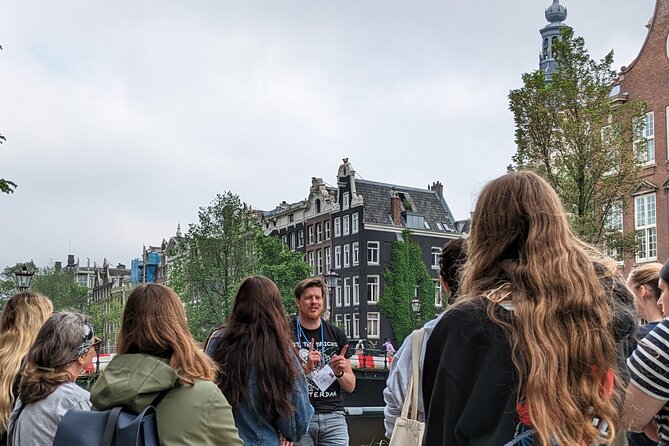
Reviewed · AMSTERDAM WALKING TOURS
Amsterdam 2 Hour History Walking Tour
Amsterdam is a city where water shapes everything, and this 2 hour walking tour is a fast, friendly way to understand that in human terms, not just dates. I especially like the relaxed small-group pace and the fact that the guide mixes serious context with history plus humor. One thing to consider is that you pass through the De Wallen area, so you should be comfortable with an adult neighborhood.
You also get a practical hit of orientation for a first visit. I like that it ends in a major hub (Dam Square), and you’ll leave with easy photo stops like the Monet bridge. If the weather is bad, the tour can be rescheduled or refunded, so keep an eye on forecasts.
Key highlights you will actually use
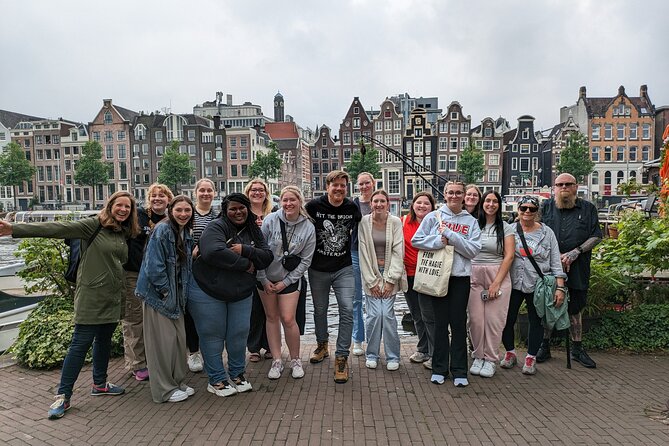
- Canal belt context first: You start in Amsterdam’s canal ring, where the water and the city mindset are inseparable
- De Wallen history, not just shock value: You learn why it exists and how the Dutch tend to talk about it
- Short stops, clear stories: The pace makes it easy even if you are jet-lagged
- Begijnhof secret-garden moment: A calm courtyard break in the middle of a busy city
- Monet bridge photo time: A quick photo stop that is worth the time
- Guides that keep you at ease: People cite guides like Axel and Mark as funny and personable
Why this Amsterdam history walk is such a smart first stop
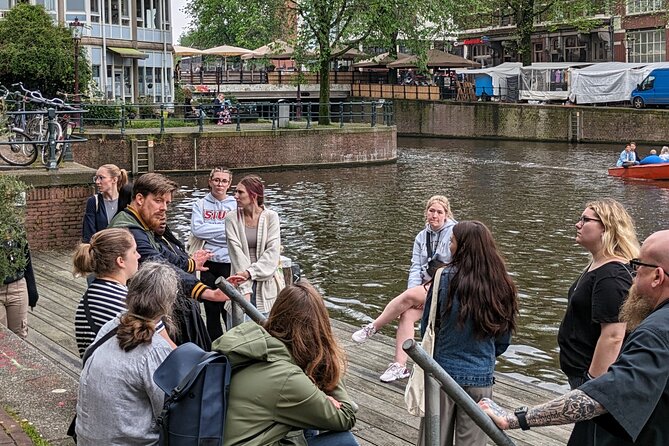
This tour works because it gives you a guided “map in your head.” Amsterdam can feel like a puzzle when you arrive, with canals everywhere and neighborhoods that look similar until someone explains the logic. In about 2 hours, you connect the dots between geography, religion, trade, and survival.
You also get that rare combo of information and atmosphere. A guide who can keep things light while staying accurate makes the whole city feel more human. And because the group is capped at a maximum of 10 travelers, you usually get a calmer experience than big bus-style tours.
The adult content consideration is real. You will walk through the famous Red Light District area, but the framing is historical and cultural, not scandal hunting. Still, if you prefer to avoid that kind of area, plan your day accordingly.
More walking tours in Amsterdam:
- Anne Frank’s Story – Guided Walking Tour through Amsterdam
★ 5.0 · 11,619 reviews - Amsterdam: Life of Anne Frank and World War II Walking Tour
★ 4.8 · 10,467 reviews - Absolutely Amsterdam – the Essential Introductory Walking Tour
★ 5.0 · 3,629 reviews
Getting ready: meeting point, timing, and what to bring
The tour meets at Hit the Bricks Walking Tours, Prinsenstraat 13, 1015 DA Amsterdam. It starts at 11:00 am and ends at Dam Square, near major transport options, so you can easily keep moving after the walk.
You get a mobile ticket, which is convenient if you travel with your phone only. It’s also offered in English, and the group size stays small, so you do not feel like you are shouting over the crowd.
Bring a refillable water bottle. Bottled water is not included, but the route includes several places where you can refill. The tour also depends on good weather, so if rain is likely, wear footwear that can handle wet sidewalks.
Practical travel note: service animals are allowed, and it’s near public transportation. “Most travelers can participate,” which is a good sign if you want an easygoing stroll rather than a long, intense hike.
Canal Ring: the water story that makes Amsterdam make sense
You start in the canal belt, the grachtengordel area where Amsterdam is famous for its waterways. This is the foundation story, because so much of the city’s character comes from living with water instead of fighting it.
Expect a clear explanation of how the Dutch had to coexist with canals and flooding risks, and how that shaped cultural attitudes over time. The best part is that it is not just theory. You begin to look at streets and canal edges as clues, not just pretty scenery.
This early segment is also a mood-setter. The pace is relaxed, and the guide uses the surroundings to make the history stick. If you learn best by seeing how something fits into place, this start is a win.
De Wallen at street level: history, rules, and cultural context
Next comes the Red Light District, De Wallen. This area is famous worldwide, so it can be tempting to treat it like a spectacle. Here, you get the other angle: how it started, why it is located where it is, and how the Dutch talk about it as part of their broader social reality.
You will not spend a long time here, but you will leave with a better sense of the neighborhood’s logic. The guide explains how the system works and gives cultural context for why it exists and how it fits into Amsterdam.
Photo tip: keep your camera use respectful and quick. This is a busy street with lots of activity, and you will get better results if you pause only when the guide signals a good moment.
A consideration for your comfort level: if you do not want to be in a sex-industry area at all, this stop may not feel like your kind of Amsterdam. But if you can handle it with curiosity and a bit of historical framing, it adds real context to the city.
More history-led tours in Amsterdam:
- Amsterdam Food and Cultural Tour with Tastings
★ 5.0 · 2,442 reviews - Amsterdam: Haunted History and Ghost Walking Tour
★ 4.5 · 488 reviews - Amsterdam High-End Dutch Food & History Tour – Up to 8 guests
★ 5.0 · 482 reviews - Amsterdam: Historic City Sightseeing Canal Cruise
★ 4.5 · 444 reviews
Dam Square: where the water fight becomes national identity
From De Wallen, you move to Dam Square, Amsterdam’s central square. This part of the walk focuses on the Dutch fight against water and the way that shaped culture and thinking.
Dam Square is a great teaching point because it is public space, full of everyday life. The guide can connect the big theme, water management, to a place that feels like the center of daily city life. You get an explanation that is easy to carry forward when you later see canals, locks, and drainage structures around town.
This is also where the tour feels like it is gearing you up for the rest. You start thinking about Amsterdam as a country that designed daily life around water, not just a city with canals.
South Church and the religion shift you can see
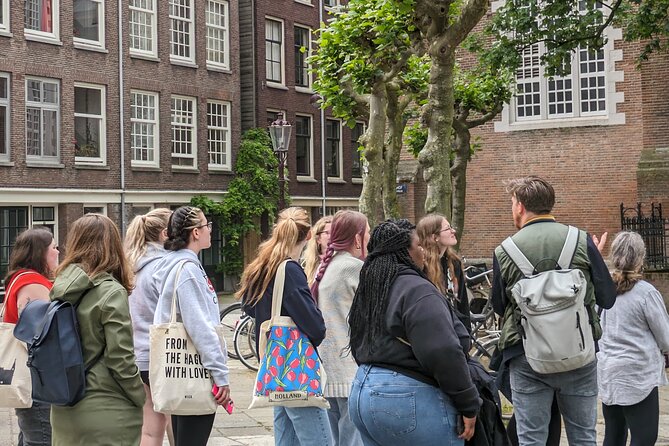
Then you head toward the South Church area and its serene inner courtyard. This stop is about a major Dutch transition, from Catholic roots toward Protestant influence.
You are not looking for grand drama. You are learning how religious change played out in real spaces and how it affected everyday identity. The inner courtyard next to the church makes this one feel calmer than you might expect, especially after a couple of big, public squares and streets.
If you like architecture as a clue, you will probably enjoy this pause. It gives you a moment to slow down and notice how faith and design meet in the urban fabric.
Jewish Quarter start: survival, loss, and the weight of the street
Next comes Jodenbreestraat, tied to the start of the Jewish Quarter in Amsterdam. Here the guide talks about the tragic fate of Jewish residents in the city, including the horrors during World War II and the hungerwinter.
This part is heavier. The stop time is short, but the theme matters. I like that it is placed here in the walk, because it ties Amsterdam’s identity not just to prosperity and trade, but to real human vulnerability and resilience.
A practical tip: keep your expectations realistic. You are on foot in a city street. If you want quiet reflection, do it in your own way during the stop, and then let the guide’s framing carry you to the next location.
East India House: how a small country built a big trade machine
After that, you walk toward the Bushuis area, the former Dutch East India company HQ, also known as Oost-Indisch Huis. This is where Amsterdam’s global story starts to feel tangible.
The guide explains how the Dutch grew from a small country into a vast empire through trade, and how spices, commerce, and competition shaped their power. It also covers the sense of survival, how the company worked to secure its independence even while fighting for a place in the world economy.
This stop is a good reset after the emotional weight of the previous segment. It gives you a sense of how Amsterdam became a connector for goods and ideas, not just a home base.
Stopera Pier: why locals call it Stopera
Then you reach the Stopera Pier on the banks of the Amstel river. The modern city hall area is known as Stopera, a local nickname that reflects the building’s mix of city functions.
Yes, you will hear that it is considered one of the uglier buildings in Amsterdam. But the point is that locals still take pride in it. I like this lesson because it keeps you from treating the city like a museum. Amsterdam contains the argument, not just the postcard.
You get river views too, which help break up the city-street intensity. Even if you do not love modern architecture, you will probably enjoy the conversation around why people defend the places they call theirs.
Begijnhof: a secret courtyard pause in the middle of everything
Next is Begijnhof, a well-known quiet courtyard often described as a secret garden within the city. This stop is about the beguine sisters and the community they built.
This is the kind of place where you can feel the pressure release. After streets, crowds, and history in motion, you step into a calmer pocket. The guide helps you understand what the community was, and why it mattered in Dutch society.
If you like urban contrasts, this is one of the best moments on the walk. It gives you a mental screenshot: Amsterdam has public spectacle, but it also has protected stillness.
Royal Palace exterior context: what you learn even if you do not go inside
The walk passes by the Royal Palace Amsterdam area. Admission is not included, so you will not automatically get palace entry as part of the ticket.
But you still learn the story basics: how the Dutch royal family came to be, how French influence connects to the timeline, and why the national colors show up the way they do. Even without paying for an interior visit, this kind of context helps you decode what you see later if you decide to return.
If you do want to add palace time after the tour, you can use the guided context as your roadmap. You’ll be able to appreciate what you are looking at instead of just admiring the facade.
Groenburgwal and the Monet bridge photo moment
Finally, you reach Groenburgwal and the famous Monet bridge area. This is the photo stop people remember because it is instantly recognizable once you are standing there.
The guide keeps it brief, so it does not drag. You take in the setting, snap the shot, and move on while the rest of the city is still in your rhythm.
This is also a good time to remind yourself why you came on a walking tour in the first place. Amsterdam looks great from a canal boat, but on foot you catch the details, the street logic, and the little corners where stories take place.
You end at Dam Square, which makes it easy to continue your day without a complicated return trip.
Price and value: why $30.04 can be more than a bargain
At about $30.04 per person for roughly 2 hours, this is not a free walk, but it is good value for what you get. You get an expert local guide, a small-group format, history framed with humor, and practical tips to help you navigate your visit.
If you try to DIY this route, you can absolutely cover some sights yourself. But you would likely miss the connections, like how water management themes tie together different eras and how the global trade story connects back to Amsterdam’s local energy.
The tour also includes tips and tricks to get the most out of your Amsterdam trip. Plus, there are discount codes for other tours if you request them, which can help if you already have more tours on your list.
Bottom line: if you want fast orientation and want it explained in plain language, the price is fair for Amsterdam.
Service, comfort, and who this suits best
This experience fits best if you want a guided walk that stays lively and manageable. The max group size of 10 helps you feel socially comfortable during the walk, and the guides are described as funny and personable.
Guides like Axel and Mark are specifically named in feedback for mixing learning with an easy tone. If you arrive a little unsure of where to start, you will probably appreciate that the guide makes the city feel approachable.
It also suits you if you care about a mix of topics. You are not only doing buildings and canals. You touch religion shifts, war-era remembrance, trade and empire, and modern city identity. That variety can be a big advantage for first-timers who do not want one-note sightseeing.
Should you book this Amsterdam 2 hour history walk?
Book it if you want fast orientation plus clear, human stories across multiple neighborhoods. I think it’s especially smart for first-timers who want to understand what makes Amsterdam work, not just what looks good in photos.
Skip it or be cautious if you strongly prefer to avoid the De Wallen area. Also, if you hate walking in weather that can turn, plan around the good-weather requirement.
If you want a calm, story-led way to get bearings, this is one of the best short investments you can make on an Amsterdam trip.
FAQ
What is the duration of the Amsterdam 2 hour history walking tour?
The tour lasts about 2 hours.
How much does the tour cost?
The price is $30.04 per person.
What language is the tour offered in?
The tour is offered in English.
Where do I meet for the tour?
You meet at Hit the Bricks Walking Tours, Prinsenstraat 13, 1015 DA Amsterdam, Netherlands.
Where does the tour end?
The tour ends at Dam Square, Dam, 1012 Amsterdam. It is open in Google Maps at the end point provided.
Is bottled water included?
No. Bottled water is not included, and the tour notes that you can refill water at several stops, so bring a refillable bottle.
Is admission included for all stops?
Admission is free for most listed stops. Royal Palace Amsterdam is noted as admission not included.
What is the group size limit?
The maximum number of travelers is 10.
Is cancellation free, and does weather matter?
Free cancellation is available, and the tour requires good weather. If canceled due to poor weather, you will be offered a different date or a full refund.
Recently reviewed around Amsterdam
- Amsterdam Highlights Canal Cruise with a Drink★ 5.0 · 66 reviews
- Private walking tour Amsterdam. English or Spanish.★ 5.0 · 21 reviews
- Guided Private Bar Tour in Amsterdam City Center★ 5.0 · 4 reviews
- Amsterdam Private Boat Trip With Skipper, Burger and Beers★ 5.0 · 5 reviews
- Arrival Private Transfer Amsterdam Airport to Amsterdam City Center by Minibus★ 4.5 · 7 reviews
- Private Arrival Transfer: Schiphol Airport Amsterdam★ 3.5 · 30 reviews
- 2-Hour Private Anne Frank Walking Tour with Drink★ 5.0 · 3 reviews
- Private Amsterdam WW2 walking tour★ 4.5 · 15 reviews
Amsterdam Walking Tours, compared.
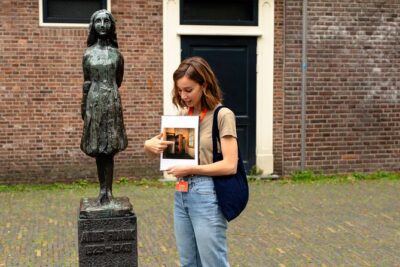
Anne Frank’s Story – Guided Walking Tour through Amsterdam
Read our review →
Life of Anne Frank and World War II Walking Tour
Read our review →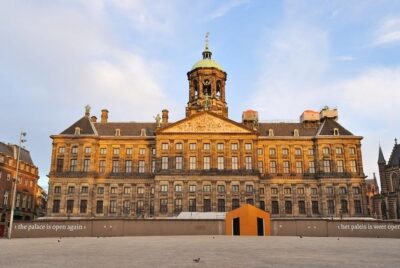
Absolutely Amsterdam – the Essential Introductory Walking Tour
Read our review →

Anne Frank Walking Tour – Guided in EN/DE/IT/ES
Read our review →

Anne Frank Walking Tour Amsterdam Including Jewish Cultural Quarter
Read our review →Browse the lists this tour appears in