
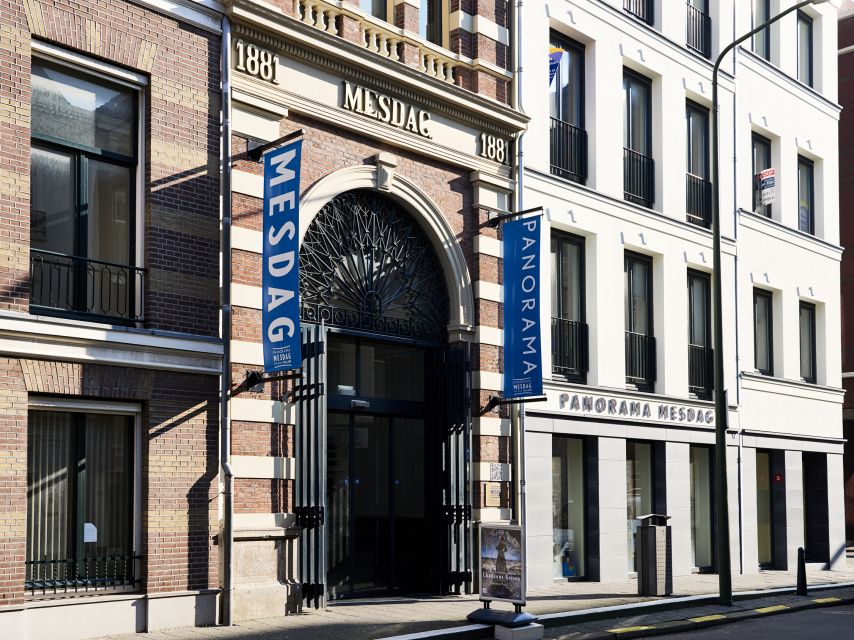
Reviewed · THE HAGUE & SCHEVENINGEN TOURS
The Hague: Panorama Mesdag Museum Entry Ticket
Panorama Mesdag is interesting because you don’t just watch a painting. You stand in the middle of Europe’s largest circular canvas and look around in a 360º view that is meant to fool your eyes.
I love the way the scene feels alive, especially as light hits the panorama differently from moment to moment. The optical illusion turns a static picture into something that feels like a real seaside day.
One possible drawback: this isn’t for everyone. It is not suitable for people with mobility impairments, and you’ll want your own headphones to hear the audio guide clearly.
Key things that make Panorama Mesdag worth your ticket
- Stand at the center of the action: you look around the panorama like you’re standing on the sand.
- Optical illusion, explained simply: you’ll learn why the trick works as you watch.
- 1881 Scheveningen in 360º: sea, dunes, fishermen village, and the growing pull of The Hague.
- Audio guide that does the heavy lifting: languages include Dutch, English, German, French, Spanish.
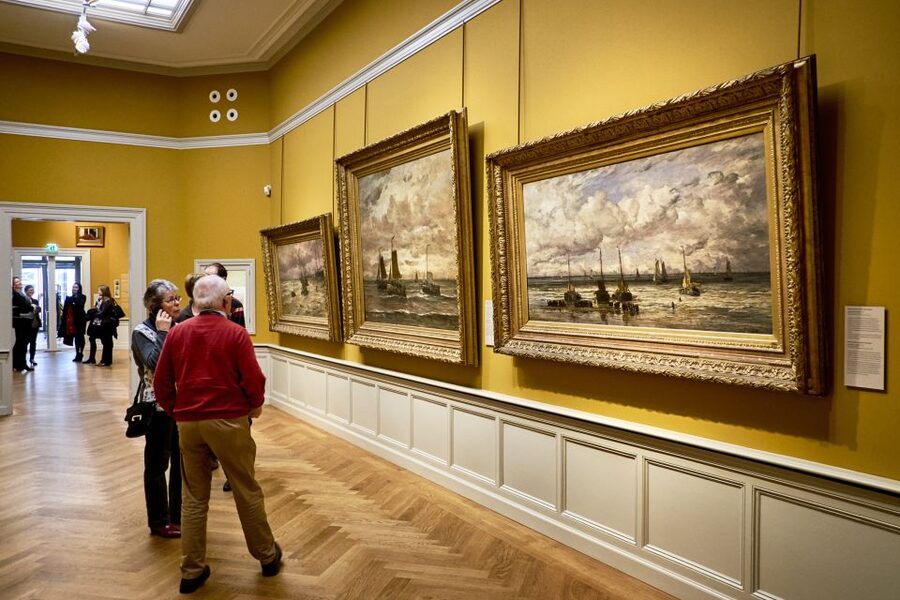
- More than the panorama: permanent collection plus a temporary exhibition round out the visit.
The main idea: a 360º painting you look into, not at
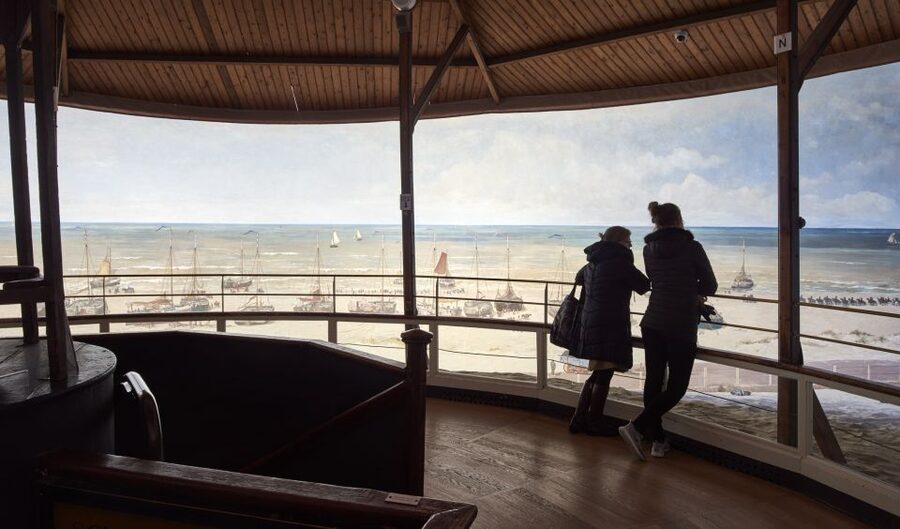
Panorama Mesdag is one of those cultural stops that sounds gimmicky until you experience it. The museum is built around a single concept: the biggest painting in the Netherlands, and Europe’s largest circular canvas, by Hendrik Willem Mesdag. Instead of hanging the work on a flat wall, it puts you in the center so you can look 360º around.
What makes that matter is how you experience time and space. You’re not scanning brushstrokes like you would in a normal gallery. You’re using your eyes to judge distance, sea width, sky, and coastline shape, all while the painting quietly guides you.
You get a view of The Hague and Scheveningen as it was in 1881, including the sea and dunes. The museum also frames the scene with a sense of change, showing beach life emerging and the city pressing in toward the coast. That “then and now” feeling is part of why it lands so well.
How the optical illusion works (and why it feels different every time)
Panoramas are built on a specific kind of visual math. Your brain expects certain cues from real space, like consistent horizons, believable shapes, and a clear sense of where you are relative to the horizon line. The Mesdag panorama uses the curved canvas and its setup so those cues match what your eyes want to see.
The museum also helps you understand the trick. You’ll learn about the optical illusion in panorama painting, which makes your experience smarter, not just stranger. Once you know what the museum is doing, you start noticing how the horizon and surrounding elements line up as you turn your head.
Then there is the light factor. The description you’ll get from the audio guide and the way the museum is presented matters because the incidence of light can change the feel of the scene from moment to moment. Even if nothing in the painting technically moves, your perception shifts. That is why people leave talking about how mesmerizing it felt.
Practical tip: slow down. Don’t just spin your head in fast circles. Pause at the sea, then at the dunes, then toward the fishermen village. The illusion works better when you let your brain reset between “zones.”
Your 1-hour flow: what you’ll do, in what order, and why
This ticket is designed for a compact visit, about 1 hour. You’ll want to treat it like a focused experience, not a long wander. Here’s the usual rhythm you can expect.
1) Enter and get your audio guide
The ticket includes entry and an audio guide. The museum offers audio in Dutch, English, German, French, and Spanish, so you can follow along without needing to squint at labels.
Headphones are required for this kind of experience, so bring your own. If you forget, your visit time can get messy fast, and you’ll lose the part of the experience that points out the highlights and explains what you’re seeing.
2) Head to the observation deck, then stand in the middle
The big moment is standing in the center and looking around from the observation deck. The museum is built so you feel inside the scene, not outside it.
This is where the “biggest painting” idea stops being a trivia hook and becomes the whole point. You’ll see the painted coastline, the sea, and the dunes, plus the fishermen’s village at the time. You’ll also notice how The Hague’s presence feels like it’s pushing toward the coast, rather than staying far away.
A small consideration: since the experience is 360º and relies on looking around, it can be a bit visually intense if you get motion sickness or if crowds make you feel rushed. If you’re sensitive, take it slow and pick a calmer time slot.
3) Learn the highlights while the panorama does the talking
As you look around, the audio guide helps you pick out what the museum wants you to notice. You’ll get an explanation of the optical illusion and guided attention on key elements.
This is where the experience becomes more moving than just cool. A panorama can feel like a movie still, but the audio and historical framing give it emotional weight. You start seeing the scene as a snapshot from 1881, with real people and real routines behind the visuals, not just a pretty view.
4) Explore the permanent collection and the temporary exhibition
After the panorama itself, you’ll have time for more museum content, including the permanent collection and a temporary exhibition. That matters because the panorama is a centerpiece, but the rest of the museum helps you understand it in context.
If you like art that connects to place, this added time is what rounds out the visit. Instead of leaving with only the “wow,” you leave with a few extra ways to think about Mesdag’s work and why the panorama is treated as a unique cultural-historical monument.
The Hague and Scheveningen as they were in 1881, and why that time period still feels relevant
One of the strongest parts of Panorama Mesdag is that the view is not just “the sea.” It’s Scheveningen as it was in 1881, with the seaside world transitioning into the more modern beach life that would develop later. You get a visual sense of the old fishermen’s village and the way the city of The Hague is encroaching on the coast.
The museum’s framing also points to two shifts at once:
- The natural setting, sea and dunes, which gives the scene its mood and scale.
- The human setting, fishermen life and the growing cosmopolitan beach atmosphere, which shows change in culture and daily life.
There’s something quietly satisfying about seeing an earlier version of a place you might already associate with today’s coastline. Even if you’ve visited Scheveningen before, this view helps you notice what would have felt familiar back then, and what would have felt new.
From a value standpoint, this is not just a one-note attraction. It gives you an art experience plus a sense of place in a specific year. That combination helps the museum justify its focus and time commitment.
What to bring, what to avoid, and who should plan around the limitations
This is a museum, not a long walking tour. Still, a few practical points can make your visit smoother.
Bring: headphones
Because the audio guide is included, you’ll benefit from hearing it clearly. If you show up without headphones, you might end up waiting or turning it into a guessing game.
Not allowed: pets
Pets are not allowed, though assistance dogs are allowed.
Mobility note: not suitable for people with mobility impairments
The visit is built around standing and looking around from the observation area. If mobility is a concern, it’s worth thinking ahead rather than hoping it will be easy once you arrive.
Group size and crowd reality: plan for visibility and comfort
The experience depends on your ability to see and focus. If the museum is busy, you may not get your ideal pace. Picking a calmer time slot can help you enjoy the light changes and the 360º slow scan.
Price and value: is $18 for about 1 hour actually fair?
At around $18 per person, Panorama Mesdag sits in the “you pay for a special experience” category. That can be a gamble at smaller museums, but here the value makes sense for three reasons.
First, you’re paying for something genuinely rare. Standing in the center of Europe’s largest circular canvas is not a thing you can replicate in any other museum in the region.
Second, the ticket includes the audio guide, in multiple languages. That matters because a panorama gets better when you know what you’re looking at. The guided highlights and the explanation of the illusion turn the novelty into a more thoughtful visit.
Third, you get more than the main view. You also have access to the permanent collection and a temporary exhibition. That gives you enough content to make the visit feel like a complete hour, not a quick photo stop.
So the honest takeaway is this: if you like visual tricks, art tied to place, and a focused museum visit, the price feels fair. If you only want broad, wandering galleries, you might decide this museum is too concentrated for your style.
Best times for the light, and how to get the most from your viewing
The panorama’s effect changes with light, which is a big deal for a museum centered on perception. You can’t control everything, but you can control your pace.
Here’s how I’d optimize it:
- Arrive prepared to take your time. You’re not racing to the finish line.
- Choose a spot where you can stand comfortably and look around without twisting awkwardly.
- Pause at each section long enough to let your eyes accept the horizon, then shift to the next direction.
Also, don’t underestimate the value of learning the illusion while you watch it happen. It’s easier to remember what you see when your brain connects the explanation to the exact moment you experience it.
If you prefer quiet, aim for a time slot that feels less chaotic. A panorama works best when you can hear the audio guide and focus on the view rather than adjusting to crowd pressure.
Who this museum fits best, and who might not love it
This is a great match for:
- People who enjoy art that uses the senses, not just the eyes
- Visitors who like historical place-based storytelling, especially with a specific year like 1881
- Anyone who wants a short, high-impact activity in The Hague that doesn’t require a long travel day
You might not love it as much if:
- Standing and looking around sounds uncomfortable or exhausting for you
- You don’t like visual illusions or you feel dizzy when watching 360º perspectives
- You’re hoping for a long, detailed museum with lots of room to wander
Also, if you enjoy museums mainly through reading and quiet gallery time, the panorama structure may feel more “experience first” than “text first.” The audio guide helps, but the centerpiece is visual.
Should you book Panorama Mesdag? My decision guide
Book this ticket if you want a one-hour art experience that is both rare and carefully presented. The centerpiece is genuinely special: stand in the middle of the largest circular canvas in Europe and see Scheveningen as it was in 1881, with sea, dunes, and the old fishermen village in full view. Add the audio guide, the explanation of the illusion, and the extra context from the permanent collection plus a temporary exhibition, and you get a well-rounded visit for about $18.
Skip it or think twice if mobility is an issue for you, or if you know you dislike 360º viewing setups. In that case, it’s easy to have a frustrating visit rather than a memorable one.
If you’re on the fence, here’s the simplest test: do you like the idea of a painting that tricks your eyes and changes with light? If yes, this one is worth your hour in The Hague.
More Museums and Galleries in The Hague & Scheveningen
- Amsterdam: Van Gogh Museum Ticket
★ 4.7 · 52,054 reviews - Moco Museum Amsterdam Entrance Tickets with Banksy & More
★ 4.4 · 10,088 reviews - Amsterdam: The Upside Down Museum Entrance Ticket
★ 4.4 · 9,506 reviews - Amsterdam: Red Light Secrets Museum Entry Ticket
★ 4.2 · 5,722 reviews
More Trips to The Hague and Scheveningen
- The Hague: Mauritshuis Entrance Ticket
★ 4.7 · 2,706 reviews - The Hague: City Canal Cruise
★ 4.6 · 2,024 reviews - From Amsterdam: Rotterdam, Delft & The Hague Guided Day Tour
★ 4.2 · 1,765 reviews - The Hague: Madurodam Miniature Park Entry Ticket
★ 4.6 · 1,559 reviews
The Hague & Scheveningen Tours, compared.
Hop-on Hop-off Old-Fashioned Heritage Tram Tour
Read our review →

Rotterdam, Delft, the Hague, Madurodam from Amsterdam
Read our review →Browse the lists this tour appears in